
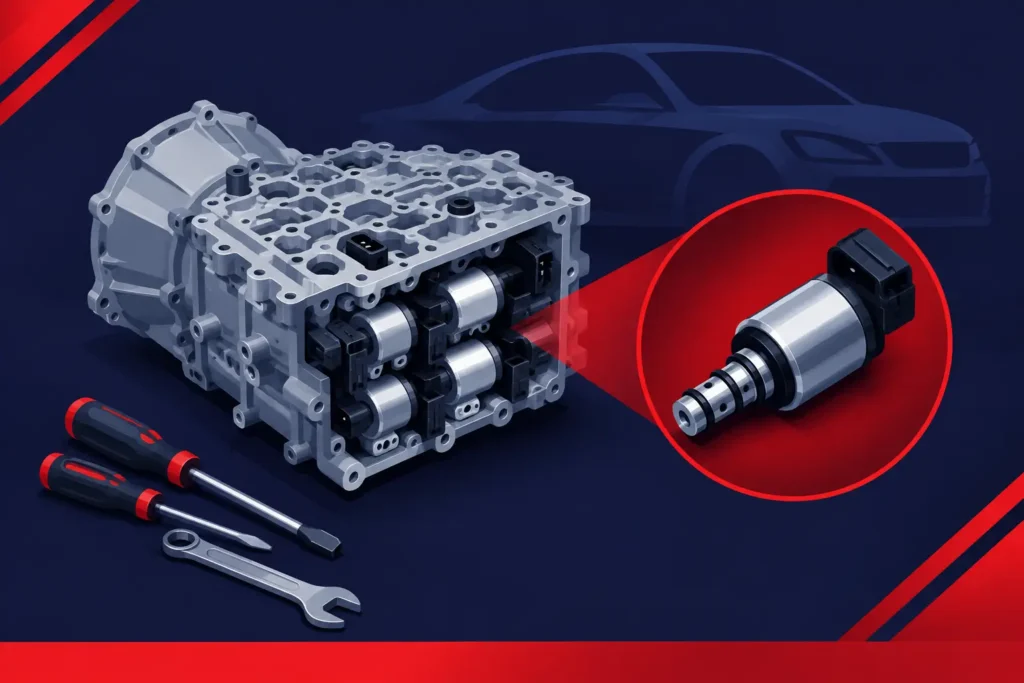
A transmission warning light, a delayed shift, and one stored fault code can make a driver fear the worst. This transmission solenoid repair case study follows a representative diagnostic scenario that shows why a code is the beginning of the repair process, not the final answer. For owners of European, performance, classic, and everyday vehicles, that difference can mean repairing the actual problem instead of paying for work the transmission never needed.
The Complaint: Rough Shifts and a Warning Light
The vehicle arrived after its owner noticed a hard shift when moving from second to third gear. It was not happening on every drive. The transmission behaved normally when cold, then shifted more sharply after the vehicle reached operating temperature. A warning light appeared intermittently, and the customer had already been told the transmission might need to be replaced.
That is a serious recommendation, especially when the vehicle still drives, moves through all gears, and has a concern that comes and goes. A transmission replacement is sometimes the right answer, but it should follow a complete diagnosis. Symptoms such as harsh engagement, slipping, delayed shifting, limp mode, or a warning light can come from internal wear, low or degraded fluid, valve body problems, damaged wiring, a failed sensor, or an electrical issue affecting a shift solenoid.
In this case, the customer wanted a clear answer before approving major work. That is the right approach.
What a Transmission Solenoid Does
Modern automatic transmissions use pressurized fluid to apply clutches and bands at the right time. The transmission control module commands solenoids to direct that fluid through the valve body. Put simply, a solenoid is an electrically controlled valve that helps determine when and how firmly the transmission changes gears.
A failing solenoid can cause a hard shift, a flare between gears, a delayed engagement into Drive or Reverse, or a transmission that enters fail-safe mode. But a solenoid-related trouble code does not automatically prove that the solenoid itself has failed.
The code may point to an electrical circuit with excessive resistance, an open circuit, a short to ground, or performance outside the expected range. The underlying cause could be a damaged harness, a poor connector connection, contamination in the valve body, low system voltage, or a control module issue. Replacing parts before testing is how a manageable repair turns into unnecessary expense.
The Diagnostic Process Behind This Case Study
A proper diagnosis starts with the vehicle as it sits, not with assumptions. The technician first confirmed the owner’s complaint during a controlled road test. The harsh upshift occurred after the transmission warmed up, matching the customer’s description. Scan data showed a stored code related to the circuit for one shift solenoid, along with transmission temperature and gear-ratio information that needed closer review.
Step One: Verify Fluid Condition and Service History
Transmission fluid is both a lubricant and a hydraulic working fluid. Its condition can reveal a great deal, but it must be evaluated correctly. The fluid level was checked at the specified temperature and using the manufacturer’s procedure. The level was within range, but the fluid was darkened and had a burnt odor.
That finding mattered, but it did not settle the diagnosis. Dark fluid can contribute to valve body and solenoid problems, particularly when service has been delayed. It can also be the result of an internal transmission issue. The transmission pan was removed for inspection, where the technician looked for excessive friction material, metal debris, and other signs of major internal damage.
There was normal fine material on the pan magnet for a higher-mileage vehicle, but no large metal pieces or heavy clutch debris. That made a complete internal failure less likely and supported moving forward with targeted electrical and hydraulic testing.
Step Two: Test the Circuit Before Replacing the Solenoid
The external transmission connector and harness were inspected closely. Heat, vibration, oil intrusion, and previous repairs can all affect these components. No obvious broken wires were visible, but visual inspection alone is not enough.
Using the correct wiring information, the technician tested power, ground, continuity, and resistance through the solenoid circuit. The solenoid’s resistance reading was inconsistent when the harness was moved near the transmission case connector. That was the first strong clue.
Further testing found corrosion inside a connector terminal. The connection was stable when cold but became unreliable as heat and vibration increased. The control module interpreted the inconsistent electrical signal as a solenoid circuit problem, then commanded protective transmission operation. That is why the vehicle shifted harshly and why the issue was more noticeable after warming up.
Step Three: Inspect the Valve Body and Solenoid Assembly
Because the fluid was overdue for service and the transmission pan was already removed, the valve body and solenoid assembly received a careful inspection. The affected solenoid was tested directly. Its readings were within specification at the time of bench testing, but it had been exposed to degraded fluid and an unreliable electrical connection.
This created an honest repair decision. The connector terminal was clearly defective and had to be repaired. The solenoid itself was not conclusively failed, but access to it required the same disassembly already completed for the repair. Depending on the vehicle, mileage, parts cost, and customer’s long-term plans, there are two reasonable paths.
For a newer vehicle with a verified good solenoid, repairing the connector, servicing the fluid and filter, and retesting may be the most responsible option. For an older specialty vehicle, or one with known solenoid reliability concerns, replacing the affected solenoid while the pan is down may offer better long-term value. The important point is that the customer should understand the evidence, the options, and the trade-off before authorizing the work.
The Repair and Why It Was Targeted
In this representative case, the repair included replacing the corroded connector terminal, securing and protecting the harness, installing the appropriate transmission service components, and refilling the transmission with the correct manufacturer-approved fluid. The solenoid was also replaced because of the vehicle’s mileage, the condition of the fluid, and the labor overlap while the transmission was open.
No complete transmission replacement was needed. No internal rebuild was sold as a precaution. The repair addressed the confirmed electrical fault and reduced the risk of a future solenoid concern caused by contaminated or aged fluid.
Quality control matters after any transmission repair. Once reassembled, the vehicle was scanned again, adaptive values were reviewed where applicable, and the transmission was road-tested through cold and fully warmed operating conditions. The shift concern did not return, the code remained cleared, and the transmission moved through its gears smoothly.
What This Transmission Solenoid Repair Case Study Teaches
The lesson is not that every harsh shift has a simple fix. Some transmissions do need a rebuild or replacement because of clutch failure, damaged hard parts, severe debris, or extensive valve body wear. A responsible shop should say so plainly when the evidence supports it.
But the opposite is also true. A warning light and a solenoid code do not automatically justify replacing an entire transmission. Accurate diagnosis requires checking the fluid, verifying the complaint, reading live data, testing circuits under realistic conditions, and inspecting the transmission before making a major recommendation.
This is especially important for European luxury cars, exotics, and classics. These vehicles may have specialized transmission designs, specific fluid requirements, and control systems that require experience and proper diagnostic equipment. A generic repair approach can miss the real issue or create new ones.
At MotorSport Prime, transmission work is approached with the same care we would want for our own vehicles. With 38 years of hands-on experience, we believe customers deserve direct answers, fair recommendations, and repairs based on proof rather than guesswork.
If your vehicle has a transmission warning light, delayed engagement, slipping, or harsh shifting, avoid waiting until a small concern becomes a larger repair. A thoughtful inspection now can give you a clearer path forward and help protect the vehicle you depend on.