
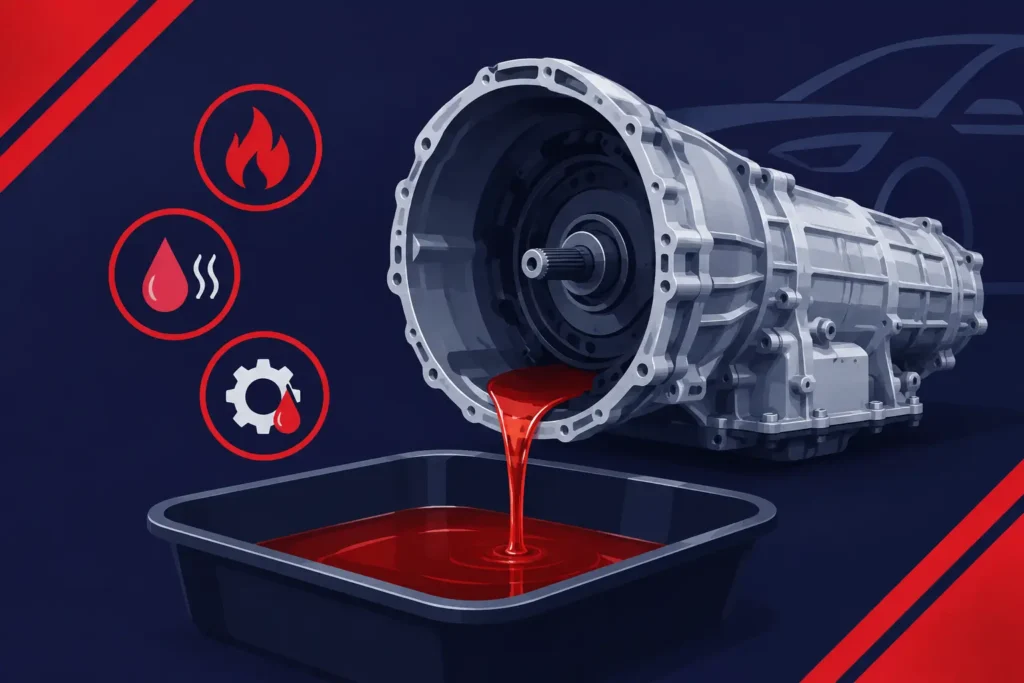
A hot, sharp odor after a long drive is not something to ignore. Can transmission fluid burn? Yes – although in most cases, drivers are noticing fluid that has overheated and broken down rather than fluid that has literally caught fire. Either way, it is a warning that the transmission may not be getting the protection it needs.
Automatic transmission fluid does far more than lubricate moving parts. It carries heat away, helps create hydraulic pressure, protects internal clutches, and allows the transmission to shift smoothly. When that fluid gets too hot, its chemistry changes. Left unaddressed, overheating can turn a manageable service need into internal transmission damage.
What Burning Transmission Fluid Usually Means
Fresh automatic transmission fluid is typically red, pink, amber, or another clean, transparent color depending on the vehicle and fluid specification. It should have a mild petroleum smell, not a scorched odor. When fluid overheats repeatedly, it can darken to brown or nearly black and develop a burnt smell.
That odor comes from the fluid’s additives and lubricating properties breaking down under excessive heat. Once the fluid loses its ability to control heat and protect friction materials, clutch packs, seals, valve body components, and bearings can wear much faster. In a performance vehicle, European luxury car, classic car, or a daily driver, the principle is the same: heat is one of a transmission’s biggest enemies.
There is another possibility worth separating from overheated fluid inside the transmission. A transmission fluid leak can drip onto a hot exhaust component and create smoke or a burning smell. This situation deserves prompt attention because leaking fluid near hot exhaust parts can become a safety concern. The source of the leak needs to be identified, not simply topped off.
Can Transmission Fluid Burn From Normal Driving?
Under normal conditions, no. A properly maintained transmission operating at its intended temperature should not burn its fluid during everyday driving. Modern vehicles are engineered with cooling systems and fluid capacities designed to manage regular acceleration, highway travel, and stop-and-go traffic.
But normal driving can become hard use in Central Florida heat, especially when a vehicle is stuck in traffic, towing, carrying heavy loads, or repeatedly accelerating in demanding conditions. High ambient temperatures leave less room for the transmission to shed heat. A cooling problem, low fluid level, or internal slipping can push temperatures beyond what the fluid can handle.
Older and classic vehicles may be especially vulnerable if their original cooling systems are tired, their transmission has accumulated internal wear, or the vehicle sees modern traffic conditions it was never designed to face. High-performance and exotic vehicles can also generate substantial heat due to their power output and tightly packaged drivetrains. The right diagnosis depends on the vehicle, its transmission design, and how it is used.
Common Causes of Overheated Fluid
Low transmission fluid is one of the most common causes. Fluid is needed not only for lubrication but also for hydraulic operation and heat transfer. When the level is low because of a leak, the transmission may draw in air, lose pressure, slip between shifts, and run hotter.
A restricted or damaged transmission cooler can create the same cycle. Many vehicles route transmission fluid through a cooler in or near the radiator, while others use a dedicated auxiliary cooler. If coolant system issues, debris, internal restrictions, or damaged lines prevent heat from leaving the fluid, temperatures rise quickly.
Internal transmission trouble can also be the cause rather than the result. Worn clutch packs, a sticking valve body, failing solenoids, torque converter problems, or mechanical wear may cause slipping. Slipping creates friction, friction creates heat, and heat further damages the fluid and friction materials. That is why a burnt smell should not automatically be treated as a simple fluid-change issue.
Warning Signs You Should Not Wait On
Burnt fluid may be visible during a proper inspection, but drivers often notice symptoms before they ever see the fluid. Shifts may become delayed, harsh, erratic, or noticeably soft. The vehicle may hesitate before moving into Drive or Reverse, rev higher before changing gears, or feel like it is slipping under acceleration.
You may also notice a burning smell after parking, smoke from beneath the vehicle, or red or brown fluid on the driveway. A check engine light or transmission warning message may appear, though not every transmission problem triggers a warning light right away.
If the transmission begins slipping or overheating, continuing to drive can make the damage worse. Pulling over safely, allowing the vehicle to cool, and arranging an inspection is usually the smarter choice. A transmission that still moves the vehicle can sometimes be saved with timely repair. One that is repeatedly driven while slipping may require much more extensive work.
Why the Right Fluid Service Matters
Transmission fluid service is not a one-size-fits-all job. The fluid must meet the exact specification required by the manufacturer. Using a universal product where a specific fluid is required can affect shift quality, clutch engagement, and long-term reliability. This is particularly critical on European, exotic, and specialty vehicles, where transmission designs and fluid requirements can be highly specific.
The service method matters, too. In many cases, a drain-and-fill service with the correct filter, pan gasket, and fluid level procedure is appropriate. Some transmissions require fluid-temperature monitoring during filling. Others have no conventional dipstick, making an accurate level check impossible without the correct equipment and process.
A complete fluid exchange may be appropriate in certain maintenance situations, but it is not automatically the right answer for every high-mileage transmission with existing symptoms. If the fluid is badly burnt, the transmission is slipping, or there is heavy debris in the pan, an experienced technician should diagnose the condition before recommending a service. Honest advice means explaining whether maintenance is likely to help, whether a repair is needed first, or whether internal damage has already progressed too far.
What a Professional Inspection Should Include
A proper transmission diagnosis starts with more than looking at the color of the fluid. The technician should verify the fluid level and condition, inspect for external leaks, check the transmission cooler and related lines, and scan the vehicle for stored fault codes. A road test may be needed to identify when the concern occurs and whether the transmission is slipping, shifting harshly, or failing to engage correctly.
For many vehicles, the transmission pan can provide valuable evidence. Friction material, metal particles, or unusual debris can reveal what is happening inside. Diagnostic data may also show transmission temperature, commanded gear changes, solenoid operation, and input or output speed readings. These details help separate a maintenance issue from an internal mechanical or electronic fault.
At MotorSport Prime, the goal is not to sell a repair before understanding the cause. With 38 years of hands-on experience, the shop approaches transmission concerns with the same care given to the vehicle itself: inspect it thoroughly, explain the findings clearly, and recommend the repair that makes sense for its condition and your plans for the car.
Protecting Your Transmission Before Heat Takes Over
Following the manufacturer’s recommended maintenance interval is a strong starting point, but driving conditions matter. A vehicle used for towing, frequent short trips, heavy traffic, spirited driving, or high-temperature operation may benefit from more attentive fluid and cooling-system checks. If your vehicle is older, newly purchased, or has an unknown service history, an inspection can establish a practical maintenance plan.
Pay attention to changes that seem minor. A slight delay into gear, an occasional flare in engine speed during a shift, or a new odor after driving are often early warnings. Addressing them early gives you more options and can protect the long-term value and reliability of a vehicle you enjoy driving.
If transmission fluid smells burnt, do not assume the transmission is finished – but do not assume a quick fluid change will solve everything, either. A careful diagnosis can identify the source of the heat and give your vehicle the best chance of returning to smooth, dependable operation.