
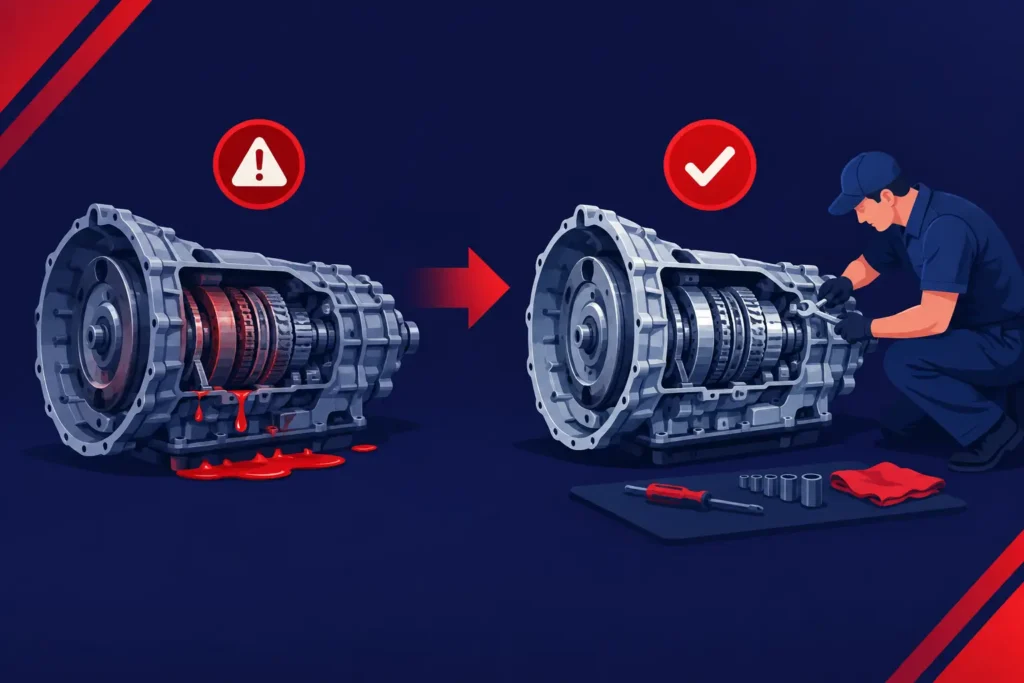
A transmission problem rarely begins with a dramatic breakdown. More often, it starts with a slight delay when shifting into drive, a shudder at cruising speed, or an engine that revs higher than expected before the vehicle moves. This transmission repair example shows why the right diagnosis matters just as much as the repair itself, especially when the vehicle is a European luxury car, a classic, or a performance-oriented model.
A customer brought in a late-model European sedan after noticing an intermittent hesitation on acceleration. The vehicle drove normally when cold, but after 20 to 30 minutes on the road, it would flare between gears and occasionally enter a reduced-power mode. The owner had already been told that the transmission might need to be replaced. That is a serious recommendation, and not one that should be made without evidence.
At MotorSport Prime, transmission work begins with careful testing, clear communication, and respect for the customer’s investment. A transmission can be one of the most complicated systems in a vehicle, but a complicated system does not automatically require the most expensive repair.
A Transmission Repair Example Starts With the Complaint
The first step was listening closely to what the owner experienced. The hesitation happened only after the car reached operating temperature. There was no constant grinding noise, no major fluid leak under the car, and no problem selecting reverse. Those details helped narrow the direction of the diagnosis.
A road test confirmed the concern. Under light throttle, the transmission shifted normally most of the time. Under moderate acceleration after the vehicle warmed up, however, the shift from one gear to the next became inconsistent. The engine speed would rise briefly before the gear engaged.
That symptom can point to internal wear, but it can also be caused by low fluid pressure, a sticking valve body component, a failing electrical solenoid, outdated transmission software, or fluid that has broken down over time. Replacing a complete transmission before separating those possibilities would be guesswork, not professional repair.
Testing Before Recommending Repairs
The next stage involved a full scan of the vehicle’s control modules. Modern automatic transmissions rely on communication between the transmission control unit, engine computer, sensors, and other systems. A stored fault code is useful, but it is only one piece of the story.
In this case, the scan revealed an intermittent pressure-control code. The technicians also reviewed live data while driving the vehicle, comparing commanded line pressure with actual pressure. When the hesitation occurred, the data showed that the transmission was struggling to maintain the pressure needed for a clean shift.
Fluid condition was checked as well. This is especially important because some transmissions do not use a simple dipstick. The fluid level must be verified at a specified temperature and through the manufacturer’s proper procedure. The fluid in this vehicle was darkened and had a noticeable burnt odor, but it did not contain a large amount of metal debris. That distinction mattered.
Heavy metal contamination may suggest severe internal damage. In this situation, the evidence pointed more strongly toward a hydraulic control issue and overdue fluid service rather than a completely failed transmission.
Why Fluid Service Is Not Always a Simple Drain and Fill
Transmission fluid does more than lubricate internal parts. It helps control hydraulic pressure, carries heat away from components, and allows clutch packs to apply smoothly. As fluid ages, heat and friction can reduce its ability to do those jobs.
For the sedan in this example, the repair plan included removing the transmission pan, replacing the filter, servicing the correct fluid, and inspecting the pan for debris. The valve body was then removed for further inspection. A worn pressure-regulating component and a sticking solenoid were found, both consistent with the test results.
This was not a situation where a fluid service alone would solve everything. It also was not a situation where the customer needed a full transmission replacement. The right repair was targeted: restore proper hydraulic control, renew the fluid and filtration, and verify the system’s operation afterward.
The Repair and the Result
The valve body components were repaired and replaced as needed, then reassembled to specification. The transmission received the correct manufacturer-approved fluid, filled at the proper temperature and level. Once the work was complete, the vehicle was scanned again, adaptations were addressed where appropriate, and the car went through an extended road test.
The shift flare was gone. The transmission moved through its gears smoothly under light and moderate throttle, and the reduced-power condition did not return. Most importantly, the owner received a clear explanation of what failed, what was repaired, and why a complete replacement was not recommended at that time.
That is the outcome vehicle owners should expect from transmission service: a repair based on diagnosis, not assumptions. It protects the car, avoids unnecessary expense, and gives the owner a realistic picture of the transmission’s condition.
When a Full Transmission Repair or Replacement Makes Sense
There are situations where a targeted repair is not enough. If a transmission has extensive internal damage, widespread metal contamination, badly burned clutches, cracked hard parts, or repeated failure after proper diagnostics, a rebuild or replacement may be the responsible choice.
A rebuild involves disassembling the transmission, inspecting internal components, replacing worn friction materials and seals, correcting damaged hard parts, and rebuilding the unit to proper standards. A replacement may make more sense when parts availability, vehicle usage, cost, or turnaround time make it the better path. The right option depends on the vehicle and the actual failure, not a one-size-fits-all rule.
Owners of European, exotic, and classic vehicles should be especially cautious about quick diagnoses. These vehicles can use specialized transmission designs, unique fluids, manufacturer-specific scan tools, and calibration procedures. A shop may be able to perform routine maintenance on a specialty vehicle, but transmission diagnosis requires deeper experience and the willingness to follow the correct process.
Warning Signs Worth Addressing Early
Transmission concerns are easier to manage when they are checked early. A small shift delay today can become clutch damage later if the transmission continues to slip. Heat is also a major concern. Once fluid overheats repeatedly, wear can accelerate quickly.
Pay attention if your vehicle starts to hesitate before moving, shifts harshly, slips between gears, shudders at steady speed, leaks reddish or dark fluid, makes unusual whining noises, or shows a transmission warning message. None of these symptoms guarantees the same repair, but each one deserves professional inspection.
It is also wise to follow the correct maintenance interval for your vehicle rather than assuming transmission fluid lasts forever. Some manufacturers describe their fluid as long-life, but real-world driving in Central Florida brings heat, traffic, stop-and-go use, and heavy air-conditioning loads. Those conditions can be harder on transmission fluid than ideal laboratory assumptions.
What Honest Transmission Service Looks Like
Good transmission repair is not about selling the largest job. It is about finding the cause, explaining the options, and performing work that supports long-term reliability. That may mean a fluid service, an electrical repair, valve body work, a full rebuild, or a replacement. It depends on what the vehicle is actually telling us through symptoms, inspection, and testing.
For drivers in Saint Cloud and the surrounding Central Florida area, the best next step is to bring in a vehicle when the first warning signs appear. A careful diagnosis can turn an uncertain shifting problem into a clear repair plan, helping you make a confident decision before a smaller issue becomes a much larger one.