
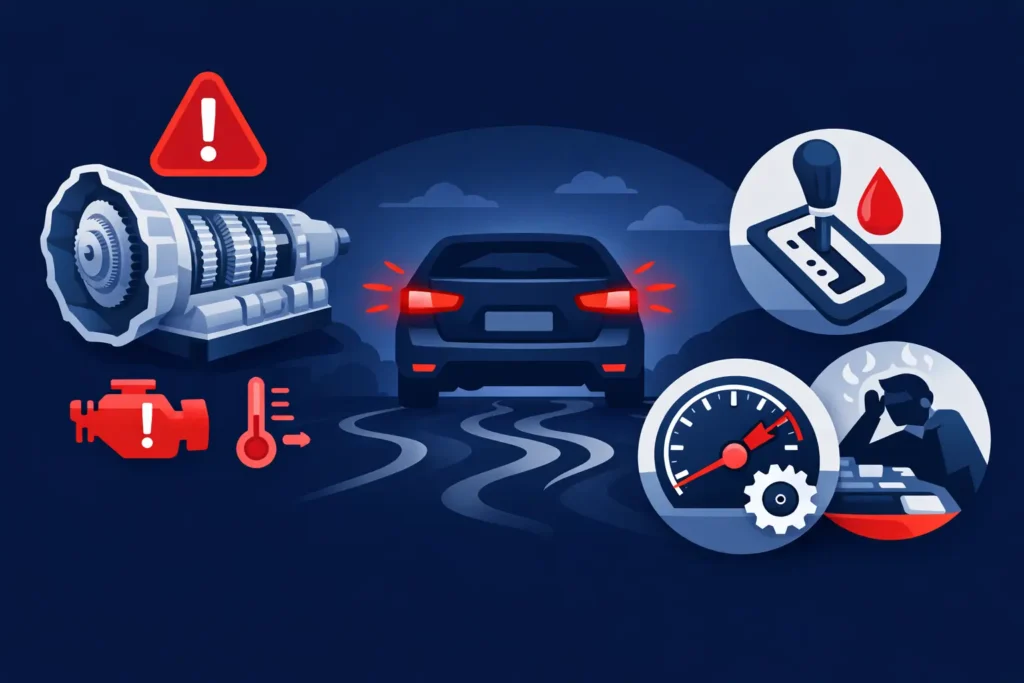
A transmission problem rarely starts with a dramatic breakdown. More often, it begins with a small change – a pause when shifting into drive, a shudder at a stoplight, or a gear change that just does not feel right. Knowing the best warning signs of transmission failure can help you act early, protect your vehicle, and avoid turning a repairable issue into a full replacement.
For many drivers, the hardest part is knowing what deserves attention and what can wait. That matters even more if you own a European car, an exotic model, a classic vehicle, or any car with a transmission that demands experienced diagnosis. Some symptoms point to a minor service need. Others are clear signs that internal damage may already be underway.
Why transmission symptoms should never be ignored
Your transmission is responsible for transferring engine power to the wheels at the right ratio for speed and load. When it begins to fail, performance, fuel economy, drivability, and long-term reliability all suffer. In automatic transmissions especially, small issues can escalate quickly if fluid pressure drops, clutches wear, or electronic controls stop responding correctly.
The tricky part is that transmission trouble does not always look dramatic at first. A vehicle may still drive, but each mile can add heat, wear, and contamination. Catching a problem early often means the difference between a fluid service, a targeted repair, or a much more expensive rebuild.
1. Delayed engagement when shifting into drive or reverse
One of the best warning signs of transmission failure is delayed engagement. You start the car, shift into drive or reverse, and the vehicle hesitates before moving. That pause may last only a second at first, but it often gets worse over time.
This symptom can point to low or degraded transmission fluid, internal seal problems, worn clutch packs, or valve body issues. In some cases, electronic faults are also involved. What matters is that a healthy transmission should respond promptly and smoothly. If engagement feels lazy, inconsistent, or harsh after the delay, it deserves professional attention.
2. Slipping gears under acceleration
A slipping transmission often feels like the engine is revving higher than it should without the expected increase in speed. You may press the gas pedal and notice the RPM rises, then the transmission catches late. On some vehicles, it can feel like the car briefly falls out of gear.
This is not something to watch for weeks and hope it improves. Gear slipping usually means the transmission is struggling to maintain proper hydraulic pressure or clutch holding power. Continued driving can create more internal heat and wear. If the slipping happens during uphill driving, highway merging, or stop-and-go traffic, the problem may become obvious very quickly.
3. Hard, jerky, or erratic shifting
Not every rough shift means the transmission is failing, but repeated harsh shifting is a serious warning sign. The car may bang into gear, lurch between shifts, or behave unpredictably at certain speeds. Sometimes the problem shows up only when the transmission is cold. Other times, it gets worse after the vehicle warms up.
There is some nuance here. Rough shifting can come from software issues, worn mounts, fluid condition, internal hydraulic faults, or sensor problems. Modern transmissions depend on accurate input from multiple systems, so diagnosis matters. The key is consistency. If your car shifts harshly again and again, it is telling you something is off.
4. Shuddering, shaking, or vibration while driving
A transmission shudder is often mistaken for an engine misfire, tire issue, or driveline problem. It may feel like a vibration during light acceleration, a shake at cruising speed, or a rumble as the transmission changes gears. Some drivers describe it as driving over a rough patch in the road that never quite goes away.
This symptom can be related to torque converter problems, deteriorated fluid, internal wear, or uneven clutch engagement. In specialty and performance vehicles, that distinction matters because the wrong repair can waste time and money. A proper inspection should separate transmission shudder from engine, suspension, or wheel-related vibration before parts are replaced.
5. Burning smell or overheated fluid
Transmission fluid has a very specific job. It lubricates, cools, and helps create the hydraulic pressure needed for shifting. When that fluid breaks down from age, heat, or internal damage, it can produce a sharp burning odor. That smell is a major red flag.
Overheating is especially hard on automatic transmissions. Heat damages seals, reduces fluid effectiveness, and accelerates wear on internal components. In Central Florida traffic and heat, this can become a bigger issue, particularly for vehicles that already have early shifting problems or overdue fluid service. If you notice a burnt smell after driving, or fluid that looks dark instead of clean and red or amber, do not ignore it.
6. Transmission fluid leaks
A transmission should not be losing fluid. If you see red, reddish-brown, or dark oily spots under your vehicle, a leak is possible. Some leaks are obvious. Others show up only after parking overnight or after the vehicle reaches operating temperature.
Leaks can come from seals, cooler lines, pans, gaskets, connectors, or the torque converter area. On older vehicles and classics, age-related seal hardening is common. On newer vehicles, a small leak can still create a big problem if fluid level drops enough to affect pressure. Unlike some minor engine oil seepage, transmission leaks usually demand quicker action because low fluid can lead directly to slipping, overheating, and internal damage.
7. Warning lights and limp mode
Dashboard lights are not always precise, but they should never be dismissed. A check engine light, transmission warning message, or sudden limp mode operation can indicate the control system has detected a fault. Limp mode typically reduces performance and limits gear changes to protect the transmission from further damage.
This is where experience matters. Trouble codes do not automatically mean the transmission itself is ruined. Sometimes the issue is a speed sensor, solenoid, wiring fault, or control module problem. Other times, the codes confirm internal mechanical failure. Honest diagnosis is the difference between fixing the actual cause and replacing parts that were never the problem.
8. Unusual noises in neutral, drive, or during shifting
Whining, humming, clunking, or grinding sounds can all point toward transmission trouble, especially when they occur during gear changes or under load. A whining noise may suggest pump or fluid flow issues. A clunk can signal excessive wear or engagement problems. Grinding is more serious and may indicate internal damage that should be inspected right away.
Noise diagnosis can be tricky because wheel bearings, differentials, axles, and engine accessories can create similar sounds. Still, if the noise changes when you shift gears or appears alongside slipping, hesitation, or shuddering, the transmission should be checked before the condition worsens.
What to do when you notice the best warning signs of transmission failure
The right next step depends on the symptom, the vehicle, and how severe the problem feels. If the transmission is slipping badly, refusing to engage, or making severe noises, driving it further can raise the final repair cost. Having it inspected early gives you more options.
It is also smart to avoid self-diagnosing based on one symptom alone. A delayed shift and a harsh shift can come from different root causes, and some problems overlap with engine performance or drivability faults. That is why a careful road test, fluid inspection, scan data review, and hands-on diagnosis matter so much.
At MotorSport Prime, this is exactly where experienced transmission work makes a difference. Vehicles with complex automatic systems, European platforms, classics, and higher-end models often need more than a quick code scan. They need technicians who understand how the transmission behaves, how the system is supposed to respond, and when a repair is possible versus when a rebuild is the smarter long-term solution.
When early service can save the transmission
Not every symptom means the unit is finished. In some cases, contaminated or overdue fluid, a failing solenoid, a leaking seal, or an electrical issue can be addressed before major internal damage occurs. That is the best-case scenario, but timing matters.
Wait too long, and a serviceable problem can turn into clutch damage, overheating, metal contamination, or complete failure. That is why honesty is so important in transmission repair. You want a shop that will tell you when a maintenance service is enough, when a repair makes sense, and when replacement is the only reliable path forward.
If your vehicle has started shifting differently, hesitating, leaking, or shaking, trust that instinct. Cars usually give warnings before they leave you stranded. Paying attention now can protect your investment, preserve performance, and give you a better chance at a simpler repair later.