
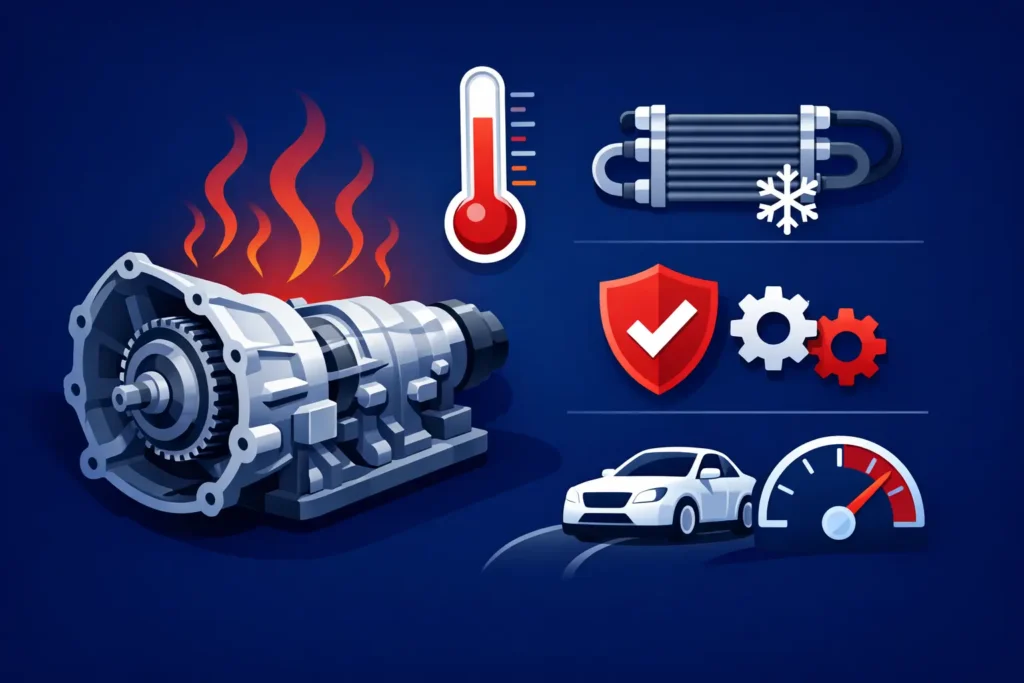
A transmission can run hot long before the driver notices a problem. In Central Florida, high ambient temperatures, stop-and-go traffic, heavy loads, and long idle periods can all raise transmission temperature quickly. The best ways to prevent transmission overheating come down to proper fluid care, sensible driving habits, and addressing small warning signs before heat turns them into internal damage.
Automatic transmissions rely on transmission fluid for far more than lubrication. The fluid carries heat away from internal components, helps control hydraulic pressure, and allows clutch packs to apply smoothly. Once fluid overheats, it can lose its protective properties, accelerate wear, and leave behind debris that affects valves, solenoids, seals, and friction materials.
Why transmission heat causes expensive damage
A little heat is normal. Modern transmissions are designed to operate at controlled temperatures, and many vehicles use a heat exchanger in the radiator or a dedicated transmission cooler to manage that heat. Trouble begins when temperatures remain elevated for too long or spike repeatedly under load.
Excessive heat can darken and oxidize transmission fluid. As the fluid breaks down, internal parts receive less protection and clutch material can begin to wear faster. That wear creates contamination, which then circulates through the system. What starts as a cooling or maintenance issue can eventually lead to slipping, harsh shifting, delayed engagement, or a complete transmission failure.
European luxury vehicles, high-performance cars, and older classics each deserve a tailored approach. Some need a specific manufacturer-approved fluid, while others have cooling systems or service procedures that require careful attention. Using a universal fluid or guessing at the proper level can create problems rather than solve them.
Keep transmission fluid in proper condition
Follow the correct service interval, not just a guess
Transmission fluid is not a lifetime fluid in the practical sense. Heat, mileage, driving conditions, towing, and age all affect how long it can protect the transmission. A vehicle used mostly for short trips, city driving, hauling, or Florida summer traffic may need service sooner than one driven lightly on the highway.
The right interval depends on the vehicle, its transmission design, and how it is used. A professional inspection can assess fluid color, odor, level, leaks, shift quality, and diagnostic data rather than relying on a one-size-fits-all schedule. This is especially valuable when buying a used vehicle with an uncertain maintenance history.
Use the exact fluid your transmission requires
Transmission fluids are not interchangeable simply because they are red or labeled for automatic transmissions. Fluid specifications affect friction characteristics, viscosity, additives, and compatibility with seals and electronic controls. The wrong fluid can contribute to poor shifts, clutch wear, and heat-related issues.
Many late-model transmissions also require the fluid level to be checked at a precise operating temperature. An overfilled or underfilled transmission can both overheat. Correct service means using the right fluid, setting the level by the manufacturer procedure, and checking for the reason the fluid became low in the first place.
Repair leaks early
A small leak can become a major problem when fluid level drops enough to affect pressure and cooling. Look for fresh fluid around the transmission pan, cooler lines, axle seals, or beneath the vehicle after it has been parked. Not every transmission fluid is bright red, so any unexplained fluid spot deserves a closer look.
A leak repair is usually far more manageable than internal transmission work caused by running low on fluid. It also protects the environment and keeps the underbody from accumulating oily residue that can hide other issues.
Make sure the cooling system can do its job
Your engine cooling system and transmission cooling system are often connected. If the radiator is restricted, coolant is low, cooling fans are failing, or the engine itself is running hot, the transmission may struggle to shed heat as well.
Pay attention to engine temperature warnings, weak cooling fans, coolant leaks, and a radiator that is overdue for service. A transmission cooler line that is kinked, leaking, or restricted can also prevent proper fluid flow. On vehicles used for towing, commercial work, or repeated heavy loads, an appropriate auxiliary cooler may be worthwhile. It should be selected and installed correctly for the vehicle and its intended use, not added as a substitute for repairing an existing fault.
Drive with heat in mind when conditions are demanding
Hard acceleration, steep grades, towing, sand, heavy cargo, and bumper-to-bumper traffic all create more transmission heat. That does not mean you cannot use your vehicle for the work it was built to do. It means driving within its ratings and giving the transmission the right conditions to manage the load.
When towing, confirm the vehicle’s tow rating and use the recommended tow or haul mode if equipped. That mode often adjusts shift timing and converter lockup to reduce unnecessary heat. On long grades, avoid letting the transmission repeatedly hunt between gears. Selecting a lower gear when appropriate can help maintain steadier operation.
If you notice a burning smell, slipping, delayed engagement, or a sudden change in shift quality while under load, reduce the demand on the vehicle and have it inspected. Continuing to tow or drive aggressively through a transmission warning can turn a repairable issue into a rebuild or replacement.
Do not ignore early signs of overheating
Transmission trouble is not always dramatic. A driver may first notice a shudder when accelerating, rough shifts after the vehicle warms up, slow engagement when shifting into Drive or Reverse, or a warning light that appears only during hot weather. Some vehicles may enter a reduced-power or fail-safe mode to protect the transmission.
These symptoms can come from several causes, including a fluid issue, cooling restriction, failing solenoid, sensor fault, internal wear, or an engine-related drivability problem that affects how the transmission operates. Accurate diagnosis matters. Replacing parts without testing pressures, scan data, fluid condition, and related systems can waste money and miss the actual cause.
Get a real diagnosis before choosing a repair
A transmission service is valuable preventive maintenance, but it is not a cure-all. If the transmission is already slipping, producing metal debris, or setting fault codes, it needs a proper evaluation before deciding whether service, repair, rebuild, or replacement is the best path forward.
At MotorSport Prime, transmission concerns are approached with the respect high-value vehicles deserve. Experienced technicians look beyond a symptom to identify the underlying cause, explain the findings clearly, and recommend only the work that supports reliable results. That is particularly important for European, exotic, and classic vehicles where correct parts, fluids, and procedures make a real difference.
A practical maintenance habit that pays off
Ask for a transmission inspection as part of routine vehicle maintenance, especially before a road trip, towing season, or the hottest part of the year. A thorough check can catch low or deteriorated fluid, leaks, cooling concerns, stored transmission codes, and shift-quality changes while there is still time to prevent larger damage.
Transmission overheating is often preventable, but it rarely gets better by being ignored. Give the vehicle the correct fluid, a healthy cooling system, and prompt professional attention when something feels different. That care helps preserve the smooth, confident performance you expect every time you put the vehicle in gear.