
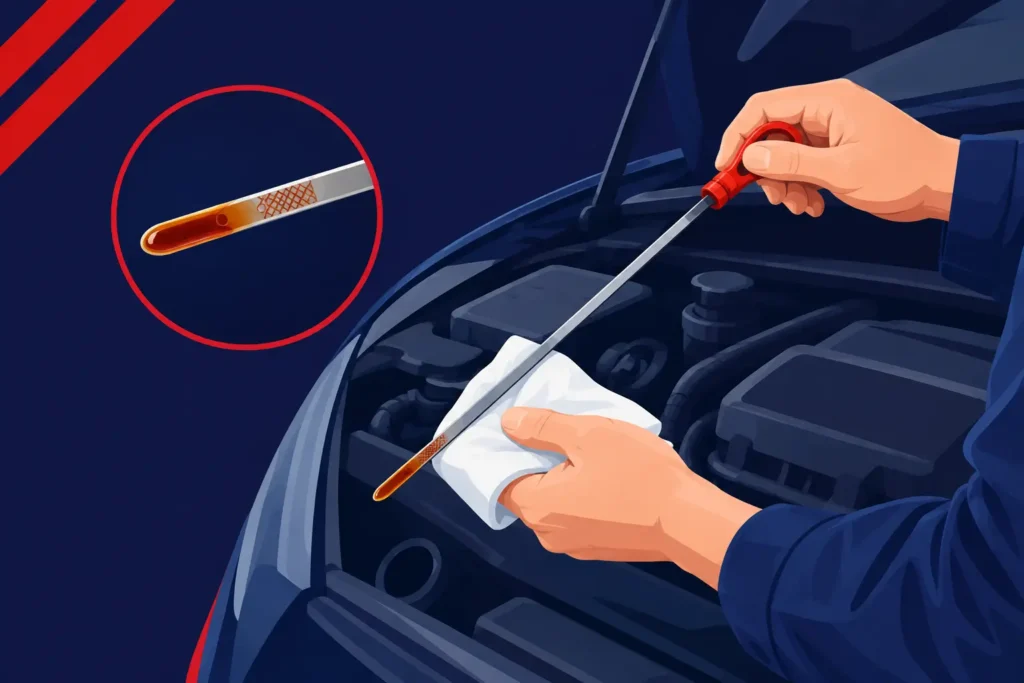
A transmission can feel perfectly normal right up until it does not. A delayed shift leaving a Saint Cloud intersection, a faint shudder at highway speed, or a new hesitation when selecting Drive can all be early clues. Knowing how to check transmission fluid gives you a useful first look, but the correct procedure depends heavily on the vehicle. On many late-model European, luxury, exotic, and performance vehicles, a quick driveway dipstick check simply is not possible – or reliable.
Before You Check Transmission Fluid, Know Your System
Older automatic transmissions commonly use a serviceable dipstick tube, much like an engine oil dipstick. Many newer vehicles use a sealed transmission design instead. “Sealed” does not mean the fluid lasts forever or cannot be checked. It means the fluid level is verified through a fill or level plug at a specific transmission temperature, often with the vehicle level and a diagnostic scan tool monitoring fluid temperature.
That difference matters. Adding fluid to a sealed unit without following the manufacturer’s procedure can leave it overfilled or underfilled. Either condition can cause shifting problems, leaks, overheating, foaming, or internal damage.
Your owner’s manual is the first place to confirm whether your vehicle has a transmission dipstick and what fluid specification it requires. Never assume transmission fluid is universal because it is red. Some approved fluids are amber, blue, green, or nearly clear, and using the wrong type can affect shift quality and clutch operation.
How to Check Transmission Fluid With a Dipstick
If your vehicle has a transmission dipstick, you can perform a basic condition and level check at home. The exact instructions vary, but this process is appropriate for many conventional automatic transmissions.
First, park on level ground. A sloped driveway can produce a misleading reading. Set the parking brake, keep the vehicle in Park, and make sure the area around the dipstick tube is clean. Dirt that falls into the tube can create problems inside the transmission.
Most vehicles require the transmission to be fully warm before checking. Take a normal 15- to 20-minute drive so the fluid reaches operating temperature. With the engine idling and your foot firmly on the brake, move the shifter slowly through each gear position. Pause briefly in every gear, then return to Park. This circulates fluid through the transmission passages and torque converter.
Remove the transmission dipstick, wipe it with a clean lint-free cloth, reinstall it fully, and remove it again. Read the level against the marks on the dipstick. Many dipsticks have separate ranges for cold and hot fluid. If you have driven the vehicle to operating temperature, use the hot range.
The fluid should sit within the indicated range, not far below it and not above it. A slight difference around the marks may not be an emergency, but a low reading deserves attention. Transmission fluid does not get consumed in normal operation the way engine oil can. If the level is low, there may be an external leak, a service issue, or another concern worth diagnosing.
Do not top it off just to make the reading look perfect unless you are certain of the approved fluid and the correct procedure. A small overfill can be just as harmful as running low.
What Healthy Transmission Fluid Looks and Smells Like
New fluid often appears red or reddish amber, though color varies by manufacturer. More than color, pay attention to the fluid’s clarity, odor, and feel. Healthy fluid is generally clean and has a mild petroleum smell.
Fluid that is dark brown, smells burnt, looks milky, or contains visible metallic debris should be evaluated by a transmission professional. Dark fluid alone does not automatically mean the transmission needs replacement. It may indicate overdue service, heat exposure, or normal aging. But burnt odor and debris can point to clutch wear, overheating, or internal mechanical trouble.
Milky fluid is especially concerning because it can indicate coolant or water contamination. That calls for prompt diagnosis. Continuing to drive with contaminated fluid can damage internal components quickly.
Checking Fluid on a Sealed Transmission
A sealed transmission is not a do-it-yourself shortcut. Many modern vehicles require a specific fluid temperature range – sometimes within only a few degrees – before the level can be accurately set. The technician may need to raise the vehicle on a level lift, remove an underbody panel, connect a scan tool, cycle the gears, and open the level plug while the engine is running.
This is common on many European vehicles and is increasingly common across domestic and Asian makes as well. Some dual-clutch transmissions, continuously variable transmissions, and advanced automatic units have their own unique procedures and fluid requirements.
The practical takeaway is simple: do not assume a sealed transmission has no service needs, and do not remove plugs underneath the transmission unless you know exactly which plug you are opening. On some designs, removing the wrong plug can drain fluid rather than check it.
At MotorSport Prime, proper fluid checks are handled as part of a wider inspection. A level reading is useful, but it means more when paired with a leak inspection, a road test when appropriate, diagnostic fault-code scanning, and an honest conversation about how the vehicle has been shifting.
Signs You Should Schedule a Transmission Inspection
A fluid check can reveal a low level or poor fluid condition, but it cannot identify every transmission problem. Modern transmissions use electronic controls, solenoids, sensors, valve bodies, clutch packs, and adaptive programming. A normal-looking fluid sample does not rule out a mechanical or electronic fault.
Schedule an inspection if you notice any of these concerns:
- Delayed engagement when shifting into Drive or Reverse
- Slipping, flare-ups, shuddering, or harsh shifts
- Red, brown, or clear fluid spots under the vehicle
- A burning smell, transmission warning light, or check engine light
- Whining, grinding, or unusual noises that change with gear selection
Do not wait for a small symptom to become a no-drive situation. Early diagnosis may lead to a fluid service, connector repair, software-related correction, or seal repair. Waiting can allow overheating or clutch damage to turn a manageable repair into a major rebuild or replacement.
Should You Change the Fluid If It Looks Dark?
It depends on the vehicle, its maintenance history, and the symptoms. A properly performed transmission fluid service can support smooth operation and long-term reliability when it follows the manufacturer’s specification. This may involve draining and refilling fluid, replacing a filter or pan gasket where applicable, and correctly setting the final level.
However, a fluid change is not a cure for an actively failing transmission. If the vehicle is slipping severely, has metal in the fluid, or has stored transmission fault codes, diagnosis should come first. Honest transmission service means identifying the cause rather than selling a service that may not address the problem.
Be cautious with any one-size-fits-all flush recommendation, particularly on a high-mileage vehicle with unknown service history. Some transmissions benefit from a specific exchange process; others are better served by a controlled drain-and-fill procedure. The right choice comes from the manufacturer’s requirements and the transmission’s actual condition.
A Small Check That Can Prevent a Big Repair
Checking transmission fluid is worthwhile because fluid carries heat, lubricates moving parts, and helps the transmission apply clutches smoothly. Still, the goal is not simply to see red fluid on a dipstick. The goal is to catch leaks, contamination, overheating, and shifting concerns before they threaten the reliability of the vehicle you depend on.
If the procedure feels uncertain, the fluid level is low, or your vehicle is showing any change in how it drives, let an experienced technician inspect it before adding fluid or choosing a service. A careful diagnosis protects both your transmission and your confidence behind the wheel.