
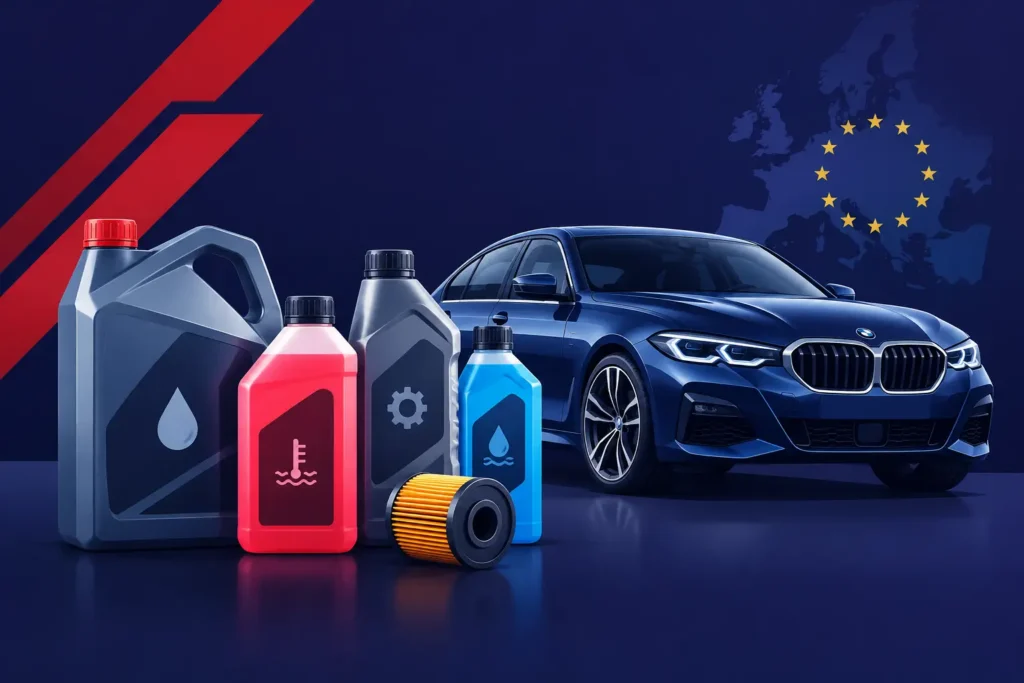
A European car can run perfectly with a fluid that looks right on the shelf, then develop expensive problems because that fluid was not right for its exact specification. That is why choosing the best fluids for European cars is not about buying the most expensive bottle or trusting a universal label. It is about matching the factory-required approval, viscosity, and service procedure to the vehicle in front of you.
For owners in Central Florida, heat, humidity, stop-and-go traffic, and hard-working air conditioning systems make that attention even more valuable. Fluids do more than lubricate moving parts. They manage heat, protect seals, prevent corrosion, operate hydraulic systems, and help sophisticated modules and transmissions perform as designed.
Why European Cars Need Specification-Matched Fluids
Many European manufacturers engineer engines, cooling systems, brake systems, and automatic transmissions around tightly defined fluid requirements. A BMW, Mercedes-Benz, Audi, Volkswagen, Porsche, Volvo, or Land Rover may use a fluid with a very specific additive package or friction characteristic that is not interchangeable with a generic alternative.
The issue is not that every aftermarket fluid is poor quality. Many are excellent. The key is whether the product carries the required manufacturer approval or is clearly documented as meeting the exact specification for your vehicle. “Compatible with” can mean something different from “approved for,” and that distinction matters most on newer European vehicles and complex transmission systems.
Using the wrong fluid may not cause an immediate breakdown. More often, it creates gradual wear, rough shifting, reduced fuel economy, leaks from seal incompatibility, sludge, corrosion, or trouble codes that become harder to trace later. Proper fluid selection is preventive maintenance with a real payoff: reliable operation and fewer surprises.
The Best Fluids for European Cars by System
There is no single best brand or product for every European vehicle. The best choice depends on the year, engine, transmission, options, and factory specification. A professional shop should verify those details by VIN, service information, and the labels or part numbers already used in the vehicle.
Engine Oil: Approval Matters More Than Marketing
European engines often require full synthetic oil, but “full synthetic” alone is not enough. Oil must meet the manufacturer’s stated standard, such as a BMW Longlife approval, Mercedes-Benz MB approval, Volkswagen/Audi VW specification, or Porsche approval. The viscosity also matters. A 0W-20, 0W-30, 5W-30, or 5W-40 may all be appropriate in different engines, but they are not automatically interchangeable.
Modern turbocharged engines are especially sensitive to oil quality and change intervals. Their oil handles high temperatures, protects turbocharger bearings, manages deposits, and supports variable valve timing systems. On an older European classic, the requirements may be different again, particularly if the engine was designed before modern low-ash oils became common.
For Florida drivers, short trips and high ambient temperatures can be tough on engine oil. Following the correct oil specification and using a realistic service interval based on driving conditions is more useful than stretching an oil change to the longest possible interval.
Coolant: Color Is Not a Specification
Coolant is one of the most misunderstood fluids in European cars. Blue, pink, purple, green, and yellow coolants can all appear in the same shop, but color is not a reliable way to identify compatibility. Different coolant chemistries protect different metals, plastics, gaskets, radiators, and water pumps.
The best coolant is the one that meets the vehicle manufacturer’s required formula. Mixing coolants simply because their colors look similar can weaken corrosion protection or create contamination that requires a complete cooling-system flush. This is particularly important on vehicles with aluminum components, plastic cooling fittings, and electrically controlled water pumps.
A coolant service should also include an inspection for leaks, brittle hoses, aging expansion tanks, weak caps, and water-pump concerns. Fresh coolant cannot solve a mechanical issue, but it helps preserve a sound cooling system in Florida’s demanding climate.
Brake Fluid: Small Service, Major Safety Benefit
Brake fluid absorbs moisture over time. That is normal, but excess moisture lowers the boiling point and can contribute to internal corrosion in brake calipers, lines, master cylinders, and ABS components. European vehicles commonly specify DOT 4 brake fluid, including low-viscosity formulations for certain electronic brake and stability systems. Some performance models require a higher-temperature fluid.
The right brake fluid is not necessarily the highest racing specification available. Track-focused fluid can be excellent for severe use, but it may need more frequent replacement and may not be the best value for a daily driver. For most owners, the right move is a complete brake-fluid flush with the exact required fluid at the manufacturer’s recommended interval.
A proper service removes old fluid from the system rather than only exchanging the fluid in the reservoir. This protects braking performance and gives a technician an opportunity to inspect pads, rotors, hoses, calipers, and electronic brake components.
Transmission Fluid: Never Guess
Transmission fluid is where a one-size-fits-all approach can become especially costly. Automatic transmissions, dual-clutch units, continuously variable transmissions, and transfer cases each depend on precise fluid properties. The fluid controls hydraulic pressure, clutch engagement, cooling, lubrication, and shift quality.
A transmission may be built by ZF, Aisin, Mercedes-Benz, Getrag, or another manufacturer, but the correct service fluid must still be confirmed for the specific application. Even two vehicles using transmissions from the same manufacturer may have different fluid requirements. The wrong fluid can lead to delayed engagement, harsh shifts, shudder, clutch damage, or internal wear.
Service method matters as much as fluid choice. Many European transmissions require the fluid level to be set at a specific temperature with the vehicle level and the engine running. Some use serviceable filters or integrated transmission pans; others have procedures that require specialized scan tools. A drain-and-fill can be the best maintenance option in many situations, while a flush is not appropriate for every transmission, especially one with existing internal problems.
If a transmission is shifting poorly, diagnosis should come before a fluid service. Fresh fluid cannot repair worn clutch packs, a valve-body fault, or an electronic control issue. Honest recommendations begin with identifying the cause rather than selling a service that will not fix the problem.
Power Steering, Differential, and Transfer Case Fluids
These fluids are easy to overlook because they are not always serviced as frequently as engine oil. Yet they play a major role in steering feel, gear protection, and all-wheel-drive performance. Some European power steering systems use hydraulic fluid that is not compatible with standard ATF. Differentials may require conventional gear oil, limited-slip additive packages, or electronically controlled differential fluids.
Transfer cases are another common source of confusion. Their fluid can be unique, and skipping its service interval can contribute to binding, noise, warning lights, or costly drivetrain repairs. The best plan is to treat these systems as part of the vehicle’s complete maintenance schedule, not as lifetime-fill components that never need attention.
How to Make the Right Fluid Decision
Start with the owner’s manual, but do not stop there. Manufacturer recommendations can change by engine code, production date, transmission version, and market. A qualified technician should confirm the exact specification before adding or replacing fluid.
Be cautious with universal fluids and bargain service packages. A quality multi-vehicle fluid may be appropriate when it explicitly meets the required specification, but a vague “European formula” label is not enough proof. Keeping service records also helps protect the vehicle’s resale value and makes future diagnostics more straightforward.
At MotorSport Prime, fluid service is approached as part of protecting the entire system, not as a quick add-on. The goal is simple: use the right product, follow the right procedure, inspect for developing issues, and give owners a clear explanation of what their car needs and why.
The best time to address fluids is before a warning light, overheating event, or shifting problem forces the issue. A correctly specified service today is one of the most practical ways to keep a European vehicle performing with the confidence its engineers intended.