
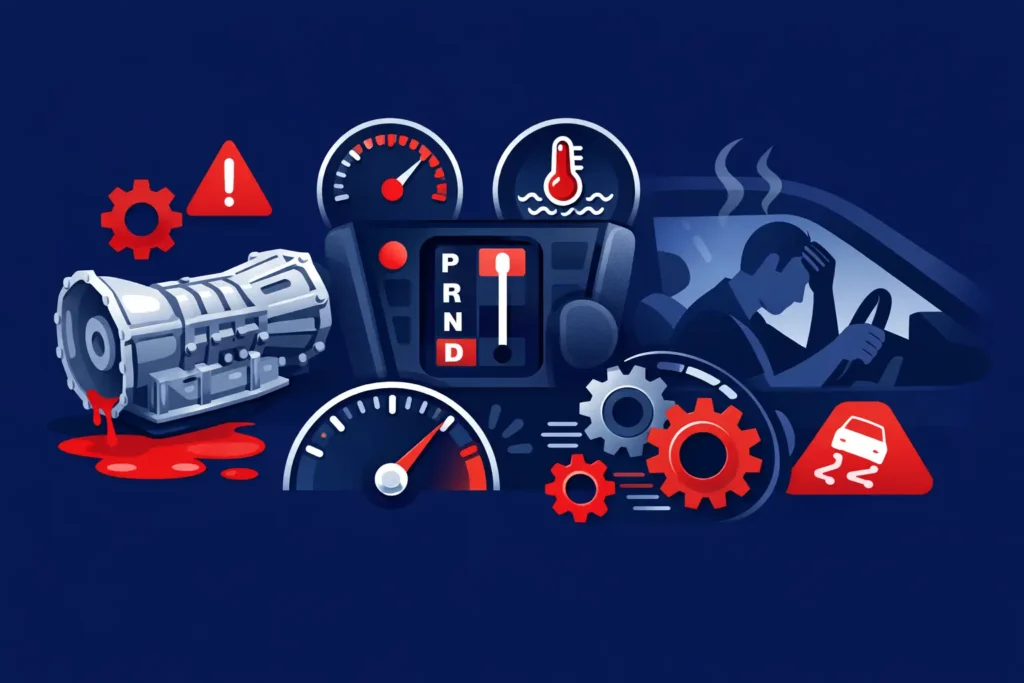
A car that suddenly hesitates leaving a stoplight, bangs into gear, or revs higher than normal before moving is trying to tell you something. If you are asking what are transmission failure symptoms, the short answer is this: the signs usually show up in the way the vehicle shifts, responds, sounds, and leaks long before the transmission quits completely.
That matters because transmission problems rarely get cheaper with time. A small fluid leak, a worn solenoid, or early clutch pack wear can sometimes be handled before the damage spreads. Wait too long, and what could have been a repair may turn into a rebuild or full replacement.
What are transmission failure symptoms you should never ignore?
The most common symptom is delayed engagement. You shift into Drive or Reverse, press the brake, release it, and the car takes an extra second or two to respond. Healthy transmissions should engage with confidence. A delay can point to low fluid, internal wear, valve body issues, or pressure loss inside the unit.
Harsh shifting is another big warning sign. If the vehicle slams into gear, jerks during upshifts, or feels unusually rough on downshifts, the transmission may be struggling to apply the correct gear at the correct time. Sometimes this is related to worn internal components. Sometimes it is an electronic control issue. On many modern European vehicles, the difference matters because software, sensors, and hydraulic control all work together.
Slipping is one of the clearest answers to what are transmission failure symptoms. In real-world driving, slipping feels like the engine revs climb but the car does not accelerate the way it should. You may notice this when merging, climbing a hill, or cruising at steady speed. It can feel subtle at first, especially if the problem only happens under load. Left alone, slipping can create more heat and accelerate internal damage.
Then there is shuddering. A shudder can feel like driving over a rumble strip for a moment during acceleration or at cruising speed. Drivers often mistake this for an engine problem, a tire issue, or even bad road surface. In some vehicles, though, it can come from torque converter problems, worn fluid, or internal transmission wear.
Common signs the transmission may be failing
Fluid leaks are easy to overlook because many owners do not inspect the area where they park. If you see red, reddish-brown, or dark fluid under the car, have it checked. Clean transmission fluid is usually bright and clear. Burnt, dark, or contaminated fluid can suggest overheating or wear inside the unit. Not every leak means the transmission is failing, but every leak deserves attention.
A burning smell is another signal. Transmission fluid does more than lubricate. It also helps manage heat and hydraulic pressure. When fluid breaks down or the transmission runs hot, the smell can become sharp and burnt. That does not automatically mean the entire unit is done, but it does mean something is wrong.
Warning lights also matter. A check engine light can be triggered by transmission-related faults, shift solenoid issues, gear ratio errors, and communication problems between modules. The light itself does not confirm internal failure, but it should never be brushed off, especially if it shows up with poor shifting behavior.
Unusual noises can point in the same direction. Whining, humming, clunking, or grinding while shifting or driving may indicate internal wear, low fluid, or component damage. The exact noise matters, and when it happens matters too. A noise in Park is different from a noise under load in third gear. That is why a proper diagnosis beats guessing.
Not every symptom means total transmission failure
This is where honest diagnostics make a difference. Some symptoms that feel serious are caused by serviceable problems. Low or degraded fluid, a leaking pan gasket, a faulty speed sensor, a bad solenoid, or software calibration issues can all affect shift quality.
Other times, the symptoms do point to major internal wear. Burnt fluid combined with slipping, delayed engagement, and metal debris in the pan is a different conversation. At that stage, repair options may be limited. The best path depends on the vehicle, the transmission design, the extent of damage, and how long the problem has been present.
That is especially true for European, exotic, and classic vehicles. These cars often require a more precise diagnostic approach than a general repair shop is prepared to offer. The wrong fluid, the wrong test procedure, or a rushed diagnosis can send you down an expensive path that does not fix the real problem.
What causes transmission failure symptoms?
Heat is one of the biggest enemies of any automatic transmission. Excess heat breaks down fluid, reduces lubrication quality, and stresses seals and internal friction materials. Towing, stop-and-go traffic, aggressive driving, cooling system issues, and overdue maintenance can all contribute.
Fluid neglect is another major factor. Many owners are told their transmission fluid is “lifetime” fluid, but in the real world, fluid condition still matters. Over time, fluid can degrade, collect contaminants, and lose the properties the transmission depends on. Service intervals vary by manufacturer and by how the vehicle is driven.
Internal wear is inevitable with enough age and mileage. Clutch packs wear down. Seals harden. Solenoids fail. Valve bodies develop problems. On older or specialty vehicles, parts availability and transmission design can also affect what repair makes sense.
Electrical and control issues can create symptoms that mimic mechanical failure. A transmission control module problem, wiring fault, sensor issue, or software error can lead to poor shift timing, limp mode, or incorrect gear engagement. That is why scanning codes is only the beginning, not the whole diagnosis.
When to stop driving and get it inspected
If the vehicle will not go into gear, slips badly, makes grinding noises, or shows signs of significant fluid loss, do not keep driving it. The same goes for severe shuddering, repeated overheating behavior, or a transmission warning that puts the car into limp mode. Continuing to drive can turn a contained issue into widespread internal damage.
If the symptoms are milder, such as occasional hesitation or one rough shift per trip, do not panic – but do not wait months either. Early diagnosis gives you more options. It can mean the difference between a service and a major repair bill.
A good shop should road test the car, inspect fluid condition, check for leaks, scan for codes, and evaluate whether the issue is hydraulic, electrical, mechanical, or a combination. That process matters more than a quick guess from the front counter.
What to expect from a proper diagnosis
A quality transmission diagnosis should be clear, not mysterious. You should understand what the technician found, what tests were performed, and what the realistic repair options are. In some cases, the right recommendation is a fluid service and re-evaluation. In others, the honest answer is that the transmission needs internal repair or replacement.
There is no one-size-fits-all rule. A late-model luxury vehicle with electronic shift complaints may respond to a targeted repair. A high-mileage unit with multiple failure symptoms and burnt fluid may not. Craftsmanship matters here because transmission work is not just about replacing parts. It is about understanding the whole system and doing the job to a standard you can trust.
At MotorSport Prime, we have seen how often customers come in after being told to either ignore the issue or replace everything. The truth is usually more precise than that. Careful diagnostics, the right repair path, and straightforward communication are what protect both your car and your wallet.
If your car is showing signs that something feels off, trust that instinct. Transmission problems tend to whisper before they shout, and catching them early gives you the best chance at a better outcome.