
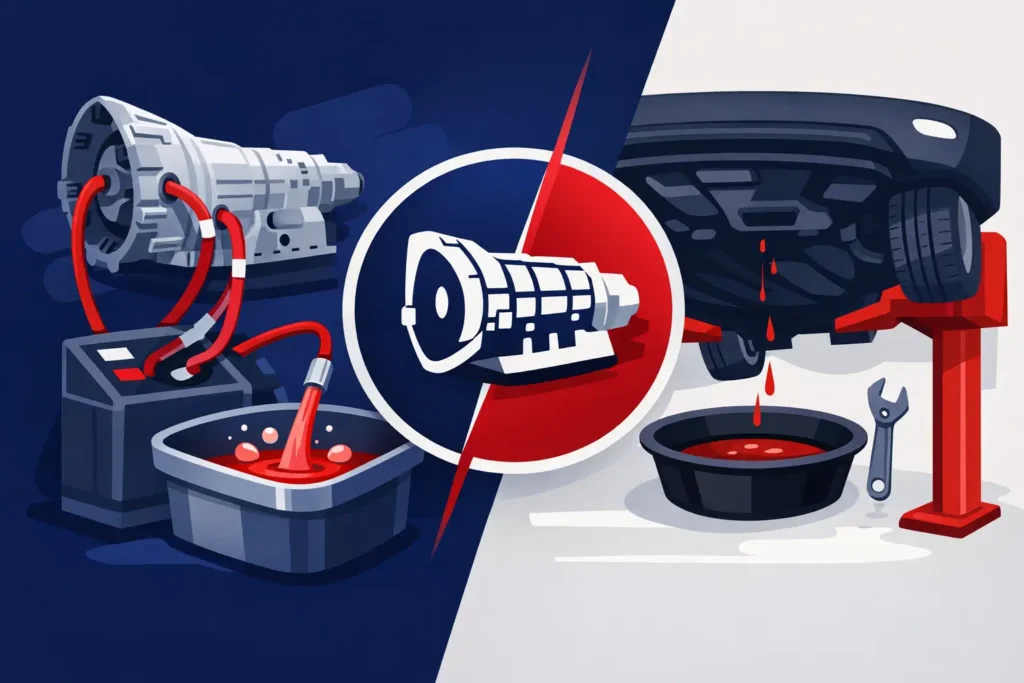
A transmission service is not one-size-fits-all, especially on European luxury vehicles, classics, and performance cars. The transmission flush vs drain decision should be based on your vehicle’s manufacturer requirements, service history, transmission condition, and the type of fluid system it uses – not on a blanket recommendation.
A proper service can help protect smooth shifting, reduce heat-related wear, and support long-term reliability. The wrong approach, fluid, or service interval can create expensive problems. That is why an experienced transmission technician starts with the vehicle in front of them, then recommends the service that makes sense for that specific system.
Transmission Flush vs Drain: The Core Difference
A transmission drain service removes fluid that can be released through the drain plug or by removing the transmission pan. Because much of the fluid remains inside the torque converter, valve body, cooler lines, and internal passages, a drain generally replaces only part of the total fluid capacity.
A transmission flush uses specialized equipment to exchange a much larger percentage of the old fluid for new fluid. As fresh fluid enters the system, old fluid is pushed out through the transmission’s fluid path. Depending on the transmission design and service procedure, a flush may replace nearly all of the old fluid.
Neither option is automatically “better.” A drain is often the correct maintenance procedure for many vehicles. A flush can be useful when it is approved for the transmission and performed properly. The key is following the manufacturer’s specification while considering how the vehicle has been maintained.
When a Transmission Drain Makes Sense
A drain and refill is commonly recommended as routine preventive maintenance. It is a controlled service that refreshes a portion of the fluid without aggressively exchanging the entire system at once.
For many transmissions, especially those with a removable pan and serviceable filter, this is an excellent opportunity to inspect what is happening inside. Removing the pan can reveal clutch material, metal debris, damaged magnets, leaks, or other signs that the transmission needs more than fresh fluid. A filter replacement may also be part of the job, depending on the design.
Drain services are often well suited for vehicles with unknown service history, older vehicles, and transmissions that are operating normally but are overdue for maintenance. In some cases, several drain-and-refill services performed at appropriate intervals can gradually renew a larger share of the fluid while keeping the service conservative.
Many modern European vehicles use sealed or semi-sealed transmission systems that require a precise fill procedure. Fluid temperature, vehicle level, scan-tool data, and exact fluid specifications can all matter. Adding the wrong amount of fluid, or checking the level at the wrong temperature, can affect shift quality and transmission life.
When a Transmission Flush May Be Appropriate
A flush may be appropriate for a transmission that has been consistently serviced, has no active drivability concerns, and is approved by the manufacturer for fluid exchange. It can be a practical way to replace heavily aged fluid throughout more of the system.
This may benefit a vehicle that sees demanding Central Florida conditions. Heat, stop-and-go traffic, towing, spirited driving, and frequent short trips all put extra stress on automatic transmission fluid. Over time, fluid loses its ability to manage heat, lubricate internal components, and support proper hydraulic pressure.
A professional flush should never be treated as a quick upsell. The technician should verify the fluid type, inspect the existing fluid, check for transmission codes or shift concerns, and confirm whether a flush is suitable for the vehicle. Some transmissions require a specific factory procedure, while others are better served by a pan service or drain and refill.
The machine matters less than the knowledge behind it. A fluid exchange performed with incorrect fluid or excessive pressure is not quality maintenance. Expert service means using the right process for the transmission, not forcing every vehicle into the same service package.
Can a Flush Cause Transmission Problems?
This question comes up often, and the honest answer is that it depends on the condition of the transmission before service. Fresh fluid does not create worn clutches, damaged seals, internal pressure loss, or failing solenoids. However, a transmission that has been neglected for a long time may already have significant internal wear.
Old fluid can become dark and contaminated with friction material. In a severely worn transmission, that contamination may be masking an existing mechanical problem. After a fluid exchange, slipping or harsh shifting may become more noticeable because the transmission was already near failure. The service did not cause the wear, but it may reveal it.
That is why a quality shop does not promise that fluid service will repair a transmission that is slipping, banging into gear, delayed when shifting, or producing metal debris. Those symptoms call for diagnosis first. A scan for fault codes, a road test, fluid inspection, and a careful evaluation can prevent spending money on maintenance when repair is the more responsible recommendation.
Fluid Type Is Not a Detail
Automatic transmission fluid is engineered for specific friction characteristics, pressures, and operating temperatures. Using a universal fluid where a manufacturer-specific fluid is required can lead to harsh shifts, shuddering, poor engagement, and internal damage.
This is especially relevant for European and exotic vehicles. Many use specialized fluid formulations and exact service procedures that differ by model year, transmission family, and even drivetrain configuration. A dual-clutch transmission, continuously variable transmission, conventional automatic, and automated manual transmission do not use the same approach or fluid.
Classic vehicles deserve equal care, though for different reasons. Their transmissions may use older fluid specifications, original-style filters, or seals that need closer inspection. A thoughtful technician considers the vehicle’s age, restoration history, usage, and prior repairs before recommending a service.
What Happens During a Proper Transmission Service?
The best transmission service begins before any fluid is removed. A technician should ask about shifting behavior, warning lights, leaks, towing, recent repairs, and service records. Then the vehicle can be checked for diagnostic trouble codes, fluid condition, leaks, and signs of mechanical trouble.
If a drain service is appropriate, the process may include draining the fluid, removing the pan where applicable, inspecting internal debris, replacing the filter and gasket, cleaning the pan and magnets, and refilling with the exact approved fluid. The final fluid level is set according to the manufacturer’s temperature and level-check procedure.
If a flush is approved, the technician should still inspect the transmission first and use the correct fluid volume and exchange method. A flush should not replace diagnostics. It is maintenance for a transmission that is functioning properly, not a cure for a transmission with an internal failure.
How Often Should Transmission Fluid Be Serviced?
Your owner’s manual is the starting point, but real-world driving conditions matter. A vehicle driven in heavy traffic, high heat, towing conditions, or performance use may need service sooner than a lightly driven vehicle. Some manufacturers list long intervals or describe fluid as “lifetime,” but that term does not always reflect how long an owner plans to keep the vehicle.
Rather than waiting for a problem, have the fluid condition and service history reviewed during regular maintenance. Fluid that smells burned, appears unusually dark, leaks from the transmission, or accompanies rough shifting deserves attention. Waiting until the transmission fails can turn a manageable maintenance visit into a major repair or replacement.
At MotorSport Prime, transmission recommendations are based on inspection, diagnosis, and the vehicle manufacturer’s requirements – not pressure or guesswork. With 38 years of hands-on experience, the goal is simple: protect the transmission you have and give you a clear answer about what it needs.
If your vehicle has a questionable service history or has started shifting differently, schedule an inspection before choosing a flush or drain. A straightforward evaluation can help you make a confident decision and keep your car dependable for the miles ahead.