
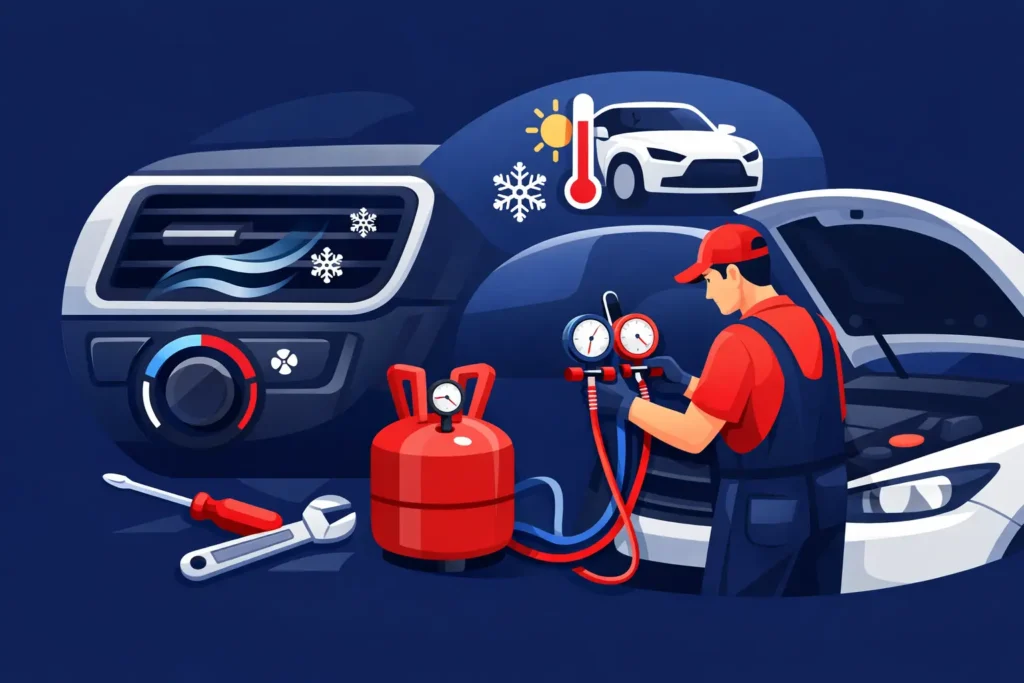
A Florida afternoon can turn a minor air conditioning problem into a serious driving distraction fast. When cold air fades, airflow weakens, or the cabin begins to smell damp, timely AC repair is about more than comfort. It helps protect visibility during humid weather, reduces stress on related components, and keeps your vehicle enjoyable to drive.
For owners of European, exotic, classic, and everyday vehicles, the right repair starts with an accurate diagnosis. Adding refrigerant without finding the reason it is low may provide temporary relief, but it does not solve the problem. A quality shop takes the time to understand the entire system, explain what failed, and recommend the repair your vehicle actually needs.
When AC Repair Should Not Wait
Most drivers notice air conditioning trouble when the vents stop blowing cold. That is a clear warning sign, but it is not the only one. Changes in performance, noise, odor, or airflow can point to an issue before the system quits altogether.
Warm air from the vents may mean the refrigerant charge is low, but it can also involve a leak, compressor concern, electrical fault, expansion valve issue, or cooling fan problem. Refrigerant does not simply get used up. If a modern vehicle needs refrigerant repeatedly, there is usually a leak or a system fault that deserves attention.
Weak airflow is a different problem than warm air. If the temperature feels right but very little air reaches the cabin, the cabin air filter may be restricted, the blower motor may be failing, or an HVAC door inside the dash may not be moving correctly. On many luxury vehicles, climate-control systems use multiple sensors and electronic actuators, so a proper diagnosis matters.
Other signs worth scheduling service for include a musty odor when the system starts, unusual clicking or squealing under the hood, water collecting inside the cabin, foggy windows that will not clear properly, or an AC system that works only while driving. These symptoms can range from a simple drain blockage to a more involved mechanical or electrical repair.
Why Accurate AC Diagnostics Matter
Automotive air conditioning is a closed, pressurized system. It relies on the compressor, condenser, evaporator, lines, valves, sensors, blower components, cooling fans, and climate-control electronics working together. Replacing one part based on a guess can waste money and still leave the original problem behind.
A thorough inspection begins with the customer’s concern. Does the AC cool at highway speed but not at idle? Does it cool one side of the cabin but not the other? Did the problem begin after another repair or after the vehicle sat for months? Details like these help narrow the diagnostic path.
From there, a technician should inspect system pressures, refrigerant condition, compressor operation, cooling fan performance, electrical signals, and visible signs of leakage. Leak detection may involve ultraviolet dye, electronic detection equipment, or testing methods suited to the vehicle and refrigerant type. The goal is not to sell the biggest repair. The goal is to identify the failed component and confirm that the recommended repair addresses the cause.
This approach is especially valuable for European and exotic vehicles. Their climate-control systems can be tightly integrated with engine management, cooling systems, and body-control modules. A fault code is useful information, but it is not automatically a diagnosis. Experienced hands-on testing separates a real repair from a parts-swapping exercise.
Common AC Problems and What They Can Mean
A leaking seal, hose, condenser, or evaporator is among the most common reasons for poor cooling. Road debris can damage a condenser at the front of the vehicle, while age and heat can affect seals and connections. The repair can be straightforward when the leak is accessible, but an evaporator leak may require more labor because the component is often located behind the dashboard.
Compressor failure is another possibility, particularly if the system makes grinding noises, blows warm air, or shows contamination in the refrigerant oil. When a compressor fails internally, the repair may require more than installing a new compressor. Depending on the vehicle and the extent of contamination, the system may need flushing and additional components to prevent the new part from being damaged.
Electrical issues can also mimic a refrigerant problem. A failed pressure sensor, relay, fuse, control module, or wiring connection may prevent the compressor from engaging even when the refrigerant level is correct. Likewise, a cooling fan that does not operate properly can leave the AC weak at stoplights while it performs better on the road.
For classic cars, the challenge may be different. Older systems were designed around earlier refrigerants and components that may no longer be practical or reliable. A thoughtful repair plan considers originality, availability of parts, driving habits, and whether a carefully selected upgrade would improve comfort without compromising the character of the vehicle.
What Professional AC Service Should Include
A proper air conditioning service is more than connecting a machine and sending the car out cold. Before any refrigerant is added, the system should be evaluated for leaks and mechanical concerns. If a leak is found, repairing it first is the responsible move.
After repairs, the system should be evacuated to remove air and moisture, then recharged with the manufacturer-specified refrigerant amount. Correct charge matters. Too little refrigerant can reduce cooling and compressor lubrication; too much can raise pressures and affect performance. Refrigerant is measured by weight, not by guesswork.
Technicians should also verify vent temperature, pressure readings, compressor cycling, cooling fan operation, and cabin airflow. On vehicles with dual-zone or multi-zone climate control, both sides of the cabin should be checked. A final road test can reveal issues that do not appear while the vehicle is stationary.
At MotorSport Prime, honest communication is part of the repair. If a vehicle needs a simple service, customers deserve to hear that. If the diagnosis finds a larger concern, the repair should be explained clearly, including what is urgent, what can be monitored, and what the available options mean for reliability and cost.
Protecting Your Vehicle Between Visits
You cannot prevent every air conditioning failure, but a few habits can help the system perform well. Run the AC periodically during cooler months to keep seals lubricated and components exercised. Replace the cabin air filter at appropriate intervals, especially in Central Florida, where pollen, humidity, and daily use can load it up quickly.
Keep leaves and debris clear from the area around the windshield cowl and inspect for signs of water inside the cabin. A blocked evaporator drain can lead to odors, moisture, and damage to interior materials. If your vehicle begins cooling inconsistently, schedule an inspection before the hottest part of the year turns a manageable repair into an urgent appointment.
It also helps to be realistic about quick fixes. Store-bought recharge cans may seem convenient, but they do not identify leaks, may add the wrong amount of refrigerant, and can complicate later diagnosis. Modern systems are precise, and specialty vehicles often leave little room for shortcuts.
AC Repair Built Around Lasting Results
The best AC repair balances comfort, reliability, and value. Sometimes that means replacing a worn component and restoring the system to factory performance. Other times, especially on an older or specialty vehicle, it means discussing repair options and choosing the approach that fits how the car is driven and cared for.
Your air conditioning should work quietly, cool consistently, clear the windshield when humidity rises, and let you focus on the road instead of the temperature gauge on the dash. If it is doing anything less, a careful diagnostic visit is a smart place to start.