
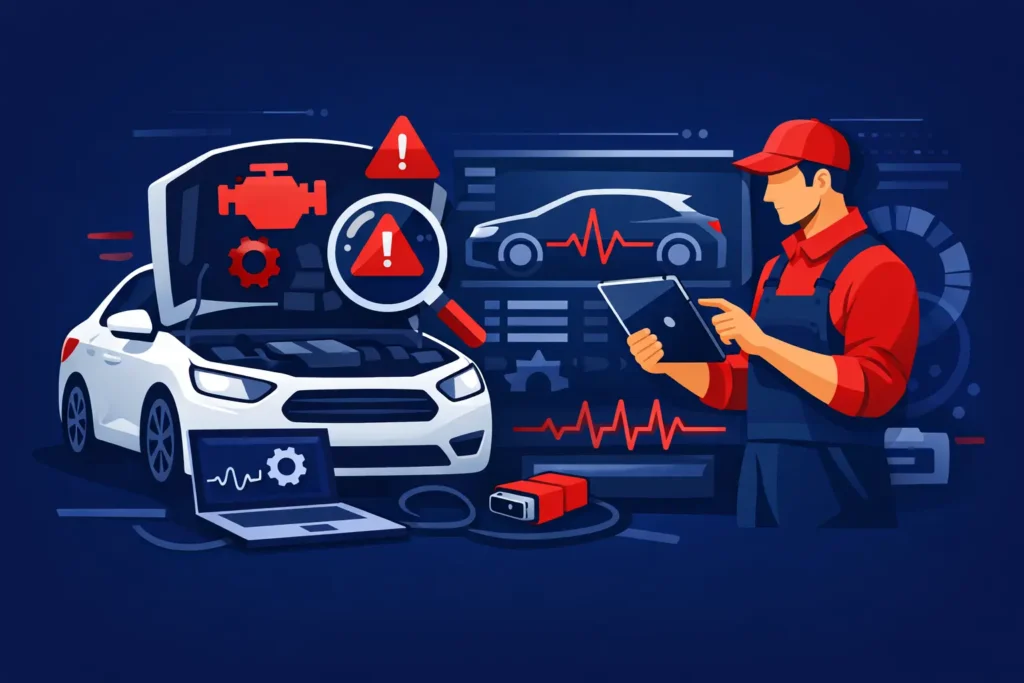
A warning light is not a repair instruction. Neither is a rough shift, a hesitation when you accelerate, an intermittent no-start, or an air conditioner that works one day and blows warm the next. Proper vehicle diagnostics are the work of finding the actual cause behind the symptom, so you can approve repairs with confidence instead of paying for parts that never needed to be replaced.
For owners of European, exotic, classic, and everyday vehicles in Central Florida, that distinction matters. Modern cars can store dozens of fault codes, but a code alone does not tell the whole story. It points an experienced technician toward a system that needs closer attention. The diagnosis comes from testing, inspection, service information, and a clear understanding of how that vehicle is supposed to operate.
What Professional Vehicle Diagnostics Should Do
A good diagnostic process should answer a straightforward question: what failed, why did it fail, and what is required to correct it? That sounds simple, but the path to an honest answer is often more involved than connecting a scan tool and reading a code.
Take a check engine light. A code may indicate an oxygen sensor concern, but that does not automatically mean the sensor itself is bad. A vacuum leak, exhaust leak, damaged wiring, fuel delivery issue, or engine misfire can create readings that make the sensor appear to be the problem. Replacing the first part named by a code can be expensive guesswork.
The same is true of transmission concerns. A code related to a solenoid, gear ratio, or pressure switch may be caused by an internal mechanical issue, a fluid condition problem, a wiring fault, a valve body concern, or a control module issue. The right repair depends on evidence, not assumptions.
Professional vehicle diagnostics protect you from two costly outcomes: replacing good parts and delaying a repair that could become more serious. They also give you a clear explanation of what your vehicle needs now, what can be monitored, and what options make sense for your budget and long-term plans.
Why Fault Codes Are Only the Starting Point
Today’s vehicles rely on a network of modules, sensors, wiring, and software. A scan tool is essential, especially on late-model European vehicles, but it is one tool in a larger process. The stored code needs to be considered alongside live data, vehicle history, symptoms, maintenance records, and hands-on inspection.
An experienced technician will often look at freeze-frame data, which records operating conditions when a fault occurred. Engine speed, coolant temperature, fuel trim, transmission temperature, vehicle speed, and system voltage can reveal whether the issue appeared during cold starts, highway driving, heavy acceleration, or stop-and-go traffic.
From there, testing may include checking power and grounds, inspecting connectors and harnesses, measuring fluid condition and level, smoke-testing for intake leaks, verifying pressure readings, or taking the vehicle on a controlled road test. Some problems only show themselves when the vehicle is hot, under load, or after a particular drive cycle.
Intermittent issues require patience. If a warning light appeared once and has not returned, a technician may need more information before recommending a repair. That is not indecision. It is a responsible approach to avoiding unnecessary work while keeping an eye on a condition that may need attention later.
The Difference Experience Makes
Vehicles with advanced systems can have similar symptoms for very different reasons. A delayed shift in one vehicle may be related to fluid service needs. In another, it may point to a worn valve body, internal transmission wear, software calibration, or an engine performance issue affecting how the transmission responds.
This is where hands-on experience matters. Technicians who work regularly with European luxury cars, performance vehicles, classics, and automatic transmissions learn the common failure patterns, but they do not let patterns replace testing. Every car has its own history, condition, and owner expectations.
A classic vehicle may need a more mechanical approach, focused on ignition, fuel delivery, vacuum, charging, and cooling systems. A newer luxury vehicle may require manufacturer-level scan capability and an understanding of complex communication networks. Both deserve careful work, not a one-size-fits-all diagnosis.
Common Signs Your Vehicle Needs Diagnostic Testing
Some concerns are obvious, such as a check engine light or a transmission warning message. Others are easier to dismiss until they become more disruptive. If your vehicle is running differently than usual, it is worth having it checked before a minor issue turns into a breakdown.
Pay attention to a rough idle, reduced power, stalling, hard starting, unusual fuel consumption, burning smells, fluid leaks, overheating, or electrical accessories that behave unpredictably. Transmission symptoms deserve prompt attention as well, particularly slipping, delayed engagement, harsh shifts, shuddering, whining, or a hesitation when moving from park into drive or reverse.
Air conditioning issues also benefit from proper testing. Low refrigerant may be part of the problem, but a leak, compressor concern, pressure sensor fault, cooling fan issue, or climate-control problem may be the real cause. Simply adding refrigerant without identifying a leak can provide temporary cold air while allowing the underlying issue to continue.
If a warning light is flashing, the vehicle is overheating, transmission fluid is leaking, or the car is losing power while driving, do not wait for a convenient time. Those symptoms can signal conditions that risk additional damage or leave you stranded.
What to Expect From an Honest Diagnostic Visit
A trustworthy repair shop should explain the purpose and cost of diagnostic time before work begins. Diagnosis is skilled labor. It involves professional equipment, technical information, testing procedures, and the judgment to interpret what the results mean. It is not an extra charge added without value.
At MotorSport Prime, the goal is to give customers a clear path forward. That means discussing the concern, checking for relevant service history, performing the necessary testing, and explaining the findings in plain language. If further disassembly or additional testing is needed to confirm a concern, you should know why and what that next step involves.
Once the cause is confirmed, the repair recommendation should be specific. You should understand what part or system needs attention, why it failed when that can be determined, how urgent the repair is, and what the expected result will be. Fair pricing does not mean cutting corners or installing a part without verification. It means doing the right work and communicating honestly about it.
There are times when more than one repair option is reasonable. For example, an aging automatic transmission may be serviceable with a targeted repair, while another vehicle with significant internal damage may be better served by a rebuild or replacement. The right choice depends on the condition of the vehicle, the extent of the problem, its value, and how long you plan to keep it.
How Drivers Can Help Speed Up the Process
The best information often comes from the person behind the wheel. Before your appointment, think about when the problem happens. Does it occur only after the vehicle warms up? During acceleration, braking, turns, or highway speeds? Does it happen after fueling up or when the A/C is running?
Be as specific as possible, even if the details seem small. Let the shop know when the warning light first appeared, whether any recent repairs were performed, and whether the vehicle has been sitting or recently purchased. If a sound occurs only on the first drive of the day or a shift feels wrong only in traffic, say so.
Avoid clearing codes or disconnecting the battery before your visit unless it is necessary. Doing so can erase valuable information that helps identify an intermittent fault. And while online forums can help you describe a symptom, they cannot test your vehicle in person. Two cars with the same code can require entirely different repairs.
Your vehicle is telling you something when a light appears, a shift changes, or a familiar sound becomes different. Give that message the attention it deserves. A careful diagnosis today can preserve performance, protect your investment, and help keep every mile ahead more dependable.