
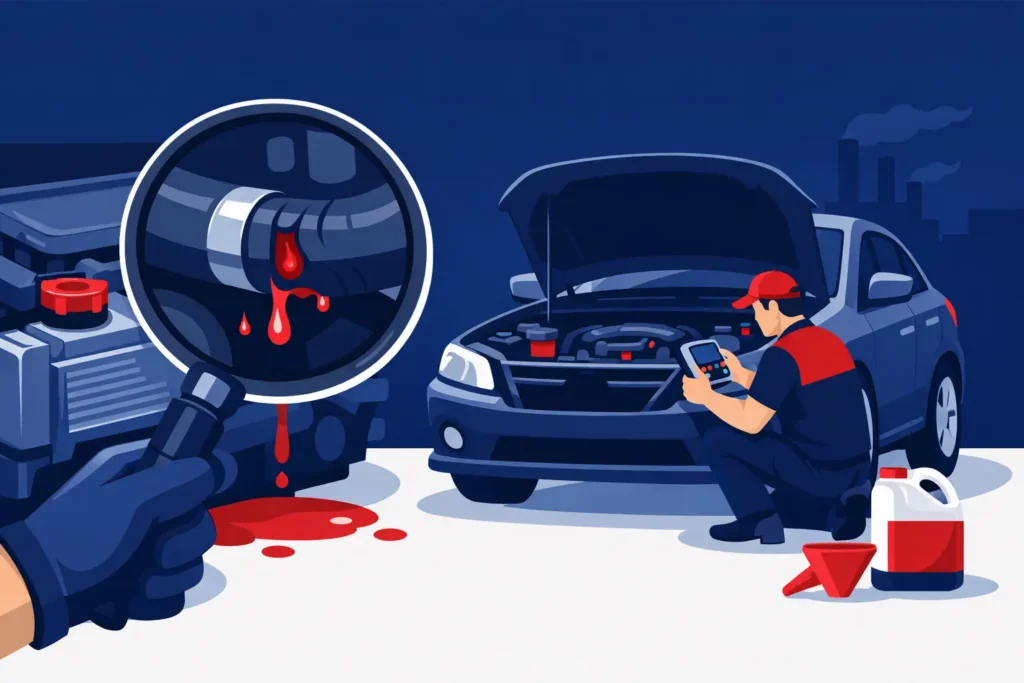
A small sweet smell after parking, a damp spot beneath the engine, or a coolant warning that appears only once can be the first sign of trouble. Coolant leak detection is not simply about finding where fluid is dripping. It is about protecting the engine, cooling system, heater, and, in some vehicles, transmission components before heat turns a manageable repair into major damage.
For Central Florida drivers, heat places a heavy demand on every cooling system. European luxury vehicles, exotics, classics, and daily drivers all have their own weak points, but they share one rule: an engine cannot tolerate low coolant for long. Address the warning early, and the repair may be as straightforward as a hose, reservoir, clamp, or gasket. Keep driving while the coolant level falls, and the risk rises quickly.
Why a Coolant Leak Needs Prompt Attention
Coolant does more than prevent an engine from boiling over. The correct mixture of coolant and water carries heat away from the engine, protects internal passages from corrosion, lubricates certain components, and helps the heater deliver warm air when needed. When the system loses fluid, it may also lose pressure. That lowers the coolant’s boiling point and makes overheating more likely.
Overheating can warp cylinder heads, damage head gaskets, compromise plastic cooling-system parts, and create expensive internal engine problems. On certain automatic transmission applications, the radiator or auxiliary cooler is part of the transmission’s heat-management system. A cooling-system concern can therefore deserve attention beyond the engine bay, particularly when fluid contamination or temperature issues are involved.
The right response depends on the severity of the leak. A few drops after a long drive may not mean the vehicle is about to overheat, but it does mean the cooling system needs a proper inspection. A rapidly falling coolant level, visible steam, or a temperature gauge climbing above normal calls for stopping safely and arranging service rather than trying to drive home.
Common Signs That Coolant Is Escaping
A puddle is helpful evidence, but not every leak reaches the ground. Coolant can evaporate on a hot engine, collect in an undertray, leak only when the system is pressurized, or seep into an area that is difficult to see without removing covers. Modern vehicles are especially good at hiding small leaks until they become larger.
Watch for a coolant level that repeatedly drops below the marked line in the expansion tank. Never remove a radiator cap or coolant reservoir cap while the engine is hot. Check levels only after the vehicle has cooled completely, and use the coolant specified for your vehicle rather than topping it off with whatever is available.
Other warning signs include a sweet odor around the vehicle, white or colored residue near hoses and fittings, dried crust around the water pump or radiator, steam from under the hood, and an overheating warning. A weak or inconsistent cabin heater can also point to low coolant or air trapped in the system. If the windshield fogs unusually and there is a sweet smell inside the cabin, a heater-core leak is one possibility worth checking.
Do not assume every wet area is coolant. Engine oil, power steering fluid, air-conditioning condensation, washer fluid, and plain water can all appear beneath a car. Coolant commonly has a distinct color, but color alone is not a reliable diagnostic method because manufacturers use different formulas and fluids can discolor with age. Identifying the fluid and tracing it to its source matters more than guessing.
How Professional Coolant Leak Detection Finds the Real Source
A dependable diagnosis starts with a visual inspection of the entire cooling system, not just the area where fluid is visible. A trained technician checks hoses, clamps, the radiator, expansion tank, cap, thermostat housing, water pump, heater hoses, fittings, sensors, and cooling-system seals. On European vehicles, plastic flanges and expansion tanks may become brittle with age and heat cycles. On classic cars, older hoses, clamps, and radiator seams often deserve close attention.
The next step is often a cooling-system pressure test. With the engine cool, the system is pressurized to its specified range so small leaks can reveal themselves without the engine running. This test can expose seepage at a hose connection, a radiator seam, a water-pump weep hole, or a cracked fitting that may not leak visibly during a brief idle.
When a leak is elusive, ultraviolet dye may be added to the coolant and inspected with a special light after the vehicle has been driven. This can be particularly useful for slow leaks hidden behind engine components or under protective panels. Technicians may also inspect for combustion gases in the cooling system if there are signs that coolant is being lost internally rather than externally.
That distinction is critical. An external leak may leave residue or a puddle. An internal coolant loss may show up as persistent overheating, unexplained coolant consumption, misfires on startup, white exhaust after warm-up, or contamination concerns. These symptoms do not automatically mean an engine has a failed head gasket, but they call for careful testing before any repair decision is made.
The Parts Most Often Behind Cooling-System Leaks
Hoses and clamps are familiar culprits, especially where rubber has hardened or a clamp has lost tension. Radiators can develop cracks at plastic end tanks, corrosion at seams, or damage from road debris. Expansion tanks and caps can also fail to hold pressure, allowing coolant to escape or boil sooner than it should.
Water pumps are another common source. Many use a small weep hole that releases coolant when the internal seal begins to fail. Catching that early can prevent a complete pump failure and reduce the chance of an overheating event. Thermostat housings, crossover pipes, intake-related coolant passages, and quick-connect fittings are other frequent trouble areas, depending on the vehicle.
It is tempting to replace only the visibly leaking item. Sometimes that is exactly right. Other times, a technician may recommend related parts because access overlaps, the surrounding components are the same age, or a known weak component is already showing deterioration. The honest approach is to explain the reason, the options, and the cost difference so you can make an informed decision instead of being surprised later.
What Not to Do When You Suspect a Leak
Do not ignore a temperature warning in the hope that it will clear. Do not pour cold water into an overheated engine, and do not open a hot cooling system. Both can create a safety hazard and may worsen the problem.
Avoid relying on stop-leak products as a permanent repair. Some products may provide a temporary emergency measure in limited circumstances, but they can also clog narrow passages in radiators, heater cores, and other cooling-system components. That is a poor trade for vehicles that depend on precise cooling performance.
Also, do not mix coolant types without confirming compatibility. The wrong formula can reduce corrosion protection or react poorly with existing coolant. If you have needed to add fluid repeatedly, tell the technician what was added and how often. That history helps narrow down the diagnosis.
A Repair Should Restore Confidence, Not Just the Coolant Level
After a leak is repaired, the cooling system needs to be filled with the correct coolant mixture and properly bled of air. Air pockets can cause erratic temperature readings, weak cabin heat, and repeat overheating symptoms even when the original leak has been fixed. A final pressure check and road test help confirm that the system holds pressure and reaches normal operating temperature.
At MotorSport Prime, coolant concerns are approached as a system diagnosis, not a quick top-off. With 38 years of hands-on experience, the focus is on finding the source, explaining the repair clearly, and helping drivers protect the long-term reliability of the vehicles they value.
If you notice a falling coolant level or even a minor overheating warning, take a photo of the dash message, note when it occurred, and have the vehicle inspected while the evidence is still fresh. Early attention is often the most practical way to keep a small cooling-system issue from becoming an engine repair.