
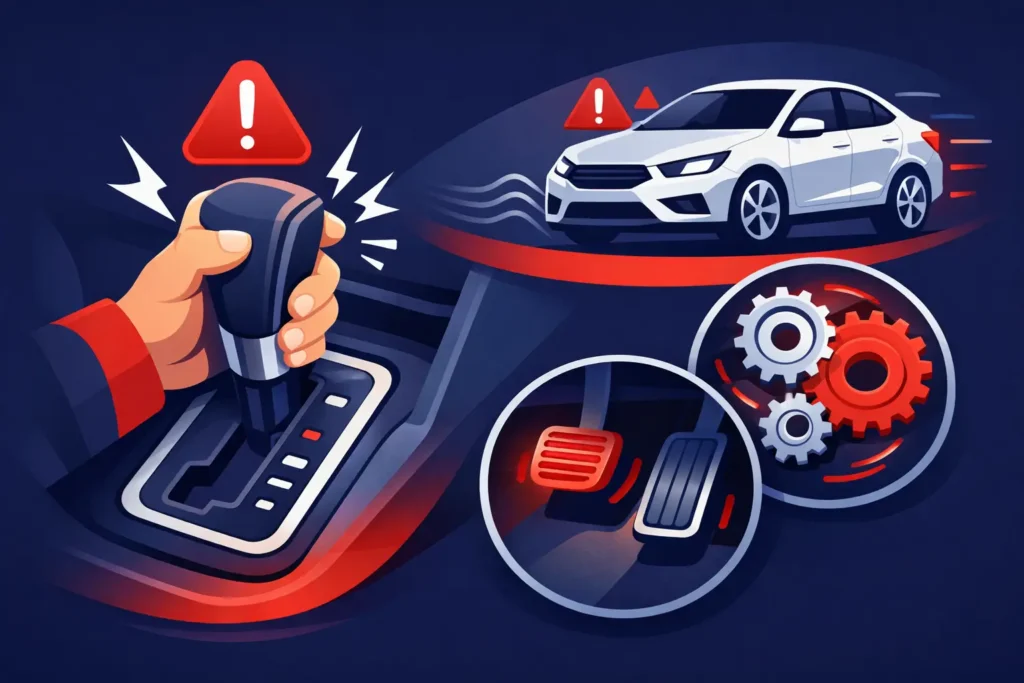
You back out of the driveway, drop the car into Drive, and something feels off right away. The engine revs, the gear change is late, or the shifter moves but the car does not respond the way it should. When a car won’t shift properly, that is not the kind of problem to ignore and hope disappears by the next stoplight.
Shifting problems can come from something straightforward, like low fluid or a worn bushing, or from deeper transmission trouble that needs professional diagnosis. The key is catching the pattern early. A small drivability issue is often cheaper and simpler to address than the damage that follows when a transmission keeps slipping, banging into gear, or hunting between shifts.
What it means when a car won’t shift properly
“Won’t shift properly” covers a lot of ground, and the details matter. Some vehicles hesitate before shifting up. Others slam into gear, stay stuck in one gear, refuse to go into Reverse, or shift so erratically that the car feels unpredictable. In a manual car, you may feel resistance when moving the shifter through the gate, grinding between gears, or a clutch pedal that no longer feels normal.
On modern vehicles, especially European and performance platforms, shifting is managed by a combination of hydraulic pressure, electronic controls, sensors, solenoids, software logic, and mechanical parts. That means the symptom you feel may not point to the failed part as clearly as it did on older cars. A bad speed sensor, contaminated fluid, valve body issue, worn clutch pack, failing torque converter, or simple linkage problem can all create similar complaints from the driver seat.
That is why guessing gets expensive. Replacing parts based on suspicion instead of testing often wastes money and delays the real repair.
Common reasons your car won’t shift properly
Transmission fluid is one of the first places to look. If the fluid is low, burned, contaminated, or the wrong type, the transmission may not build or control pressure correctly. That can lead to slipping, delayed engagement, harsh shifts, or overheating. On some newer vehicles, fluid level checks are more involved than people expect, so this is not always a quick parking lot inspection.
Electronic faults are another common cause. Modern transmissions rely on input from speed sensors, range sensors, shift solenoids, and the control module itself. When one of those signals goes bad, the transmission may enter a fail-safe mode, hold a single gear, or shift at the wrong time. Sometimes the check engine light comes on. Sometimes it does not, at least not right away.
Mechanical wear inside the transmission is more serious, but it is not rare, especially on higher-mileage vehicles or cars that have been run low on fluid. Worn clutch packs, damaged bands, valve body problems, or torque converter issues can all produce poor shifting. In these cases, the symptom often grows gradually before it becomes obvious.
If you drive a manual, the clutch system deserves just as much attention as the gearbox. A worn clutch, failing master or slave cylinder, air in the hydraulic system, or damaged shift linkage can all make the car feel like it has a transmission problem when the root cause is elsewhere.
Then there are external issues that can imitate transmission failure. Engine performance problems, misfires, throttle body faults, and even certain ABS or stability control issues can affect shift timing. On European vehicles especially, systems talk to each other. A correct diagnosis means looking at the whole vehicle, not just the transmission in isolation.
Signs the problem is getting worse
A shift issue rarely improves on its own. More often, it starts as a mild hesitation and turns into hard shifting, slipping, overheating, or loss of drive. If your car won’t shift properly only once in a while, that still matters. Intermittent faults are often the early warning sign.
Pay attention if you notice revving between gears, a thud when shifting into Drive or Reverse, a burned smell, fluid leaks under the vehicle, or a delay before the car moves after selecting a gear. If the transmission overheats or the warning lights come on, stop treating it like a nuisance. That is your car telling you the system is under stress.
With specialty vehicles, performance cars, and older classics, the risk can be even greater. Some transmissions have known weak points, some parts are costly or harder to source, and some drivability symptoms can be misread by shops that do not work on these platforms often. Experience matters when the vehicle itself is uncommon or the transmission design is more complex than average.
Can you keep driving if your car won’t shift properly?
Sometimes, but that does not mean you should keep doing it.
If the issue is minor and the car still moves normally enough to reach a repair facility safely, that may be reasonable. But if the transmission is slipping badly, refusing gears, banging into shifts, overheating, or leaving you uncertain in traffic, driving it further can multiply the damage. A problem that might have been solved with fluid service, a sensor, or valve body repair can turn into a rebuild or replacement when friction materials burn up or internal hard parts fail.
This is where honesty matters. Not every shifting complaint means the transmission is finished. But not every shifting complaint can be fixed with a fluid change either. The right answer depends on testing, fluid condition, scan data, and what the transmission is actually doing under load.
How proper diagnosis saves money
Good transmission work starts before any wrench turns. A real diagnosis should include a road test when appropriate, fault code scanning, live data review, fluid inspection, and an understanding of the vehicle’s specific system design. In some cases, further pressure testing or pan inspection is the responsible next step. In others, the problem is outside the transmission entirely.
That matters because customers are often forced into two bad experiences. One shop shrugs and recommends a full transmission replacement without proving the need. Another throws low-cost parts at the problem until the bill grows and the issue remains. Neither approach respects your time or your money.
At a shop with transmission experience, the goal is to identify what failed, what secondary damage may have occurred, and which repair path makes sense for the age, value, and intended use of the vehicle. Sometimes a targeted repair is the smart move. Sometimes a rebuild or replacement is the better long-term decision. There is no honest one-size-fits-all answer.
When a car won’t shift properly in European, exotic, or classic vehicles
Specialty vehicles deserve extra care here. European automakers often use transmission programming, adaptation values, and integrated control systems that require platform-specific knowledge. Exotic vehicles may use dual-clutch or highly specialized automatic units where misdiagnosis is especially expensive. Classic cars bring a different challenge, because wear in linkage, vacuum systems, mounts, bushings, or older hydraulic components can affect shifting in ways many general repair shops no longer see every day.
That is one reason owners in Central Florida often look for more than basic maintenance. They want someone who understands the vehicle, respects its engineering, and will not shortcut the diagnosis. At MotorSport Prime, that kind of work is part of the craft.
What to do next if your car won’t shift properly
Start by paying attention to the exact symptoms. Does it happen cold, hot, uphill, only in certain gears, or only after longer drives? Has any warning light appeared? Have you noticed leaks, unusual noises, or changes after recent service? Those details help narrow the problem faster.
Then have the vehicle inspected before the damage spreads. If the issue is fluid-related, early service may protect the transmission from more wear. If it is electronic, a proper scan and test procedure can keep you from replacing good parts. If there is internal damage, catching it sooner gives you more repair options.
Transmission problems have a way of becoming bigger, more expensive, and more inconvenient when they are ignored. The best move is not to panic and not to guess. It is to get a clear answer from technicians who know what they are looking at and are willing to explain it plainly.
A car that shifts correctly should feel confident, predictable, and smooth. When that changes, trust the symptom. Getting it checked early is one of the smartest ways to protect both your vehicle and your wallet.