
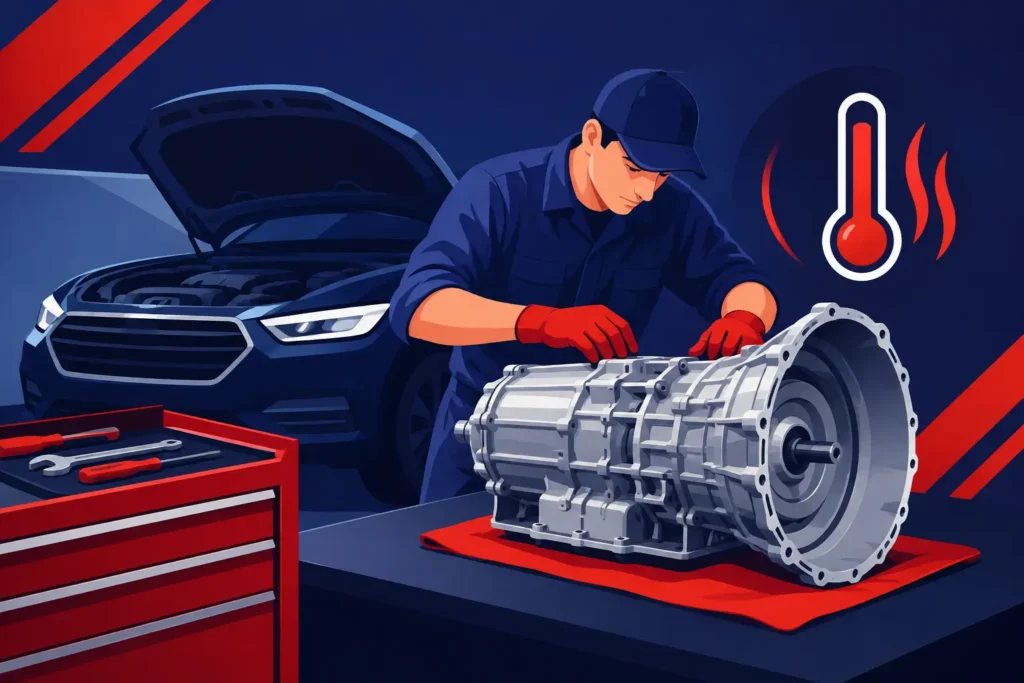
The warning arrived after a short drive, not a cross-country trip: a transmission temperature alert, followed by a hesitant shift and a faint hot smell near the front of the vehicle. A transmission overheating repair story like this can feel sudden, especially when the car was driving normally only days before. But overheating is usually the final visible sign of a problem that has been building in the fluid, cooling system, internal components, or the way the transmission is being controlled.
For Central Florida drivers, heat is already part of the equation. Add stop-and-go traffic, heavy rain, towing, aggressive acceleration, or a cooling-system issue, and an automatic transmission can be pushed beyond the temperature range it was designed to handle. The right response is not to keep driving until the warning disappears. It is to diagnose the cause before heat turns a repairable concern into major internal damage.
The repair story starts with one honest question
When a vehicle arrives with an overheating complaint, the first question is simple: what exactly happened before the warning came on? A technician needs more than a dashboard message. Was the vehicle slipping between gears? Did it hesitate when pulling away? Did the warning appear in traffic, at highway speed, or under load? Has it recently had transmission service, cooling-system work, or an impact underneath?
Those details matter because an overheating transmission does not always mean the transmission itself has failed. Low or degraded fluid can reduce lubrication and heat control. A restricted transmission cooler or damaged cooler line can trap heat. On some European vehicles, a thermostat, coolant flow issue, control module fault, or sensor problem may contribute to the alert. A hard-working classic car may have a cooling setup that was never designed for Florida temperatures or modern driving conditions.
That is why a trustworthy repair begins with testing, not a guess and not an automatic recommendation for replacement.
A representative transmission overheating repair story
Consider a performance-oriented European sedan that came in after its owner noticed a temperature warning during afternoon traffic. The vehicle still moved under its own power, but shifts had become less smooth once it was hot. The owner had been told elsewhere that it might need a complete transmission.
Before discussing a major repair, the technician inspected the vehicle for external leaks, checked the condition and level of the transmission fluid according to the manufacturer procedure, scanned the control modules for stored faults, and monitored live temperature data. The fluid was darkened and had an overheated odor, but there was no immediate evidence of catastrophic internal failure. More importantly, the transmission cooler circuit was not shedding heat as it should.
Further inspection found restricted flow in the cooling path. The transmission had been operating hotter than normal for long enough to degrade the fluid and affect shift quality. Left alone, that heat could have damaged clutch materials, seals, solenoids, and valve-body components. The warning light was not the whole problem. It was the vehicle asking for attention before the repair became far more expensive.
The repair plan focused on the actual cause: correcting the cooling restriction, performing the proper fluid and filter service where applicable, inspecting related lines and fittings, clearing faults, and road-testing the car while monitoring operating temperatures. Once the system could manage heat correctly again, the shifting improved and temperatures stayed in the expected range.
This outcome is not guaranteed in every case. If the vehicle has been driven while slipping, shuddering, or overheating repeatedly, internal damage may already be present. Still, this is why careful diagnostics matter. A complete replacement may be the right answer for one vehicle, while another can be protected with targeted repairs and correct service performed at the right time.
Why transmission heat causes so much damage
Automatic transmission fluid does more than lubricate moving parts. It helps transfer hydraulic pressure, cool internal components, and support precise shifting. As temperatures rise beyond the intended operating range, fluid can oxidize and lose the properties that allow it to protect the transmission.
Heat can harden seals, wear clutch packs, and leave deposits in narrow passages inside the valve body. Modern transmissions rely on exact hydraulic control, electronics, solenoids, and sensor feedback. When fluid condition declines or temperatures climb, the symptoms may start subtly: delayed engagement, rough shifts, slipping, a shudder on acceleration, or a warning message that appears only after the vehicle is fully warmed up.
Exotic, European, and classic vehicles each add their own considerations. A late-model luxury vehicle may have a highly integrated cooling and electronic control strategy. A classic vehicle may have been modified, restored, or driven less frequently, making its actual fluid condition and cooling capacity harder to judge. The common thread is that the transmission needs the right fluid, the right temperature control, and a technician who understands the system in front of them.
What not to do when the warning appears
A temperature warning is not always a reason to panic, but it is never a message to ignore. Continuing to drive aggressively, tow, or sit in traffic while the transmission is overheated can multiply the damage quickly. If it is safe to do so, pull over, let the vehicle cool, and arrange for a professional evaluation.
Avoid adding universal fluid or using an additive as a shortcut. Many transmissions require a specific fluid formulation and a precise fill procedure at a measured temperature. Using the wrong fluid can create shift problems of its own. A fluid change is valuable when it is appropriate, but it cannot reverse burned friction material or repair a failed cooling component.
It is also wise to be cautious about quick diagnoses based only on a code scan. Trouble codes are clues, not a final repair plan. A code may point to excessive temperature, pressure control, or a sensor reading, but the technician still needs to determine why that condition occurred.
How a proper overheating diagnosis protects your budget
A sound diagnostic process starts with the basics and moves deeper only when the evidence supports it. That includes verifying the customer concern, checking fluid level and condition, inspecting for leaks and physical damage, scanning all relevant modules, and reviewing live data. Cooling-system performance, cooler flow, electrical connections, and transmission operation under controlled road-test conditions may all be part of the process.
This approach protects customers from two costly mistakes: replacing a transmission when an external issue caused the overheating, or performing a basic service when internal damage clearly requires more involved repair. Honest recommendations should explain what was found, what can be verified, what remains uncertain, and what the realistic options are.
At MotorSport Prime, transmission work is treated as specialized work, not an afterthought. With decades of hands-on experience, the focus is on finding the cause, explaining the repair clearly, and completing the work to a standard that supports long-term reliability. Whether a vehicle needs fluid service, cooling-system correction, transmission repair, or replacement, the goal is the same: no unnecessary upsell, no vague answer, and no shortcuts where they do not belong.
When prevention is the best repair story
The best transmission overheating repair story is often the one that never reaches the point of internal damage. Follow the manufacturer’s service recommendations, while also considering how the vehicle is actually used. Frequent stop-and-go driving, towing, high heat, performance driving, and long idle periods can justify closer attention than a maintenance schedule written for ideal conditions.
Pay attention to changes in shift feel, unexplained fluid leaks, temperature warnings, or a burning odor after driving. Bring the vehicle in before a minor concern becomes a major decision. A careful inspection today can preserve the performance, reliability, and value you expect from your car tomorrow.