
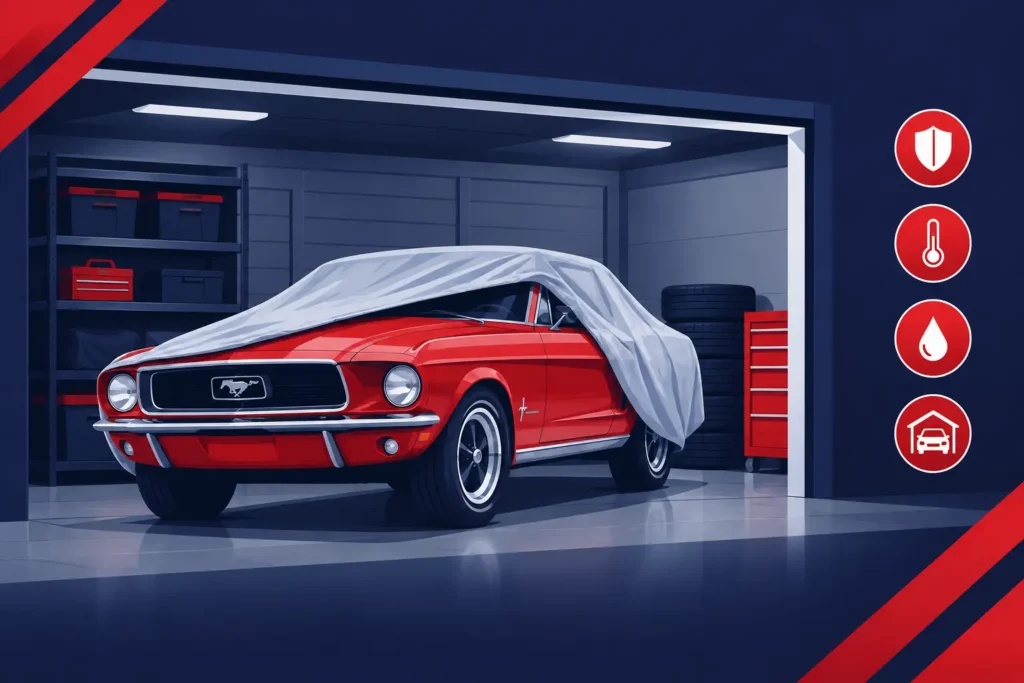
A classic car can look perfect when the garage door closes and still come back with fuel problems, stuck brakes, dead batteries, mildew, or damaged paint months later. Learning how to store classic cars correctly is less about buying expensive accessories and more about controlling moisture, protecting mechanical systems, and preparing the vehicle for the length of time it will sit.
For Central Florida owners, humidity changes the equation. Heat, sudden temperature swings, and long periods of damp air can accelerate corrosion and create interior problems that a dry-climate storage plan may not address. A few careful steps before storage can prevent an unpleasant surprise when it is time to drive again.
How to Store Classic Cars: Start With the Right Space
The best storage area is enclosed, clean, dry, and reasonably stable in temperature. A climate-controlled garage is ideal, particularly for valuable European, exotic, and classic vehicles with original interiors, chrome, leather, wood trim, or sensitive electrical systems. It is not the only workable option, but it provides the strongest protection against Florida humidity.
A standard enclosed garage can also work well if it is dry and properly maintained. Inspect the roof, walls, and floor for signs of leaks. Keep the vehicle away from lawn equipment, pool chemicals, paint cans, and fertilizers. Those items can release vapors that contribute to corrosion or damage nearby finishes.
Avoid storing a classic directly on bare dirt, grass, or a damp surface. Moisture rises from the ground and settles beneath the car, where it can affect the undercarriage, brake components, exhaust, and suspension hardware. A clean concrete floor is preferable. If the floor tends to sweat or hold moisture, use a vapor barrier beneath the vehicle, while ensuring air is not trapped against the underside.
A car cover helps, but only when it is clean, soft, and breathable. Plastic tarps are a poor substitute. They hold moisture against paint and trim, which can lead to hazing, corrosion, and mold. A fitted breathable cover protects against dust without turning the car into a humid container.
Clean and Dry the Car Before It Goes Away
Storage should never begin immediately after a drive in the rain or after a quick wash. Wash the exterior thoroughly, including wheel wells and the lower body, where road grime collects. Then dry the car completely. Water hiding around weatherstrips, emblems, mirrors, and trim can leave stains or begin corrosion while the car sits.
Clean the interior as carefully as the exterior. Vacuum carpets and seats, remove food, paperwork, and anything that can hold moisture. Leather should be cleaned and conditioned with a product suited to the material. Leave the interior dry before closing the doors for an extended period.
If the vehicle is stored in a humid space, moisture absorbers can help protect the cabin. Check and replace them as needed. They are useful support, not a cure for a garage with an active leak or serious humidity problem.
Prepare the Fuel System for Storage Time
Fuel is one of the most common causes of trouble after a classic car has been parked. Modern gasoline can deteriorate, and ethanol-blended fuels can attract moisture. Older carburetors, fuel pumps, rubber hoses, and seals are especially vulnerable when fuel sits for months.
For storage lasting more than a month or two, fill the tank with fresh fuel and add a quality fuel stabilizer designed for gasoline engines. A fuller tank leaves less open space for condensation to form inside. Run the engine long enough for treated fuel to move through the fuel lines and carburetor or injection system.
The right approach can vary by vehicle. Some carbureted classics benefit from shutting off the fuel supply and allowing the engine to run until the carburetor bowl is low, especially when storage will be extended. Other vehicles should remain full and stabilized. If you are unsure, follow the manufacturer guidance for your model or ask a technician familiar with its fuel system.
Do not assume a brief startup every few weeks is enough to protect the car. Starting an engine and idling it for a few minutes may not fully warm the oil, transmission, exhaust, and cooling system. That can leave condensation in place rather than driving it out. Either drive the vehicle long enough to reach full operating temperature and exercise the brakes, steering, and transmission, or leave it properly prepared until you are ready to recommission it.
Protect the Battery, Tires, and Brakes
A battery can discharge slowly even when the ignition is off. Parasitic draws from clocks, alarms, aftermarket electronics, and modern accessories can make the problem worse. Use a quality battery maintainer that matches the battery type, or disconnect the negative battery cable if a maintainer is not practical. A maintainer is generally the better choice for cars that will sit for several months because it keeps the battery at a healthy charge without overcharging it.
Check tire pressure before storage and inflate tires to the upper end of the manufacturer’s recommended range, without exceeding the tire’s maximum pressure. This helps reduce the chance of flat spots. For longer storage, moving the car occasionally is helpful. Some owners use tire cradles or place the vehicle on properly positioned jack stands, but lifting a car should be done carefully to avoid stressing suspension components or using incorrect support points.
Do not leave the parking brake engaged for long-term storage. Brake pads or shoes can stick to rotors or drums, particularly in damp conditions. Instead, park on a level surface, place the transmission in Park for an automatic or in gear for a manual, and use quality wheel chocks. This small step can prevent a frustrating brake repair later.
Before storing the car, check its fluids. Fresh engine oil is wise if the current oil is old, contaminated, or near its service interval. Used oil can contain moisture and combustion byproducts that are not ideal for long-term storage. Confirm that coolant protection is appropriate, and inspect for existing leaks from the engine, transmission, differential, brake system, or power steering system. Storage does not fix a leak. It often makes it easier for a small issue to become a larger one.
Keep Rodents and Insects Out
A quiet garage can become a comfortable home for rodents. They can chew wiring, insulation, hoses, and upholstery, creating damage that is expensive and time-consuming to trace. Check the storage area for openings and remove nesting materials, pet food, birdseed, and clutter around the car.
Use traps or deterrents appropriate for the space, and inspect them regularly. Avoid placing strong-smelling products directly inside the vehicle, as those odors can linger in fabric and leather. Covering the exhaust outlet with a breathable barrier can discourage pests, but place a clear reminder on the steering wheel or dashboard so it is removed before the engine is started.
Check on the Vehicle Without Disturbing It
A stored classic still deserves attention. Every few weeks, inspect the garage for water intrusion, pests, unusual odors, or fluid spots under the vehicle. Look at the battery maintainer indicator, tire condition, and moisture absorbers. You do not need to open and close every panel or start the engine during each visit.
When storage ends, resist the urge to turn the key immediately. Remove covers and pest barriers, inspect under the hood and beneath the car, check fluid levels and tire pressures, reconnect the battery if needed, and look for leaks. Let the engine warm fully, listen for unusual noises, and test the brakes gently before heading onto a busy road.
For vehicles stored through a full season or longer, a professional inspection before regular driving is smart. MotorSport Prime has spent decades working with specialty vehicles, and a careful pre-drive check can catch aging hoses, brake issues, fluid leaks, or transmission concerns before they affect your first outing.
A classic car is meant to be driven and enjoyed, but proper storage protects the work, money, and memories invested in it. Give it a clean, dry home and a thoughtful mechanical preparation now, and it will be far more likely to be ready when the next good driving day arrives.