
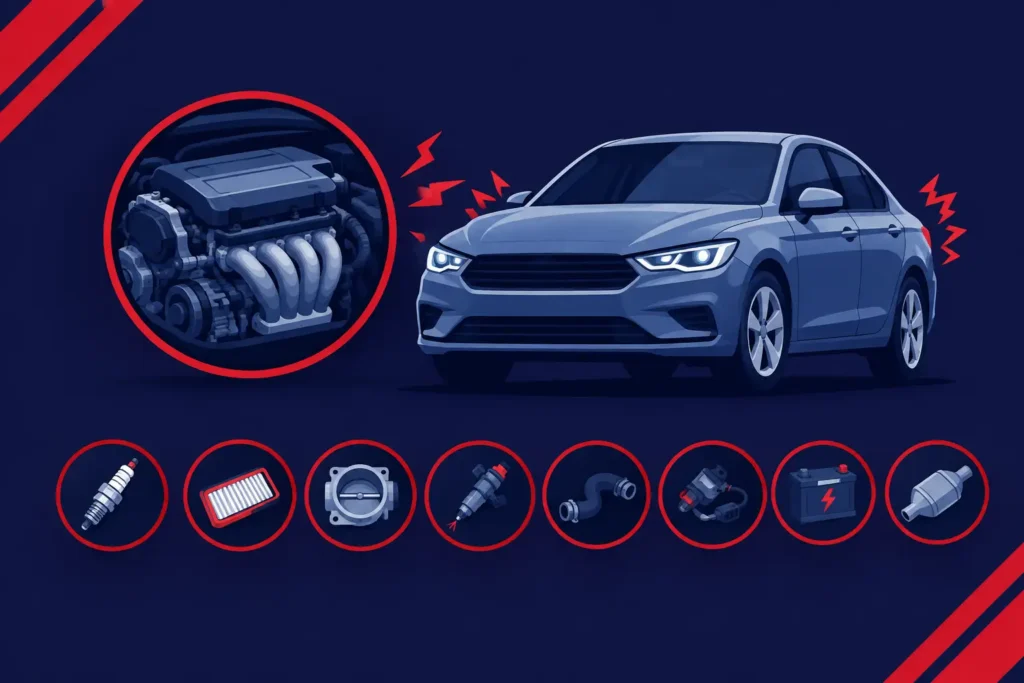
A rough idle is more than an annoying vibration at a stoplight. When a smooth-running engine suddenly shakes, stumbles, surges, or feels like it may stall, it is telling you that combustion, airflow, fuel delivery, or engine control is no longer working as it should. Understanding the common causes of rough idling can help you act before a minor repair turns into a breakdown, reduced fuel economy, or damage to expensive components.
For owners of European, exotic, classic, and everyday vehicles in Central Florida, the key is not to guess at the cause. Modern engines are closely managed systems, while older vehicles often need a technician who understands their mechanical and ignition fundamentals. The symptom may feel similar, but the correct repair depends on an accurate diagnosis.
What Rough Idling Feels Like
A healthy engine should hold a steady speed when the vehicle is stopped and in Park, Neutral, or Drive. You may notice a slightly higher idle during a cold start, when the air conditioning is running, or while the engine is warming up. That can be normal.
A rough idle feels different. The steering wheel, seat, or dashboard may vibrate. The RPM needle may rise and fall, the engine may hesitate when you press the accelerator, or the vehicle may nearly stall at a light. A check engine light may appear, but not always. Some faults are intermittent and only show themselves when the engine is cold, hot, under accessory load, or at a specific fuel level.
1. Worn Spark Plugs or Weak Ignition Components
An engine needs a reliable spark at the right time. Worn spark plugs, failing ignition coils, damaged plug wires on applicable vehicles, or poor electrical connections can create a misfire. At idle, where engine speed is low and every combustion event matters, even one weak cylinder can make the whole vehicle shake.
Many late-model European vehicles use individual ignition coils, so a failing coil can affect one cylinder while the rest continue operating. That does not make it harmless. Continued driving with an active misfire can send unburned fuel into the exhaust and overheat the catalytic converter.
Spark plugs are maintenance items, not lifetime parts. The right replacement interval and plug specification matter, especially on turbocharged, high-performance, and modified engines. Installing the wrong plug type or gap can create problems that resemble a larger mechanical failure.
2. Vacuum Leaks and Unmetered Air
Your engine control system calculates how much fuel to deliver based on the air entering the engine. A cracked vacuum hose, leaking intake boot, failed gasket, or loose connection can allow extra air in after it has been measured. The result is an air-fuel mixture that is too lean, often causing an uneven or high idle.
Rubber and plastic components are especially vulnerable to age and heat. Florida heat can accelerate deterioration, and many performance-oriented vehicles have complex intake plumbing that deserves a careful inspection. A vacuum leak may also cause a hissing sound, a check engine light, or a noticeable change in idle when the air conditioning switches on.
The trade-off here is diagnostic time. Replacing hoses at random may sound simple, but smoke testing and scan-tool data are often the fastest way to locate the actual leak and avoid paying for parts that were never needed.
3. Dirty Throttle Body or Idle Air Control System
Carbon buildup around the throttle body can restrict or disrupt airflow at low engine speeds. On vehicles with an idle air control valve, deposits or a failing valve can make it difficult for the engine to maintain a steady idle. Many newer vehicles use an electronically controlled throttle body instead, but contamination and adaptation issues can still affect idle quality.
This issue is common on cars that spend a lot of time in stop-and-go traffic or make short trips. A proper cleaning can help in some cases, but the work must be done correctly. Certain electronic throttle systems require a relearn procedure after service. Forcing the throttle plate or using the wrong cleaner can cause more trouble than the original symptom.
4. Fuel Delivery Problems
Fuel injectors must deliver the correct amount of fuel in a consistent spray pattern. Deposits, internal wear, electrical faults, low fuel pressure, or a restricted fuel filter on serviceable systems can all interfere with that process. The engine may idle roughly, hesitate under acceleration, or take longer to start.
Fuel quality can contribute, but it is rarely wise to assume that a bottle of additive is the complete answer. An additive may help with light deposits, while a mechanically failing injector or weak fuel pump requires testing and repair. Fuel pressure, injector balance, and live engine data tell a much clearer story than guesswork.
Classic vehicles add another layer. Carburetor adjustments, float issues, fuel contamination, and mechanical fuel pump concerns can produce rough idling for reasons that differ from a modern direct-injection engine. Experience with the specific fuel system matters.
5. A Dirty or Failing Mass Airflow Sensor
The mass airflow sensor measures incoming air so the engine computer can match it with the proper amount of fuel. When the sensor is dirty, damaged, or reporting inaccurate readings, the engine may run too rich or too lean. Rough idle, poor throttle response, reduced mileage, and a check engine light are all possible signs.
Because a faulty mass airflow sensor can look like a vacuum leak, injector issue, or ignition problem, replacing it based on a single trouble code is not always the right move. A skilled technician will compare scan data with the engine’s actual behavior and inspect the intake system for the underlying cause.
6. EGR, PCV, and Emissions System Faults
Emissions components play a direct role in how an engine idles. A stuck-open EGR valve can allow exhaust gas into the intake at the wrong time, causing the engine to stumble or stall. A failed PCV valve or damaged crankcase ventilation hose can create a vacuum leak and change the air-fuel mixture.
These systems are often overlooked because they are less visible than spark plugs or filters. On many European engines, however, PCV assemblies and related hoses are known wear items. A thorough inspection is more valuable than simply clearing a fault code and waiting for it to return.
7. Engine Sensors or Computer Control Issues
The engine computer relies on input from sensors such as the oxygen sensors, coolant temperature sensor, crankshaft sensor, and camshaft sensor. If one sends inaccurate information, the computer may make poor fueling or timing decisions. The result can be a rough idle that seems to come and go.
Electrical diagnosis requires patience. A stored trouble code is a clue, not a final verdict. Wiring damage, corroded connectors, battery voltage problems, and software-related concerns can all produce similar codes. This is one area where proper diagnostic equipment and hands-on experience save time and unnecessary replacement parts.
8. Mechanical Engine Problems
Not every rough idle is caused by a sensor or service item. Low compression, timing chain or belt concerns, valve train problems, intake manifold issues, and internal engine wear can all create a persistent rough idle. These possibilities are less convenient, but identifying them early is better than continuing to drive and allowing damage to grow.
A mechanical issue often comes with additional symptoms: oil consumption, unusual exhaust smoke, ticking or rattling noises, weak acceleration, overheating, or a recurring misfire on the same cylinder. Compression testing, leak-down testing, and careful inspection can separate a mechanical fault from an ignition or fuel issue.
When to Schedule a Diagnostic Inspection
If the check engine light is flashing, the engine is misfiring severely, or the vehicle is stalling in traffic, avoid continued driving when possible. A flashing light commonly indicates a misfire serious enough to threaten the catalytic converter. Have the vehicle inspected promptly.
For a mild but consistent rough idle, schedule service before it becomes an inconvenience or leaves you stranded. Bring useful details with you: whether the problem occurs cold or warm, whether it changes with the A/C on, whether it happens in Drive, and whether any warning lights have appeared. Those details give the technician a stronger starting point.
At MotorSport Prime, diagnostics begin with listening to the customer and verifying the symptom, not selling a list of parts. The goal is a clear explanation, fair recommendations, and repairs that restore the smooth, dependable performance you expect from your vehicle. A rough idle is your car asking for attention – give it the benefit of a proper answer.