
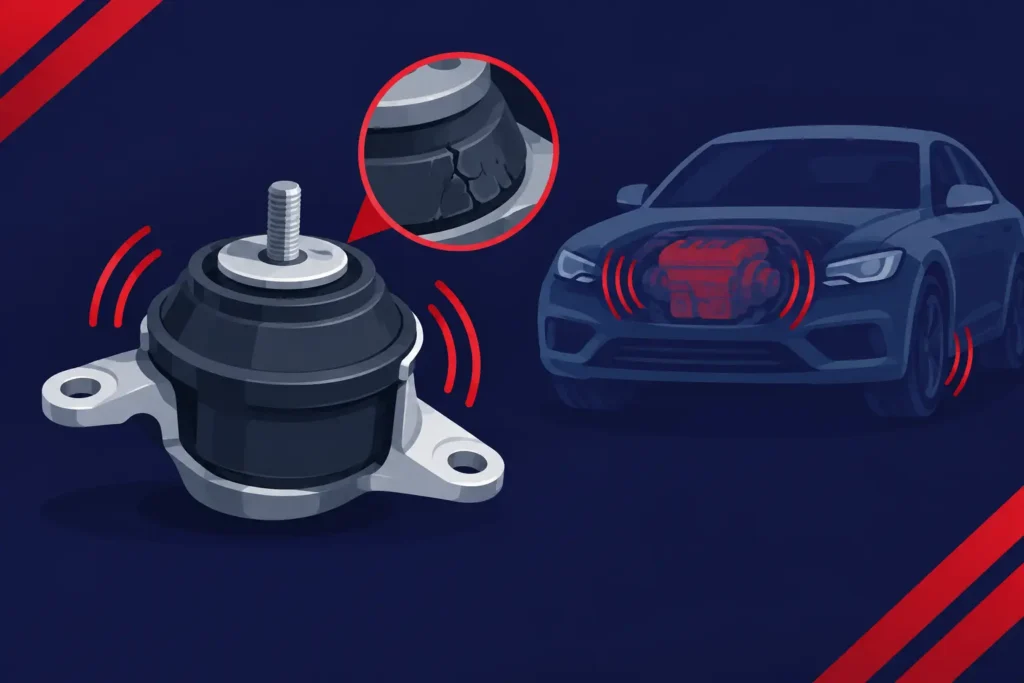
A vibration that shows up at idle, gets worse when the vehicle is in gear, or arrives with a noticeable clunk during acceleration is more than an annoyance. Can bad mounts cause vibration? Absolutely. Engine and transmission mounts are designed to hold heavy drivetrain components in the correct position while absorbing normal movement. When they wear out, that movement can travel directly into the cabin.
For drivers in Saint Cloud and across Central Florida, the right repair starts with identifying the actual source. A vibration can come from several systems, and replacing parts based on a guess is rarely the honest or cost-effective answer. Worn mounts are a common cause, but a careful inspection is what separates a proper repair from a temporary fix.
Can Bad Mounts Cause Vibration at Idle?
Yes. Excessive vibration at idle is one of the most familiar signs of a failing engine or transmission mount. A healthy mount contains rubber, hydraulic fluid, or a combination of materials that cushions the engine’s normal pulses. As the rubber cracks, separates, hardens, or collapses, it loses that cushioning ability.
Instead of being isolated below the hood, engine vibration is transferred into the steering wheel, seat, floorboard, and dashboard. You may feel a mild buzz at first. Over time, it can become a harsh shake that is especially noticeable while stopped at a light with the transmission in Drive.
The pattern matters. If the vibration becomes significantly smoother when the vehicle is shifted into Park or Neutral, a mount issue deserves attention. The engine is under a different load in gear, so a weakened mount may allow it to shift farther and transmit more vibration through the chassis.
That said, rough idle can also be caused by an engine misfire, vacuum leak, fuel delivery issue, or ignition problem. Mounts do not create a misfire, but they can make a normally minor engine vibration feel much more severe inside the vehicle. Good diagnostics look at both the condition of the mounts and how smoothly the engine is operating.
What Engine and Transmission Mounts Actually Do
Most vehicles use multiple mounts to support the engine and transmission assembly. Their job is not simply to keep the drivetrain from falling or sliding around. They also control movement during acceleration, braking, shifting, cornering, and changes in engine torque.
On many European, exotic, and performance-oriented vehicles, the mount design can be more sophisticated than a basic rubber bushing. Some use fluid-filled hydraulic mounts, vacuum-controlled mounts, or electronically controlled active mounts. These designs can deliver excellent refinement when new, but they require accurate diagnosis when problems develop.
A damaged transmission mount can produce symptoms that feel similar to a bad engine mount. It may allow the transmission to move excessively under load, create a thump when shifting from Park into Drive or Reverse, or add vibration that changes with engine speed. Because the engine, transmission, axles, exhaust, and driveline work together, technicians must inspect the system as a whole.
Signs Your Vehicle May Have Worn Mounts
Vibration is often the first symptom drivers notice, but it is not the only one. Pay attention to changes that occur during everyday driving, especially if they are becoming more frequent or pronounced.
A worn mount may cause a clunk or bump when accelerating, braking, or shifting. You might feel the engine lurch slightly when selecting Drive or Reverse. In more severe cases, the engine can move enough to strain hoses, wiring, exhaust components, or shift linkage.
Look for these warning signs:
- Stronger vibration in Drive or Reverse while stopped
- A clunk, bang, or jolt during gear changes or throttle changes
- Noticeable engine movement when the vehicle is started or shut off
- Vibration through the seat, pedals, steering wheel, or floorboard
- A thumping sound under acceleration or when coming to a stop
- Cracked rubber, fluid leakage from hydraulic mounts, or visibly sagging mounts
Not every failed mount produces every symptom. A torn mount can be noisy, while a collapsed hydraulic mount may mainly cause harsh vibration. The vehicle’s layout, engine size, age, and driving conditions all affect how the problem presents itself.
Why Bad Mounts Can Feel Like Transmission Trouble
A failing mount does not usually mean the transmission itself is failing. However, it can make shifts feel rougher, cause a pronounced engagement thud, and create movement that drivers understandably associate with a transmission problem.
This is where experience matters. If a vehicle jolts when shifting into gear, the technician should not assume the cause is internal transmission damage. The transmission fluid condition, computer data, shift operation, driveline components, and mount condition all need to be considered. A weak transmission mount can exaggerate normal engagement, while an internal transmission concern may place unusual stress on otherwise serviceable mounts.
There is also a practical trade-off to consider. Replacing only the visibly worst mount can reduce the immediate vibration, but other aged mounts may still allow excessive movement. On the other hand, replacing every mount without confirming their condition is not always necessary. The right approach is to recommend repairs based on what inspection and testing show, then explain the options clearly.
Other Problems That Can Cause Similar Vibrations
Mounts are a strong possibility when vibration changes with gear selection and engine load, but they are not the only possibility. Tire and wheel problems often create vibration that increases with road speed, usually most noticeable at a particular speed range. Brake rotor issues tend to create a shake while braking. A worn CV axle, driveshaft component, or differential mount may cause vibration or shudder during acceleration.
Engine performance concerns can feel similar as well. A misfire may cause the entire vehicle to shake at idle, and it can worsen under load. On some vehicles, a failed dual-mass flywheel, worn torque converter, or transmission-related concern can also produce vibration that needs a more detailed evaluation.
The key question is not just, “Does it vibrate?” It is, “When does it vibrate?” A technician will want to know whether the concern happens at idle, at highway speed, only under acceleration, only while braking, or when shifting into gear. Those details narrow the diagnosis and help avoid unnecessary repairs.
How a Professional Mount Inspection Works
A proper mount inspection begins with a conversation and a road test when appropriate. The technician listens for clunks, feels for vibration patterns, and notes when the condition occurs. Under the hood and beneath the vehicle, mounts are checked for collapsed rubber, separation, leakage, broken brackets, loose fasteners, and excessive drivetrain movement.
Controlled loading tests may be used to observe how the engine and transmission move when the vehicle is placed in gear or gently loaded. This must be done carefully and safely. It is not a test that should be improvised in a driveway with someone standing near moving engine components.
On modern vehicles, scan-tool information can also be useful. If the engine has stored misfire codes or the transmission has fault codes, those findings help establish whether the vibration is mount-related, powertrain-related, or a combination of concerns. For specialty European and luxury vehicles, correct diagnostic equipment and platform knowledge can make a meaningful difference.
Do Not Wait Until a Mount Fails Completely
A worn mount may still hold the engine in place well enough for normal driving, but that does not mean it should be ignored. As the mount deteriorates, the extra movement can place stress on nearby components. Exhaust flex joints, coolant hoses, wiring, air intake connections, axles, and transmission linkage may all be affected depending on the vehicle.
The repair is often more straightforward when addressed early. Waiting until a mount tears completely can turn a vibration complaint into a larger drivability issue, and it may leave the vehicle with a hard clunk every time torque changes direction.
At MotorSport Prime, the focus is on finding the cause before recommending the repair. Whether your vehicle is a daily driver, a European luxury model, a classic, or a performance car, a clear diagnosis gives you the confidence to make the right decision. If a vibration has changed the way your vehicle feels, having it inspected now can protect the refined, reliable drive you expect from it.