
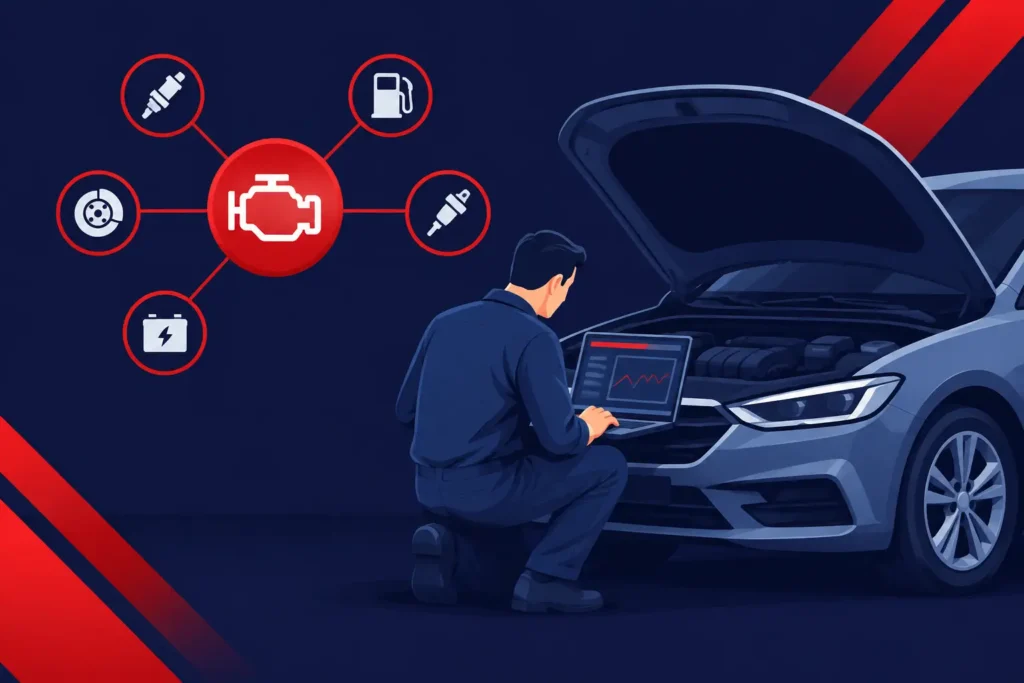
A vehicle that starts every morning can still have a serious problem. Maybe it hesitates when pulling into traffic, shudders at a steady speed, stalls at a light, or shifts with an unfamiliar delay. Those symptoms can make driving stressful, especially when the car is a European luxury model, exotic vehicle, classic, or a dependable daily driver you need to trust. Proper drivability problem diagnosis is about finding the root cause instead of replacing parts until the symptom happens to disappear.
At MotorSport Prime, we believe a diagnosis should give you clear answers: what is wrong, why it happened, what repairs are truly needed, and what can wait. That approach protects your vehicle, your time, and your repair budget.
What Counts as a Drivability Problem?
Drivability describes how a vehicle behaves when it is running and being driven. It includes starting, idling, accelerating, cruising, braking, shifting, and responding to throttle input. A concern may be obvious every time you drive, or it may only happen under a narrow set of conditions, such as when the engine is cold, after the vehicle has warmed up, during hard acceleration, or with the A/C running.
Common drivability complaints include rough idle, poor acceleration, misfires, stalling, surging, reduced fuel economy, hard starts, engine warning lights, unusual vibration, and delayed or harsh transmission shifts. These symptoms can overlap. For example, what feels like an engine misfire may be caused by a transmission issue, a restricted fuel supply, an air leak, or a failing sensor sending inaccurate information to the vehicle’s computer.
That is why a quick code scan is not the same thing as a complete diagnosis. A stored trouble code points to a system or condition that needs attention. It does not automatically identify the failed part.
Why Accurate Drivability Problem Diagnosis Matters
Modern vehicles depend on several systems working together: engine management, fuel delivery, ignition, emissions controls, air intake, cooling, electrical charging, and transmission operation. Specialty vehicles often add another layer of complexity through advanced electronics, turbocharging, direct injection, dual-clutch transmissions, adaptive shift strategies, or components that require vehicle-specific testing procedures.
Replacing the part named in a code without testing can be an expensive guess. A code related to an oxygen sensor, for instance, may come from a failed sensor, but it could also result from an exhaust leak, vacuum leak, wiring fault, fuel pressure issue, or combustion problem. Installing a new sensor may temporarily seem helpful while the actual cause remains.
A sound diagnosis also prevents small problems from becoming larger repairs. A minor ignition misfire can damage a catalytic converter if it is ignored. A transmission that slips because of low or degraded fluid can suffer internal damage if it continues to operate under load. Catching the cause early often means more repair options and better long-term reliability.
The Details That Help Find the Cause
The best diagnostic information often comes from the person behind the wheel. Before testing begins, a technician needs to understand exactly what you feel and when it occurs. “It runs badly” is a valid concern, but details help narrow the search.
Think about whether the problem happens at startup or only after the engine is warm. Does it occur during acceleration, at highway speed, while turning, or when shifting from park into drive? Has the check engine light flashed, remained on, or appeared only once? Did the concern start after recent maintenance, a dead battery, a fuel fill-up, or an extended period of storage?
It also helps to note sounds and smells. A whistle may suggest an intake air leak. A fuel smell deserves prompt attention. A clunk during a shift may point toward drivetrain movement or transmission operation, while a vibration that changes with vehicle speed may be unrelated to the engine altogether.
These observations do not replace professional testing, but they make the process more efficient and help reproduce an intermittent concern. If possible, write down the conditions when the problem occurs rather than waiting for it to become constant.
How a Professional Diagnosis Proceeds
A reliable process starts with verification. The technician listens to the concern, reviews vehicle history, performs a visual inspection, and confirms the symptom through appropriate testing or a road test. This matters because some problems can be mistaken for one another. A rough idle caused by an engine issue requires a different repair path than a vibration from a worn mount or wheel problem.
Next comes scan-tool data, but the information is interpreted in context. Diagnostic trouble codes, freeze-frame data, live sensor readings, misfire counts, fuel trim values, transmission data, and system readiness information can show where the vehicle is operating outside normal range. Skilled technicians compare that data with how the vehicle performs, rather than treating any single number as a verdict.
From there, targeted tests confirm the cause. Depending on the symptom, that may involve checking ignition spark, fuel pressure and volume, injector performance, intake leaks, compression, charging voltage, sensor circuits, cooling system operation, or exhaust restrictions. Electrical testing is especially important because a damaged connector, weak ground, or corroded wiring can imitate the failure of an expensive component.
Transmission-related drivability concerns need the same disciplined approach. Before recommending internal repairs, a technician should evaluate fluid condition and level, inspect for leaks, review transmission fault data, assess shift behavior, and determine whether the issue is electronic, hydraulic, mechanical, or related to the engine. The right answer may be a fluid service, a solenoid or control repair, internal transmission work, or an engine repair that is affecting shift quality. It depends on the evidence.
Problems That Should Not Be Put Off
Some drivability symptoms call for immediate attention. A flashing check engine light often indicates an active misfire that can damage the catalytic converter. A strong fuel odor, visible fluid leak, overheating warning, loss of power in traffic, or severe transmission slipping should also be inspected promptly.
Do not continue to drive a vehicle that is overheating, repeatedly stalling, or unable to accelerate safely. Pull over when it is safe, shut the vehicle down, and arrange professional help. Continuing to force the vehicle home can turn a manageable repair into a major engine, transmission, or safety issue.
Less urgent symptoms still deserve an appointment. A mild hesitation, occasional rough start, new shift delay, or gradual fuel economy drop can be the first sign of a developing fault. Waiting until a warning light appears or the vehicle becomes undrivable usually limits your choices.
Honest Repairs Start With Clear Findings
A quality repair shop should be able to explain the findings in straightforward language. You should know what testing supports the recommendation, whether the repair addresses the root cause, and what risks come with delaying work. If multiple items are found, the shop should separate immediate needs from maintenance and future considerations.
There are times when a diagnostic process reveals more than one issue. That is not automatically upselling. Older vehicles, high-mileage cars, and vehicles with deferred maintenance can have separate faults producing similar symptoms. The difference is proof: each recommendation should connect to an observed condition, test result, or confirmed failure.
For owners of European, exotic, and classic vehicles, experience matters even more. These vehicles may have unique service requirements, known platform-specific patterns, limited parts options, or systems that need careful calibration after repair. The goal is not simply to make the warning light go away. It is to restore the way the vehicle should start, respond, shift, and perform.
Give Your Vehicle the Attention the Symptom Deserves
A drivability concern is your vehicle communicating that something has changed. Sometimes the fix is simple. Sometimes careful testing uncovers a deeper engine, electrical, or transmission issue. Either way, accurate answers are worth more than fast guesses.
If your vehicle no longer feels predictable behind the wheel, pay attention to the pattern and have it checked before the symptom becomes a breakdown. Clear information and skilled hands can turn an uncertain drive back into one you feel good about taking.