
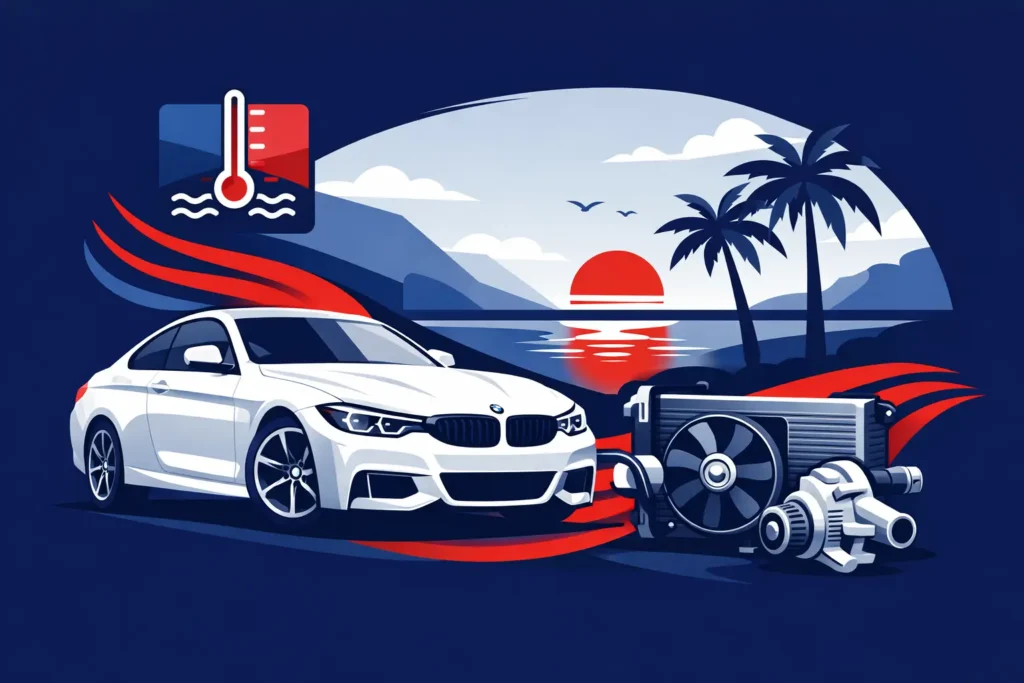
A BMW temperature warning is not a message to watch for another few miles. On many models, the gauge is heavily buffered, meaning it can sit in the normal range until the engine is already running hotter than it should. By the time a red warning appears, continuing to drive can turn a manageable cooling-system repair into cylinder-head, head-gasket, or engine damage. This BMW cooling system guide explains what owners should know before a small leak or weak component becomes an expensive problem.
BMW cooling systems are designed for precise temperature control and efficient performance. They also contain several components that age, cycle through extreme heat, and eventually require attention. A careful inspection and a correct diagnosis matter far more than simply replacing the first part that looks suspicious.
How a BMW Cooling System Works
The cooling system moves coolant through the engine, radiator, heater core, hoses, thermostat, and expansion tank to carry heat away from critical engine components. The water pump keeps that coolant moving. The thermostat regulates flow according to temperature, while the radiator and electric cooling fan release heat into the air.
Modern BMWs often use electronically controlled thermostats and, on many engines, electric water pumps. These systems can improve warm-up time, fuel efficiency, and temperature management under different driving conditions. They can also make diagnosis more involved. A traditional mechanical water pump may show a visible leak or bearing noise before failure. An electric pump can stop operating with little warning and set a fault code that requires proper scan-tool testing.
The correct coolant mixture is part of the system, not an afterthought. Coolant protects against freezing, boiling, corrosion, and cavitation. In Central Florida, freeze protection may not seem urgent, but the corrosion protection and boiling-point margin absolutely are. Mixing incompatible coolant types or topping off repeatedly with plain water can create problems inside a system that depends on clean, properly mixed fluid.
BMW Cooling System Guide: Parts That Commonly Fail
No two BMW engines have identical weak points, but several components deserve close attention as mileage and age accumulate. Plastic expansion tanks, radiator end tanks, hose fittings, and coolant flanges are common leak sources because repeated heat cycles can make plastic brittle. A small crack may only seep when the system is hot and pressurized, then leave little evidence once the engine cools.
The water pump and thermostat are also frequent concerns, especially on BMW models equipped with electric pumps. A pump may fail electronically, mechanically, or intermittently. The thermostat can stick open, causing slow warm-up and reduced heater performance, or stick closed, restricting coolant flow and causing overheating. Because these parts often have similar service access and age at similar rates, replacing them together can be sensible when diagnosis and vehicle condition support it.
Radiators can leak at their plastic-to-aluminum seams. Hoses may swell, soften, or develop cracks around the connection points. The expansion tank cap is inexpensive but important because it maintains system pressure. A weak cap can allow coolant to boil at a lower temperature or force coolant out of the system.
On older BMWs, mechanical fan clutches, belts, and pulleys may also need inspection. On newer vehicles, the electric fan, its wiring, control module, and related sensors need to be tested when the engine runs hot in traffic but seems fine at highway speed.
Warning Signs You Should Not Ignore
Coolant on the driveway is an obvious warning, but BMW cooling-system trouble is not always that visible. A sweet smell after a drive, white or bluish residue around the expansion tank, a low-coolant alert, or steam from under the hood all deserve prompt attention.
Pay attention to patterns. An engine that runs hot only while idling may have an airflow or fan issue. One that overheats at highway speed may have poor coolant circulation, a thermostat problem, a blocked radiator, or a more serious issue. Weak cabin heat can point to low coolant, trapped air, or restricted flow through the heater core. A temperature warning that comes and goes is still a warning, not a reason to wait.
If the temperature warning turns red, safely pull over as soon as possible and shut the engine off. Do not remove the expansion tank cap while the engine is hot. Pressurized coolant can cause serious burns. Allow the vehicle to cool completely, then arrange for a proper inspection rather than trying to drive it home on a low coolant level.
Why Proper Diagnosis Saves Money
Cooling-system repairs can look simple from the outside: find the leak, replace the part, add coolant. The reality is that a BMW system may have more than one age-related failure, and an external leak does not rule out an electrical fault or circulation problem.
A thorough diagnosis should include a visual inspection, pressure testing, fault-code scanning where applicable, confirmation of water-pump operation, and assessment of the thermostat, fan operation, hoses, reservoir, and radiator. In some cases, a technician may also check for combustion gases in the coolant or signs of internal engine trouble. This is especially important if the vehicle was driven while overheated.
The goal is not to sell parts based on a guess. It is to identify the failed component, inspect the surrounding parts that may be near the end of their service life, and explain the repair choices clearly. Replacing every cooling component at the first small leak is not always necessary. On the other hand, replacing only one visibly failed plastic part on a high-mileage system can lead to another breakdown soon after. The right approach depends on the BMW model, mileage, service history, condition of related parts, and how long you plan to keep the vehicle.
Maintenance That Helps Prevent Overheating
BMW does not always provide a simple, universal replacement interval for every cooling-system component. That does not mean the system should be ignored until it fails. Regular inspections during oil service, brake work, or scheduled maintenance can reveal dried coolant residue, aging hoses, brittle plastic, and declining coolant level before a roadside event occurs.
Use the coolant specified for your BMW and mix it correctly with distilled water when concentrate is required. Avoid universal coolant unless its compatibility has been verified for the specific vehicle. Color alone is not a reliable way to identify coolant chemistry. Blue, green, pink, and other colors vary by manufacturer, so the proper specification matters more than appearance.
After a cooling-system repair, correct bleeding is critical. Air trapped in the system can cause poor heater output, erratic temperatures, coolant warnings, and overheating. Some BMWs have an electronic bleed procedure that runs the electric pump in a specific cycle. Skipping this step can leave a perfectly good repair performing poorly.
It is also wise to have the cooling system inspected before long summer trips, especially in Florida. High ambient temperatures, stop-and-go traffic, extended A/C use, and heavy rain can all increase demand on the cooling fan and radiator. A vehicle that has been fine during short local errands may reveal a weak component during a long highway drive or an afternoon traffic delay.
When Replacement Makes More Sense Than a Patch
A cracked hose fitting or leaking expansion tank can sometimes be addressed as a focused repair. But when several plastic components show age, the water pump and thermostat are original at high mileage, or the cooling system has already needed repeated top-offs, a more complete service may offer better long-term value.
Quality parts and proper installation matter. Bargain components can create fitment issues, poor sealing, and premature failures. The lowest repair estimate is not always the lowest ownership cost if the same area must be disassembled again months later. A qualified technician should be able to explain what is urgent, what is preventive, and where there is a reasonable choice between repairing now or monitoring the condition.
For Central Florida BMW owners, the best cooling-system strategy is simple: act early, diagnose carefully, and use repairs that match the vehicle’s real condition. MotorSport Prime approaches that work with the same hands-on care given to every European vehicle, because reliable performance starts with an engine that can keep its cool.