
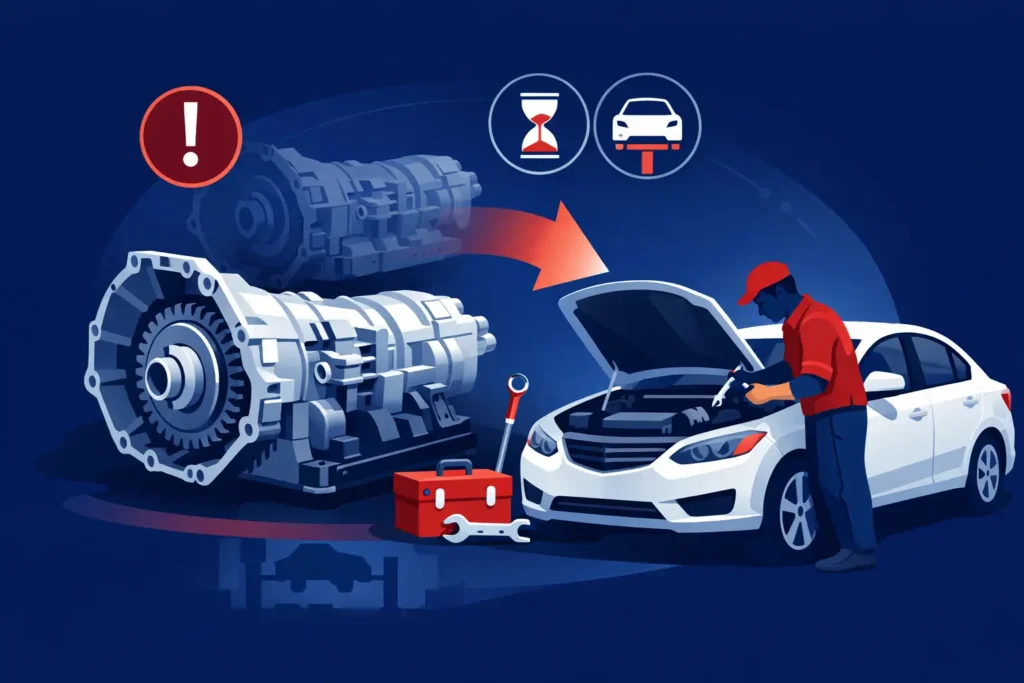
A transmission usually does not fail all at once. It gives warnings first – slipping between gears, delayed engagement, hard shifts, burned fluid, odd noises, or a dashboard light that keeps coming back. Knowing when to replace transmission components, rebuild the unit, or install a full replacement can save you from bigger damage, repeat breakdowns, and money spent on the wrong fix.
For many drivers, the hardest part is not noticing a problem. It is figuring out whether the problem is minor service work or the point where replacement makes more sense. That answer depends on the symptoms, the condition of the internal parts, the vehicle’s age and value, and how the transmission responded to previous repairs.
When to replace transmission instead of repairing it
A good shop does not jump straight to replacement. Honest transmission work starts with testing, scanning, road evaluation, and fluid inspection. Sometimes a leaking seal, a bad solenoid, a valve body issue, or overdue fluid service creates symptoms that feel worse than they are. In those cases, targeted repair can restore normal operation without the cost of a full unit.
Replacement becomes the smarter option when internal wear is widespread. If the transmission is slipping badly in multiple gears, grinding, shuddering under load, overheating repeatedly, or filling the pan with heavy metal debris, a simple repair may only buy a little time. When several internal components are damaged, piecing it together can become less cost-effective than replacing or rebuilding the entire assembly.
This is especially true if the transmission has already been repaired before and the same complaints keep returning. Repeat failures usually point to deeper wear inside the unit, not just one isolated part.
The warning signs drivers should not ignore
Some transmission symptoms are subtle at first. You may notice the engine revs rise before the car actually moves, or the vehicle hesitates when shifted into drive or reverse. Those signs often mean the transmission is struggling to build or hold the hydraulic pressure it needs.
Hard shifting is another common warning. A single harsh shift once in a while may not mean the unit is done, but repeated banging into gear, flaring between shifts, or inconsistent operation deserves immediate attention. Waiting too long can turn a repairable issue into internal clutch damage.
Fluid condition tells a story too. Healthy transmission fluid is generally clean and bright. Burned-smelling, dark, or contaminated fluid suggests excess heat and friction. If the fluid also contains visible debris, that points to wear inside the transmission itself.
Noise matters as well. Whining, humming, clunking, or grinding during acceleration or gear changes can indicate failing bearings, gear damage, or pump issues. On European, exotic, and older specialty vehicles, those noises should be checked by someone who understands the platform, because misdiagnosis is common when a shop is not familiar with the transmission design.
Repair, rebuild, or replace – what is the difference?
These terms get mixed together all the time, and that leads to confusion.
A repair means fixing a specific fault while leaving most of the transmission intact. That could involve replacing a sensor, solenoid, seal, pan gasket, cooler line, valve body component, or another external or accessible part. Repairs make sense when testing clearly shows one limited problem.
A rebuild means the transmission is removed, disassembled, inspected, cleaned, and fitted with new internal wear components as needed. A proper rebuild addresses the actual source of failure, not just the symptom. It can be a strong option when the transmission case and major hard parts are still usable.
A replacement usually means installing another complete transmission assembly, either remanufactured, rebuilt, or sometimes used depending on the situation. This can be the better path when the original unit has severe internal damage, the hard parts are no longer reliable, or the cost of rebuilding exceeds the value of the result.
There is no one-size-fits-all answer. The right choice depends on the transmission’s condition and the owner’s goals for the vehicle.
How mileage and vehicle value affect the decision
Mileage matters, but it is not the only factor. A transmission at 160,000 miles may still be worth rebuilding if the vehicle is otherwise in excellent shape. On the other hand, a lower-mileage unit that has been overheated, neglected, or driven with chronic slipping may be in worse condition than expected.
Vehicle value also changes the conversation. If you own a European luxury car, an exotic, or a classic that you plan to keep, a quality transmission replacement or rebuild can be the right investment. These vehicles deserve accurate diagnostics and careful workmanship, not guesswork.
For an older daily driver with significant wear in other systems, the equation may look different. If the transmission needs major work and the engine, suspension, cooling system, or electronics are also nearing expensive repairs, it may not make sense to put a large amount into the car. That is not about cutting corners. It is about making a practical decision based on the whole vehicle.
Why early diagnosis saves money
Transmission problems get more expensive the longer they are ignored. Low fluid from a leak can turn into overheating. Overheating can burn clutches. Burned clutches spread debris through the valve body and pump. What could have started as a repair becomes a rebuild or replacement.
That is why accurate diagnostics matter so much. A shop should not rely on a quick code scan alone. Transmission issues need a full picture – fault codes, road test behavior, fluid inspection, live data, and sometimes pressure testing. Without that process, owners often end up paying for parts that never addressed the real cause.
At MotorSport Prime, that craftsman approach matters because transmission work is not treated like an afterthought. It is a specialty. For drivers in Saint Cloud and the surrounding Central Florida area, that can make the difference between an informed repair decision and an expensive guess.
Special considerations for European, exotic, and classic vehicles
When to replace transmission systems in specialty vehicles often requires more nuance than it does on a basic commuter car. European and exotic models frequently use more complex control strategies, adaptation values, and specialized components. A symptom that looks like total failure can sometimes come from software issues, mechatronic faults, or fluid problems specific to that design.
Classic vehicles bring a different challenge. Parts availability, originality, and driving expectations all matter. Some owners want factory-correct restoration quality. Others want long-term drivability. In those cases, the best answer may not be the cheapest or fastest option. It should be the one that respects the vehicle and how the owner plans to use it.
That is why experience matters. A transmission shop that regularly works on these vehicles is more likely to spot the difference between a fixable control issue and a unit that is truly at the end of its service life.
Questions to ask before approving replacement
Before you commit to major transmission work, ask what testing confirmed the diagnosis. Ask whether the problem is isolated or if there is evidence of widespread internal damage. Ask whether repair, rebuild, and replacement were all considered and why one option was recommended over the others.
You should also ask about the condition of the fluid, any debris found during inspection, and whether related systems such as the cooler, mounts, control module, or driveline need attention too. A trustworthy shop will explain the reasoning in plain language. You should never feel pushed into a decision without understanding what failed and what result to expect.
Financing can also be part of the discussion. Transmission replacement is a major repair, and for many families it helps to know there are options that make the work manageable without delaying necessary service.
The right time is before total failure
If your vehicle is slipping, shuddering, refusing to engage, or showing signs of internal wear, the best time to act is before you are stranded on the side of the road. The right shop will not sell you a transmission you do not need, but it also will not pretend a worn-out unit can be saved with a temporary patch.
Good transmission decisions come from honest diagnosis, real experience, and respect for your vehicle and your budget. If something feels off, trust that instinct and have it checked while you still have options.