
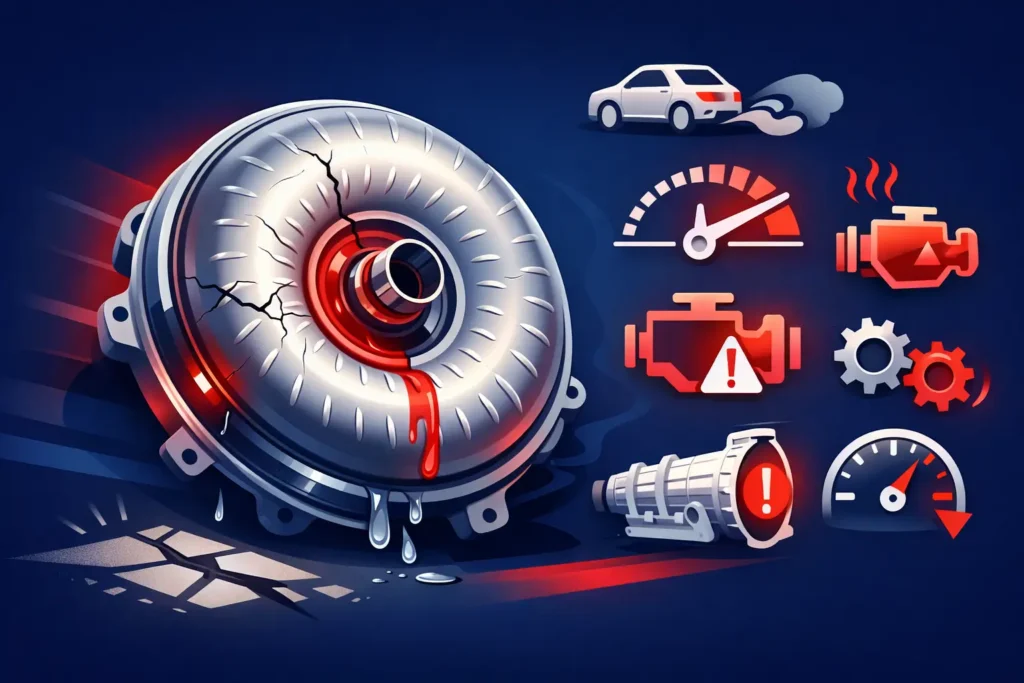
A vehicle that suddenly shudders at a stoplight, slips between gears, or feels strangely lazy on takeoff can leave you wondering whether the problem is the transmission itself or something more specific. In many cases, the signs of failing torque converter trouble show up before a complete transmission failure, but they are easy to mistake for other drivability issues if you do not know what to watch for.
For many drivers, the torque converter is one of those parts they rarely hear about until something goes wrong. It sits between the engine and the automatic transmission, transferring power and helping the vehicle move smoothly from a stop. When it starts to fail, the symptoms can be subtle at first, then turn expensive if they are ignored.
What a torque converter actually does
In an automatic transmission, the torque converter replaces the clutch you would find in a manual car. It uses transmission fluid and internal components to connect engine power to the transmission. That connection needs to be smooth, responsive, and consistent.
When the converter is working correctly, the vehicle accelerates without drama, shifts feel controlled, and engine speed matches what the car is doing. When it is not, you may feel vibration, hesitation, overheating, or slipping that seems to come and go. That is part of what makes diagnosis tricky. A failing torque converter can mimic other transmission problems, and other transmission problems can look like converter failure.
7 signs of a failing torque converter
1. Shuddering during acceleration
One of the most common signs of a failing torque converter is a shudder or vibration when the vehicle tries to accelerate, especially at lower speeds or when the converter clutch is engaging. Many drivers describe it as feeling like they are driving over rumble strips for a moment.
This shudder often happens because the internal clutch inside the torque converter is not applying smoothly. Sometimes contaminated or degraded transmission fluid contributes to the problem. Sometimes the converter itself is worn internally. Either way, it should not be brushed off as a minor annoyance.
2. Slipping between gears or poor power transfer
If the engine revs climb but the vehicle does not accelerate the way it should, the torque converter may be struggling to transfer power efficiently. Drivers often call this slipping, even though the issue may feel different from a standard gear slip inside the transmission.
The key symptom is a mismatch between engine speed and actual movement. You press the pedal, the engine responds, but the car feels delayed or soft. In performance-oriented European vehicles and heavier luxury models, that loss of crisp response is often even more noticeable.
3. Delayed movement when shifting into drive or reverse
When you put the vehicle into drive or reverse, it should engage within a reasonable moment. If there is a pronounced delay before the car starts to move, the torque converter or the fluid pressure supporting it may be part of the problem.
This does not always mean the converter alone is at fault. Low fluid, internal wear, valve body issues, and broader transmission concerns can create a similar complaint. That is why proper testing matters. Guessing at a transmission problem usually wastes time and money.
4. Unusual overheating
A failing torque converter can generate excess heat, especially if it is slipping internally or not locking up when it should. Transmission heat is never something to take lightly. Heat breaks down fluid, and once fluid loses its protective properties, wear increases fast.
You might notice a transmission warning light, a burning smell, harsher shifting, or a sudden decline in performance after driving in traffic or during longer trips. In Florida heat, those symptoms can show up sooner because the system is already under added stress.
5. Rough idle or stalling at a stop
Some torque converter problems show up when the vehicle is slowing down or sitting still. If the converter clutch stays engaged when it should release, the engine may stumble, shake, or even stall when you stop.
This can feel like an engine problem at first. The car may idle rough at a red light, then smooth out again once you move. That is one reason these issues are often misdiagnosed. A careful technician will look at transmission behavior and engine data together rather than chasing symptoms one by one.
6. Dirty or contaminated transmission fluid
You may not feel this symptom directly from the driver seat, but fluid condition tells an important story. Healthy transmission fluid should look clean and generally bright red or slightly darker depending on age. If it is burnt, discolored, or full of debris, internal wear may already be underway.
A failing torque converter can shed material into the fluid, and contaminated fluid can also damage the converter. It works both ways. If a shop recommends a transmission inspection after finding dirty fluid, that is not upselling when the diagnosis is backed by evidence. It is good preventive care.
7. Check engine or transmission warning lights
Modern vehicles monitor transmission performance closely. If the torque converter clutch is not operating correctly, the car may store fault codes and trigger a warning light. Codes related to lockup performance, slipping, or incorrect gear ratio can all point technicians toward converter-related issues.
The light itself does not confirm the exact failed part. It simply means the car has seen a problem. What matters is accurate diagnostic work – not clearing the code and hoping it stays away.
Why these symptoms should not be ignored
Torque converter problems rarely fix themselves. In some cases, a fluid service and early intervention can prevent more serious damage. In other cases, the converter has already suffered enough internal wear that replacement is the safer path. It depends on how long the issue has been present, what damage has spread through the system, and the overall condition of the transmission.
The real risk is waiting too long. A converter that continues to slip or overheat can contaminate the transmission with debris and accelerate wear in other components. What starts as one repair can turn into a much larger rebuild if the vehicle keeps being driven with clear symptoms.
That is especially true for European and specialty vehicles, where drivability concerns are sometimes subtle before they become severe. Owners of these cars often know when something feels off. Trust that instinct. If the vehicle no longer feels smooth, responsive, or consistent, it is worth having it checked by someone who understands transmission behavior, not just general mechanical repair.
What proper diagnosis should look like
Good transmission diagnosis is not guesswork. A shop should start with a road test, scan for fault codes, inspect fluid condition, and evaluate shift behavior and converter lockup performance. Depending on the vehicle, further testing may include live data analysis, pressure checks, or inspection for internal debris.
This matters because several issues can resemble the signs of failing torque converter problems. Misfires, worn engine mounts, low transmission fluid, valve body faults, and internal transmission damage can all create similar complaints. Replacing a torque converter without confirming the root cause is not the right way to handle the job.
At MotorSport Prime, this is exactly why experienced diagnostics come first. When a customer brings in a vehicle with shuddering, slipping, or overheating concerns, the goal is to identify what is actually failing and explain the repair honestly. That protects the customer, the vehicle, and the long-term reliability of the transmission.
When to schedule service
If the symptom happens once, you might be tempted to wait. If it happens twice, there is a pattern. Shuddering under light throttle, delayed engagement, unexplained overheating, or repeated warning lights all deserve attention sooner rather than later.
The urgency goes up if the vehicle is used for daily commuting, highway driving, or heavy stop-and-go traffic, because those conditions can speed up damage. It also goes up if you own a performance, luxury, exotic, or classic vehicle where parts availability, repair quality, and proper setup matter more than cutting corners.
A trustworthy repair shop will not promise the cheapest answer before diagnosing the problem. It will give you the straight story – whether that means a fluid service, a converter replacement, or a larger transmission repair. That kind of honesty saves money in the long run because it avoids repeat failures and incomplete fixes.
If your car has started to shudder, slip, hesitate, or run hotter than normal, listen to what it is telling you. Catching transmission problems early is one of the best ways to protect your vehicle, your budget, and your confidence every time you turn the key.