
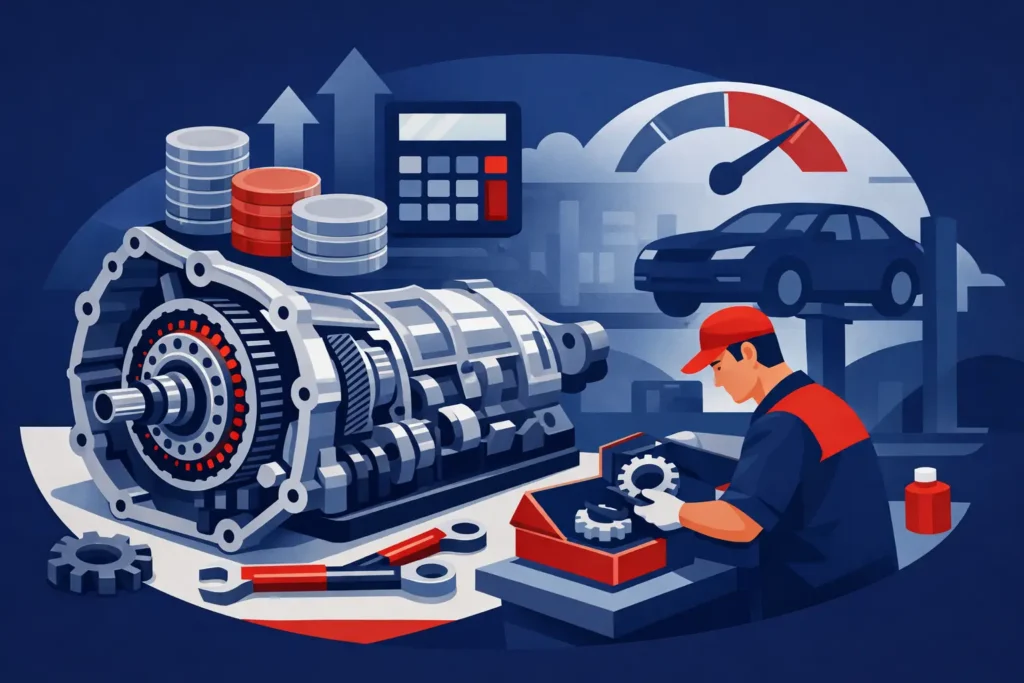
A slipping shift, delayed engagement, or transmission warning light can turn a normal drive into a stressful question: what will this cost to fix? The honest answer to rebuild automatic gearbox cost is that it depends on what failed, how far the damage has spread, and what type of vehicle you own. A proper estimate should come after diagnosis, not after a quick guess over the phone.
For many vehicles, an automatic transmission rebuild is a major repair because the transmission must be removed, disassembled, inspected, repaired, reassembled, and tested. That work demands more than replacing one failed part. It requires the right technical knowledge, quality components, careful measurements, and a commitment to finding the original cause of the problem.
What Does It Cost to Rebuild an Automatic Gearbox?
As a general Central Florida guideline, an automatic gearbox rebuild may cost roughly $2,500 to $6,500 for many common vehicles. European luxury vehicles, performance cars, heavy-duty trucks, and specialty transmissions can cost more – sometimes $7,000 to $10,000 or beyond – depending on parts availability and the complexity of the unit.
Those ranges are useful for planning, but they are not a diagnosis. A vehicle with a worn clutch pack and a clean transmission case is a very different job from one with metal contamination throughout the unit, damaged hard parts, electronic control issues, or torque converter failure. Two cars can show the same symptom and require very different repairs.
A lower quote is not automatically a better value. Ask what is included: removal and installation, internal parts, torque converter service or replacement, transmission fluid, filter, seals, programming or relearn procedures, road testing, and warranty terms. A number that looks attractive at first may leave out work that is necessary for a reliable repair.
Why Rebuild Pricing Varies So Much
The transmission itself is only part of the bill. Labor is substantial because access varies widely between vehicles. On some models, the transmission can be removed with a straightforward process. On others, exhaust components, subframes, transfer cases, driveline parts, or tightly packaged engine-bay systems add significant time.
Vehicle design matters especially for European, exotic, and classic cars. A modern European automatic may use a sophisticated valve body, integrated mechatronics, adaptive shift programming, and model-specific service procedures. An exotic application may have limited parts availability and require specialists familiar with its design. A classic vehicle can bring a different challenge: older components, prior modifications, or replacement parts that are no longer readily available.
The extent of internal damage is another major factor. Heat, low fluid, contaminated fluid, worn friction material, and continued driving after slipping begins can all turn a repairable concern into a full rebuild. If a transmission has filled its fluid with metal debris, the cooler lines and cooler may also need cleaning or replacement. Skipping that step risks sending contamination straight into the repaired transmission.
What a Proper Transmission Rebuild Includes
A rebuild is not simply a fluid change with a new filter. The transmission is removed and taken apart so the technician can inspect the internal components and identify worn or damaged parts. Friction clutches, steels, seals, gaskets, bushings, bearings, bands where applicable, and other wear items are evaluated and replaced as needed.
Hard parts such as planetary gearsets, drums, shafts, pumps, and cases must also be inspected. These components can be expensive, and their condition has a real effect on the final price. A damaged pump or scored drum cannot be ignored just because it is not included in a basic rebuild kit.
The valve body, solenoids, and electronic controls deserve equal attention on many modern transmissions. A mechanical rebuild alone will not solve an electronic pressure-control problem. Depending on the transmission, the job may require valve body repair, solenoid replacement, a mechatronic unit, control-module programming, or adaptation procedures after installation.
Finally, the rebuilt unit must be installed with the correct fluid and brought to the proper level at the specified temperature. It should be tested for leaks, shift quality, engagement, and fault codes. This final stage is where craftsmanship protects the investment made in the repair.
Rebuild, Repair, or Replacement?
A full rebuild is not always the right answer. If diagnostics identify an external leak, a failed sensor, a solenoid issue, or a service-related problem before internal damage occurs, a targeted repair may cost far less. This is why thorough testing matters before anyone recommends removing the transmission.
A remanufactured or replacement transmission can make sense when the existing unit has extensive damage, downtime is a primary concern, or a reliable replacement is available for the application. The trade-off is that replacement units are not all equal. Their quality, warranty, included components, shipping costs, and compatibility with your vehicle’s electronics should all be confirmed before moving forward.
For a well-kept European, exotic, or classic vehicle, rebuilding the original transmission may be the better route. It can preserve correct fitment and allow the technician to address the specific failure found in your unit. The right choice comes down to condition, parts availability, budget, and your plans for the vehicle.
Signs You Should Not Ignore
Transmission trouble rarely improves with more driving. Pay attention to slipping between gears, harsh or delayed shifts, shuddering on acceleration, a burning smell, fluid leaks, failure to engage Drive or Reverse, or a check engine or transmission warning light. These symptoms do not always mean a rebuild is necessary, but they do mean the vehicle should be inspected promptly.
Continuing to drive a slipping transmission creates heat. Heat damages friction material, and damaged friction material contaminates fluid. That contamination can affect valves, solenoids, the torque converter, and the cooler system. Acting early may give you more repair options and help control the eventual rebuild automatic gearbox cost.
How to Get a Fair, Useful Estimate
A trustworthy estimate begins with listening to the driver. When did the issue start? Does it happen cold, hot, under acceleration, or only during a certain shift? Has the vehicle recently had transmission service, battery work, engine repairs, or warning lights? Those details help point diagnostics in the right direction.
The shop should then inspect the vehicle, scan for codes and live data where applicable, check fluid condition, look for leaks, and verify the concern during a controlled road test when safe. On certain vehicles, additional pressure testing or pan inspection may be appropriate. The goal is to distinguish an internal failure from an external, hydraulic, or electronic problem.
When rebuilding is recommended, ask for a clear explanation of what was found and what the estimate covers. You should understand whether the torque converter is included, whether the cooler system will be addressed, which major components need replacement, and whether programming is required. Honest answers are more valuable than a vague promise of a cheap transmission job.
Protecting Your Investment After a Rebuild
Once a transmission has been rebuilt, correct maintenance helps it last. Follow the vehicle’s specified fluid type and service intervals rather than assuming all automatic transmission fluid is interchangeable. The wrong fluid can affect shift quality, clutch operation, and long-term durability.
Address engine misfires, cooling-system problems, and warning lights promptly. Transmission performance is connected to the rest of the vehicle. Low voltage, overheating, drivetrain vibration, and engine performance faults can all create symptoms that feel like transmission trouble or contribute to it.
At MotorSport Prime, transmission work is approached as a diagnosis first and a repair second. With 38 years of hands-on experience, the focus is on identifying what your vehicle actually needs, explaining the options clearly, and performing work that supports reliable performance for the long road ahead.
If your transmission is hesitating, slipping, or shifting differently than it used to, do not wait for a small warning to become a complete failure. A careful inspection can give you a clear path forward and the confidence to make the right decision for your vehicle.