
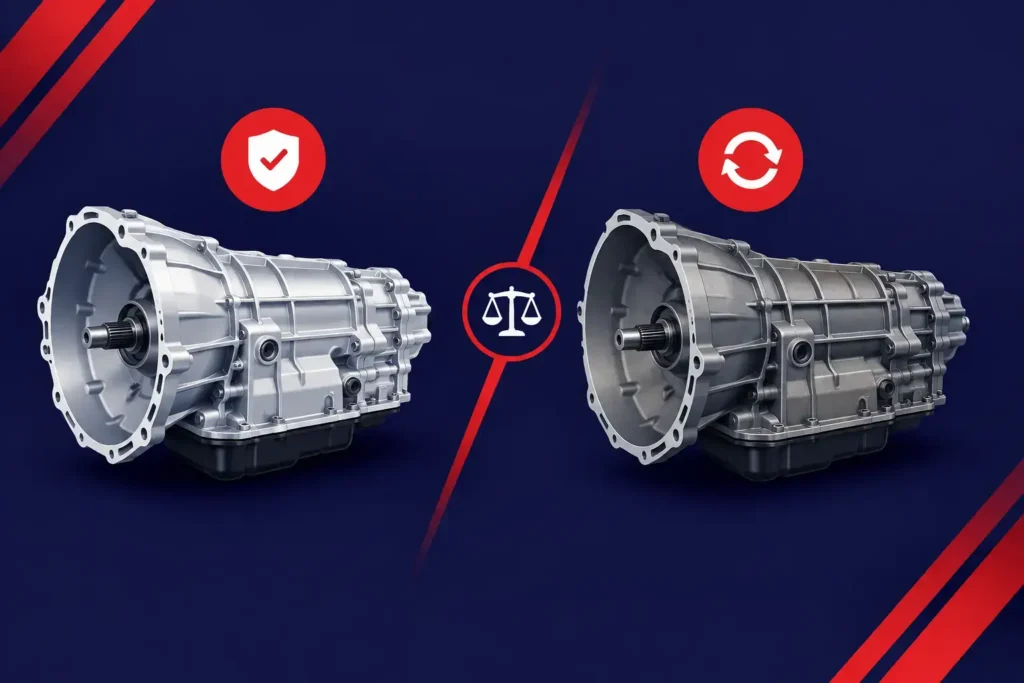
A transmission replacement is not a decision most drivers plan for. One day, a delayed shift, slipping gear, warning light, or loss of movement turns into a conversation about major repair costs. When comparing a new versus remanufactured transmission, the best answer is rarely just the lowest price or the longest warranty. It is the option that fits your vehicle, how you drive it, the condition of the supporting systems, and your plans for keeping the car.
For an everyday commuter, a European luxury vehicle, an exotic model, or a classic car, the details matter. The right transmission can restore confident, reliable driving. The wrong choice, or an installation that skips critical steps, can create another expensive problem down the road.
New Versus Remanufactured Transmission: The Real Difference
A new transmission is generally a factory-built unit made with new components. In many cases, it is supplied by the vehicle manufacturer or an approved source. It may be the closest available replacement to the transmission originally installed in the vehicle, although exact availability varies widely by make, model, and year.
A remanufactured transmission is not simply a used transmission pulled from another vehicle. A quality remanufactured unit has been disassembled, inspected, cleaned, and rebuilt to a defined standard. Worn or failed parts are replaced, common failure points may be updated, and the unit is tested before shipment. Depending on the supplier and application, it may include a remanufactured torque converter as well.
That distinction is critical. A used transmission has an unknown history. It may have high mileage, hidden internal wear, or the same design weakness that caused the original unit to fail. It can be a reasonable solution in limited circumstances, especially for hard-to-source older vehicles, but it is not the same product as a properly remanufactured transmission.
When a New Transmission Makes Sense
A new unit can be the strongest option when it is available, reasonably priced, and supported by the manufacturer. Owners who intend to keep a newer vehicle for many years often value the confidence that comes with new internal components and factory specifications.
New may also be appealing for vehicles with highly specialized transmissions, advanced electronic controls, or limited tolerance for improper parts. Late-model European vehicles can require exact calibration, programming, adaptation procedures, and correct fluid specifications. Starting with the correct unit is only part of the job, but it is a meaningful part.
There are trade-offs. New transmissions are often more expensive, and availability can be limited. Some manufacturers no longer offer new complete units for older vehicles, while others may have extended backorders. For classics, specialty imports, and certain exotic applications, a new replacement may simply not exist.
A higher purchase price does not automatically make a new unit the better value. If a vehicle has substantial rust, major engine issues, electrical problems, or a value that does not support the investment, a careful owner should weigh the full picture before moving forward.
Where a Remanufactured Transmission Can Be the Better Value
A quality remanufactured transmission often gives drivers an excellent balance of cost, reliability, and availability. Because the unit is rebuilt around a reusable core, it is typically less expensive than a new replacement while providing a more dependable option than an unknown used transmission.
For many common domestic and import vehicles, remanufactured units are readily available and backed by a parts warranty. In some applications, remanufacturers address known weaknesses with improved components or updated valve body parts. That can make a remanufactured unit a smart long-term repair, not a compromise.
However, remanufactured quality is not identical across every supplier. A low-cost unit built to meet a minimum price point may not have the same parts quality, testing process, or warranty support as one sourced through a trusted channel. The warranty language matters too. Some warranties cover the replacement part but not labor, towing, fluids, programming, or related damage if a separate issue causes failure.
For specialty vehicles, a custom rebuild of the original transmission may sometimes be preferable to either a new or catalog remanufactured unit. This is especially true when matching numbers, original fitment, or platform-specific upgrades matter. The right choice depends on the vehicle and the owner’s goals, not a one-size-fits-all recommendation.
The Installation Matters as Much as the Transmission
A replacement transmission cannot overcome the cause of the original failure. This is where experienced diagnostics protect the customer. Before installing any unit, the technician should identify whether the failure came from internal wear, contaminated fluid, overheating, an electrical fault, a valve body issue, improper fluid level, or a problem outside the transmission itself.
For example, a restricted transmission cooler can send debris or excess heat into the replacement unit. A failing control module, damaged wiring, weak battery voltage, or incorrect programming can produce harsh shifting or put a good transmission into limp mode. On many modern vehicles, the transmission also needs adaptation or relearn procedures after installation.
A proper replacement job may include flushing or replacing the cooler, inspecting mounts and axle seals, servicing related filters, using the exact required fluid, and verifying operation with a road test and scan data. If a torque converter is part of the failure, it must be addressed as well. Skipping these steps can reduce the life of even the best new transmission.
At MotorSport Prime, transmission work begins with the facts. Clear diagnostics help determine whether a repair, rebuild, remanufactured unit, or new replacement is the responsible recommendation. That approach avoids replacing an entire transmission when the problem is repairable, and it avoids installing a replacement unit without correcting what caused the failure.
How to Compare Your Options Honestly
The quote with the lowest number is not always the lowest-cost repair. Ask what is included in the estimate and compare complete repairs, not just the price of the transmission itself. A transparent estimate should clarify the source of the unit, warranty terms, labor coverage, fluid and programming requirements, and any related parts needed for a reliable installation.
Consider how long you expect to own the vehicle. If you have a well-maintained car you plan to keep, spending more for the best available unit and installation may make financial sense. If you are preparing an older vehicle for sale or working within a strict budget, a remanufactured option may deliver the value you need without cutting corners.
Vehicle use should influence the decision too. A family SUV that sees daily Central Florida traffic, a performance car driven enthusiastically on weekends, and a classic that comes out for occasional cruises place different demands on their transmissions. Heat, towing, stop-and-go driving, and performance modifications all deserve an honest discussion before selecting a replacement.
Do Not Ignore Repair as a Third Option
The choice is not always new versus remanufactured. Some transmission issues can be repaired without replacing the complete assembly. Solenoids, valve bodies, electrical connectors, sensors, seals, and certain internal components may be serviceable when caught early enough.
That is why symptoms should be checked promptly. Delayed engagement, slipping, shuddering, burning smells, fluid leaks, unusual noises, and warning lights are all reasons to schedule an inspection. Continuing to drive while the transmission is failing can turn a targeted repair into a full replacement.
A good transmission decision is built on diagnosis, not pressure. Choose the unit that fits your vehicle’s needs, insist on a complete installation, and make sure the people doing the work are prepared to stand behind it. That is how a major repair becomes a sound investment in miles you can trust.