
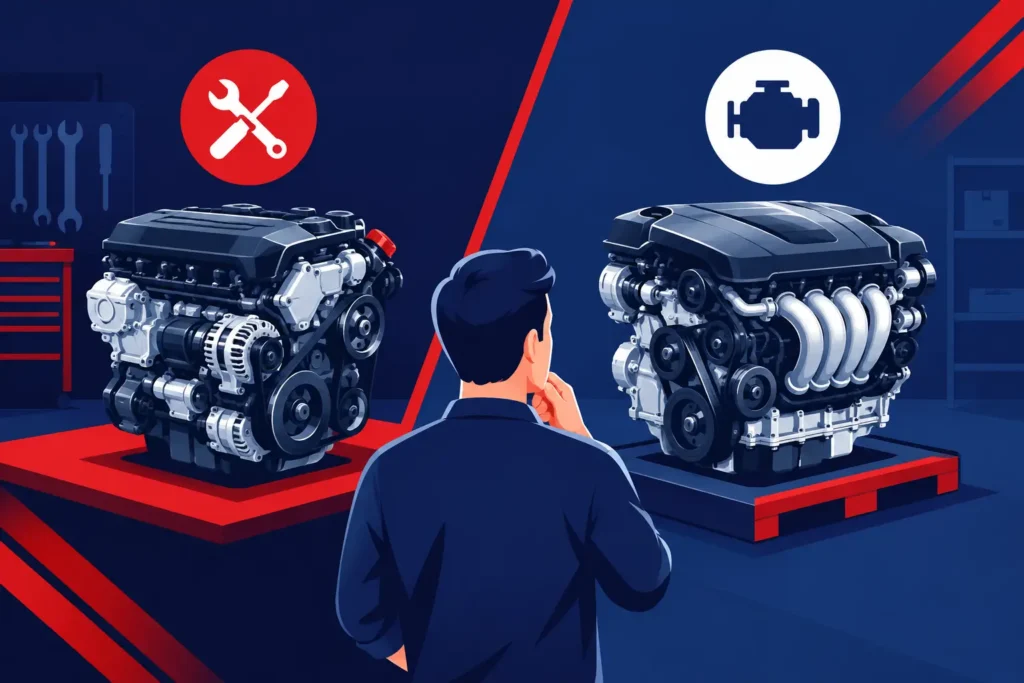
A flashing check-engine light, loud knocking, overheating, or a sudden loss of power can turn an ordinary drive into a serious decision. Engine repair versus replacement is not a choice that should be made from a warning light alone, or from the first estimate you receive. The right answer depends on what failed, how far the damage has spread, what the vehicle is worth to you, and whether the rest of the car is in condition to justify the investment.
For owners of European, exotic, classic, and well-maintained daily drivers, the answer is often more nuanced than “fix it” or “replace it.” A thorough diagnosis can reveal a repair that protects your budget and preserves an original powertrain. In other cases, replacing or rebuilding the engine is the more reliable path forward. Honest advice starts with identifying the actual failure.
Start With a Proper Diagnosis
An engine problem can feel catastrophic before anyone has tested it. Low power may come from a failed ignition coil, fuel delivery issue, vacuum leak, timing concern, or sensor fault. Smoke may point to worn seals, a cooling-system issue, or more significant internal wear. Even a knocking noise needs to be isolated before assuming the engine is beyond repair.
A professional diagnostic process should include more than reading trouble codes. Technicians may inspect fluid condition, check oil pressure, perform compression and leak-down testing, evaluate cooling-system performance, listen for internal noise, and inspect the engine with specialized equipment when needed. On modern European vehicles, manufacturer-level scan data and live readings are especially valuable because multiple systems can create similar symptoms.
This process matters because the price difference between a targeted repair and an engine replacement can be substantial. It also protects you from spending money on an engine when the root cause is outside the engine itself, such as a transmission concern, wiring fault, turbocharger problem, or cooling-system failure.
When Engine Repair Is the Smarter Choice
Repair is generally the better option when the failure is limited, the engine’s internal condition remains healthy, and the repair addresses the true cause. A failed water pump, leaking valve cover gasket, worn engine mount, malfunctioning fuel injector, damaged sensor, or ignition issue can create major drivability problems without requiring a new engine.
More involved repairs can still make sense. Timing-chain service, cylinder-head repair, oil-leak correction, or replacement of a failed turbo-related component may be worthwhile when the bottom end of the engine has good oil pressure, strong compression, and no signs of widespread damage. For a vehicle with known service history, a clean body and chassis, and years of useful life remaining, a quality repair can be a sound investment.
Repair is also often the right choice for classic and specialty cars. Original engines can carry value, character, and matching-numbers significance. Rebuilding or repairing the original unit may preserve more than performance – it can preserve the vehicle’s identity. The work must be planned carefully, but replacement is not automatically the best answer simply because the vehicle is older.
Cost should be considered honestly. A repair that costs less today but leaves a known internal problem unresolved is not a bargain. The goal is not the lowest invoice. It is a repair that gives you dependable results for the money you spend.
Engine Repair Versus Replacement: When Replacement Wins
Replacement becomes more practical when an engine has severe internal damage or a history of repeated failures. A thrown rod, cracked engine block, extensive bearing damage, severe overheating damage, or metal throughout the oiling system can make isolated repairs risky. If one major failure has contaminated other components, repairing only the visible damage may lead to another expensive problem soon afterward.
An engine replacement can also be a more predictable option when the labor to disassemble, machine, source parts, and rebuild the existing engine approaches the cost of a quality replacement unit. This is particularly true for certain modern engines with complicated timing systems, integrated components, or damage that cannot be fully assessed until teardown.
There are several replacement paths, and they are not equal. A used engine may have a lower upfront price, but its history can be uncertain unless mileage, compression, condition, and warranty coverage are carefully verified. A remanufactured engine is rebuilt to a standardized process, though quality varies by supplier. A professionally rebuilt engine can be the strongest option for many specialty applications because components, machining, tolerances, and known platform weaknesses can be addressed directly.
For high-performance, European, or exotic vehicles, proper programming, calibration, accessory transfer, cooling-system inspection, and post-installation testing are as important as the engine itself. Installing an engine is not simply a matter of bolting in a replacement. The surrounding systems must support it.
Look Beyond the Engine Estimate
Before approving major work, consider the complete condition of your vehicle. The engine may be the largest item on the estimate, but it is not the only factor that determines whether the investment makes sense.
Ask whether the transmission is operating correctly, whether the suspension and brakes are safe, whether the air conditioning system needs attention, and whether there are major electrical or corrosion concerns. A solid vehicle with one serious engine problem may be worth restoring. A vehicle with several expensive needs at once requires a more careful conversation.
Vehicle value matters, but it should not be the only measure. The book value of a well-maintained older luxury car or classic vehicle may not reflect what it would cost to replace with something equally familiar, reliable, or enjoyable to drive. On the other hand, it may not make sense to install an expensive engine in a vehicle that has significant structural issues or is no longer a good fit for your needs.
Your plans matter, too. If you intend to keep the car for several years, a higher-quality repair or replacement may provide better long-term value. If you expect to sell it soon, the decision may be different. A trustworthy shop should explain those trade-offs clearly instead of steering every customer toward the highest-ticket option.
Questions Worth Asking Before You Approve Work
A major engine decision should never feel rushed. Ask what testing confirmed the diagnosis, whether the engine has internal damage, and what caused the failure in the first place. If the cause is not corrected, even a replacement engine can be put at risk.
You should also ask what is included in the estimate. Does the price cover related gaskets, hoses, mounts, fluids, filters, cooling-system components, programming, and testing? Is there a warranty on parts and labor? Are there less expensive alternatives, and what risks come with them?
For replacement engines, ask about the source, mileage if applicable, warranty terms, and whether the engine has been inspected before installation. For rebuilds, ask what parts will be replaced, what machine work is planned, and how the shop will address the failure that brought the vehicle in.
Clear answers are a sign of quality workmanship. Vague promises and pressure to approve work without evidence are not.
Protect the Investment After the Repair
Whether you repair, rebuild, or replace, the work is only part of the solution. Engines usually fail for a reason: neglected oil service, a cooling problem, poor fuel delivery, timing-component wear, oil starvation, or an overlooked warning sign. Addressing the cause is what protects the investment.
Follow the recommended break-in procedure if a rebuilt or replacement engine requires one. Keep up with oil services using the correct specification, monitor coolant level and temperature, and do not ignore new noises, warning lights, or fluid leaks. For performance-oriented vehicles, service intervals and fluid choices deserve even closer attention.
At MotorSport Prime, decisions about major mechanical work begin with careful diagnostics and a straightforward discussion of your vehicle, your budget, and your goals. The best choice is the one that gives you a reliable car and a clear understanding of what your investment will deliver. Before making a final call, ask for the evidence behind the recommendation – a good repair decision should feel informed, not pressured.