
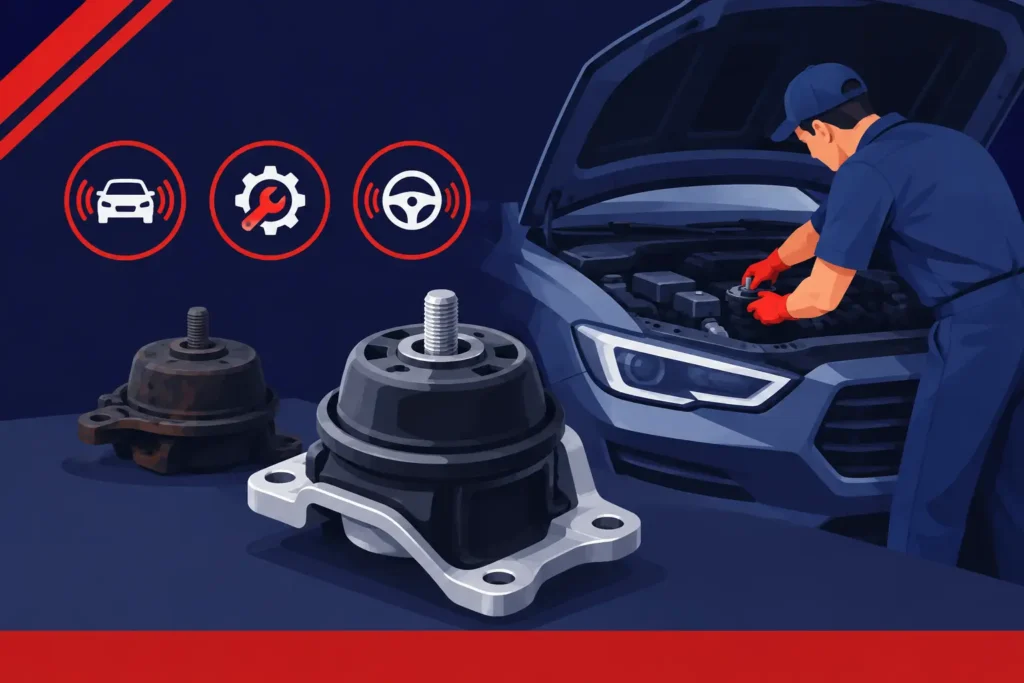
A sharp clunk when shifting into Drive, a vibration that suddenly makes the steering wheel buzz, or an engine that seems to lurch under acceleration can make any driver think the worst. Sometimes the transmission or engine is the source. Other times, the problem is the component holding them in place. Engine mount replacement can restore the smooth, controlled feel your vehicle was designed to deliver – but only after the real cause has been identified.
Engine mounts are simple in purpose but critical in function. They secure the engine and, on many vehicles, the transmission to the chassis while absorbing vibration and allowing a controlled amount of movement. When a mount wears out, tears, leaks, or collapses, that balance disappears. The result can range from an irritating cabin vibration to drivetrain movement that damages nearby components.
What Engine Mounts Do for Your Vehicle
An engine is not bolted rigidly to the vehicle frame. It produces constant vibration, torque, and movement, especially during starting, acceleration, braking, and gear changes. Engine mounts isolate much of that motion before it reaches the cabin, while keeping the drivetrain correctly aligned.
Most mounts use rubber bonded to metal. Many newer European luxury vehicles use hydraulic mounts filled with fluid, vacuum-controlled mounts, or electronically controlled active mounts. These designs improve refinement, but they can also require a more careful diagnosis. A failed hydraulic mount may leak fluid. An electronically controlled mount may create a fault code or fail internally without looking obviously damaged from the outside.
The mount’s condition matters well beyond comfort. Excess drivetrain movement can place stress on exhaust components, cooling hoses, wiring, axle joints, shifter cables, and transmission mounts. On performance-oriented cars, it can also change how the vehicle responds during acceleration and shifting.
Signs You May Need Engine Mount Replacement
A bad engine mount does not always announce itself with one clear symptom. Its warning signs can overlap with transmission concerns, suspension wear, misfires, and driveline problems. That is why an inspection should come before ordering parts or approving repairs.
The most common sign is excessive vibration at idle. You may feel it through the steering wheel, seat, floor, or dashboard, particularly when the vehicle is stopped in Drive with the brake applied. If the vibration improves noticeably in Park or Neutral, a worn mount is one possible cause.
A clunk, thud, or bang during acceleration, braking, or shifting is another common clue. As the engine moves too far, it can contact or pull against parts that should remain properly spaced. Drivers may also notice a jolt when selecting Drive or Reverse, although that symptom can also point to a transmission issue that deserves proper testing.
Look for changes in how the car feels under load. An engine that rocks excessively when pulling away from a stop, climbing a grade, or making a quick throttle change may have a compromised mount. In some cases, the movement is visible when a technician carefully loads the drivetrain during an inspection. This is not a test to perform casually at home, since working around a running engine and moving drivetrain has real safety risks.
Other clues include visible cracking in a rubber mount, separated rubber and metal, hydraulic fluid around a mount, or an exhaust system that begins rattling because the drivetrain has shifted. None of these signs proves the diagnosis by itself, but together they give a skilled technician a strong direction.
Why the Same Symptoms Can Mean Different Things
A vibration can come from worn mounts, but it can also come from an engine misfire, a damaged pulley, uneven tire wear, or a failing accessory component. A clunk on shifts may be related to a mount, transmission mount, driveshaft issue, differential mount, or internal transmission behavior.
This distinction matters, particularly on European, exotic, and classic vehicles. These platforms often use vehicle-specific mount designs, tight engine-bay packaging, and drivetrain systems that demand a knowledgeable approach. Replacing a mount without addressing the actual source of movement is not an honest repair. Accurate diagnosis protects both the vehicle and the owner’s budget.
What Happens During an Engine Mount Replacement
The repair process depends on the vehicle and the mount location. Some mounts are relatively accessible. Others require supporting the engine, removing underbody panels, intake components, exhaust sections, suspension pieces, or other parts to create safe working room.
A professional repair begins with a road test when appropriate, a visual inspection, and checks for excessive engine and transmission movement. The technician should also inspect related mounts and surrounding components. If one mount has failed due to age and heat, the others may be close behind. That does not always mean every mount should be replaced at once, but it is useful information for planning a repair correctly.
During replacement, the engine or transmission is safely supported before the damaged mount is removed. The new mount must be positioned correctly and fastened to specification. On vehicles with active or vacuum-operated mounts, electrical connections, vacuum lines, and control systems should be checked as part of the job.
Afterward, the vehicle should be evaluated for smooth operation, proper shifting feel, and any remaining noises or vibrations. If a mount failure allowed another component to rub, stretch, or loosen, that concern should be discussed clearly rather than ignored.
Engine Mount Replacement Cost: What Affects It?
There is no responsible one-price answer for engine mount replacement. The cost depends heavily on the vehicle, the number of mounts involved, the mount design, access, and the quality of the replacement parts.
A conventional rubber mount on an accessible engine may be a straightforward repair. A hydraulic or active mount on a late-model European vehicle can cost substantially more, both because of the part itself and the labor required to reach it. Vehicles with transverse engines, compact luxury platforms, turbocharged engines, or tightly packaged all-wheel-drive systems can require considerably more disassembly.
Part quality is also a real trade-off. Low-cost mounts may fit poorly, transmit more vibration, or wear out prematurely. For a daily driver, an experienced shop can help balance value and durability. For a European luxury car, exotic vehicle, or well-preserved classic, using the correct-quality part is often the better long-term decision.
If multiple mounts are worn, replacing only the visibly failed one can sometimes leave vibration or movement behind. On the other hand, replacing every mount automatically is not always necessary. The right recommendation should be based on condition, symptoms, vehicle use, and the owner’s repair priorities.
Why Mount Problems Matter for Transmission Health
Engine mounts and transmission mounts work as a system. When one fails, the others carry more load and the drivetrain can move outside its intended range. That movement can add stress to transmission linkages, axle shafts, fluid lines, wiring, and exhaust connections.
For automatic transmissions, a harsh shift should never be dismissed as “just a mount,” and a failed mount should not be mistaken for an internal transmission failure. Both conditions can produce a noticeable jolt. Proper diagnostics separate a mechanical support problem from a pressure, solenoid, fluid, control, or internal transmission concern.
That is especially valuable when a vehicle has both shifting complaints and vibration. A thorough inspection can prevent unnecessary transmission work while making sure a true transmission issue is not overlooked. At MotorSport Prime, that kind of careful distinction is part of treating customers fairly and repairing the vehicle to a high standard.
When to Schedule an Inspection
Do not wait for a small vibration to become a major drivability concern. Schedule an inspection when you notice a new idle vibration, clunk during gear changes, visible engine movement, or a sudden change in how the vehicle responds under acceleration or braking. If the check engine light is on, the vehicle is shifting abnormally, or you smell burning material after a mount-related movement, have it evaluated promptly.
Engine mounts are not glamorous parts, but they have a direct effect on comfort, control, and the protection of expensive drivetrain components. A careful diagnosis and quality repair can bring back the refined, confident feel that makes your vehicle enjoyable to drive.