
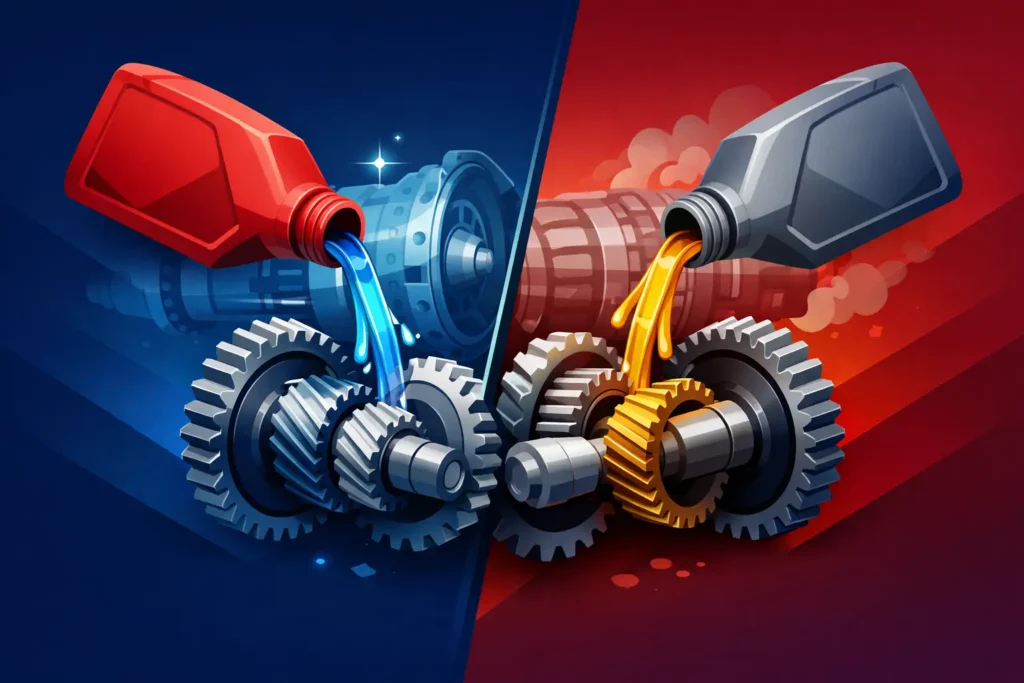
A transmission can feel perfectly normal right up until the day it does not. A delayed shift, a harsh engagement into Drive, or a faint shudder at cruising speed may begin with fluid that is overdue, incorrect, or no longer protecting internal parts as it should. When considering synthetic vs conventional transmission fluid, the right answer is not simply “synthetic is better.” The fluid must match the transmission design, the vehicle manufacturer’s specification, and the way the vehicle is driven.
For Central Florida drivers, heat makes that decision even more meaningful. Stop-and-go traffic, high ambient temperatures, towing, and spirited driving all put added stress on automatic transmission fluid. Choosing the right product and servicing it correctly can make a real difference in shift quality, reliability, and the long-term health of an expensive component.
What Transmission Fluid Actually Does
Automatic transmission fluid, commonly called ATF, is far more than a lubricant. It transfers hydraulic pressure to apply clutches, cools internal components, reduces wear, protects metal surfaces from corrosion, and helps control the friction characteristics that make shifts feel smooth and consistent.
That last job is especially critical. A modern automatic transmission is calibrated around a particular fluid formula. If the fluid’s friction properties are wrong, the transmission may shift too firmly, slip during engagement, hunt between gears, or develop clutch wear over time. In dual-clutch transmissions, continuously variable transmissions, and many European applications, the correct fluid specification is not optional.
Fluid condition matters just as much as fluid type. Heat gradually breaks down additives, while normal clutch wear can leave fine debris in the fluid. A fluid service is preventive maintenance, not a cure for a mechanically failed transmission. Still, addressing fluid before damage takes hold is usually far less costly than waiting for a drivability concern to become a rebuild or replacement.
Synthetic vs Conventional Transmission Fluid: The Real Difference
Conventional transmission fluid is generally made from refined mineral base oils, combined with additives that control friction, oxidation, foaming, wear, and corrosion. It can provide dependable protection when it meets the exact specification required by the vehicle and is changed at the proper interval.
Synthetic transmission fluid uses chemically engineered base stocks designed for more consistent performance across a wider range of temperatures. It typically resists oxidation and thermal breakdown better than conventional fluid, flows more readily in cold conditions, and can maintain its protective qualities longer under severe heat.
Those benefits are real, but the label alone does not tell the whole story. Some products marketed as synthetic may use a synthetic blend, while some conventional-style fluids can still be highly sophisticated. More importantly, a premium synthetic fluid with the wrong approval is not safer than a conventional or blended fluid with the exact manufacturer-required specification.
For a modern BMW, Mercedes-Benz, Audi, Porsche, Jaguar, Land Rover, or exotic vehicle, the transmission may require a specific OEM-approved fluid. Using a generic “universal” ATF because it is less expensive can create expensive consequences. The same principle applies to classic cars, although their needs may be very different from those of a current luxury vehicle.
Where Synthetic Fluid Has an Advantage
Synthetic fluid is often the stronger choice for vehicles exposed to high operating temperatures, heavy traffic, towing, performance use, or long service intervals. It tends to hold up better when heat tries to thin the fluid and break down the additives that protect internal clutches and bearings.
It can also support more consistent shifting as temperatures change. That is valuable for drivers who expect refined behavior from a European luxury vehicle or who want to preserve a specialty car that is not cheap to repair.
However, “often” is not “always.” If a transmission was designed around a particular factory-fill fluid, the proper choice is the product that meets that specification, whether its base oil is conventional, synthetic, or blended. The transmission does not care about marketing terms. It responds to viscosity, friction modifiers, seal compatibility, and hydraulic behavior.
When Conventional Fluid Can Make Sense
Conventional fluid may be appropriate for older vehicles that specify it, especially when the transmission is in good condition and receives regular maintenance. Many classic applications were designed around older fluid standards and may not benefit from substituting a modern formula without first confirming compatibility.
Cost can be another consideration. A conventional fluid that meets the manufacturer requirement may have a lower upfront price than a premium synthetic option. But the goal should never be to choose the lowest-cost fluid on the shelf. The value comes from using the correct fluid, installing it properly, and setting a realistic maintenance plan for the vehicle’s age and use.
Why the Correct Specification Matters More Than the Bottle
Transmission fluids are not interchangeable just because they are red. Some are formulated for traditional automatic transmissions, while others are built specifically for CVTs, dual-clutch units, or transmissions with unique manufacturer friction requirements. Putting conventional ATF into a CVT, for example, can cause immediate drivability issues and may damage the transmission.
A professional fluid service begins with identifying the vehicle, transmission model, service history, and manufacturer specification. It also includes checking for leaks, inspecting fluid condition when possible, and considering the symptoms the driver has noticed.
A darkened fluid color alone does not automatically mean the transmission is failing. On the other hand, burnt odor, metallic debris, visible clutch material, slipping, or harsh shifting deserve a deeper diagnosis before anyone recommends a simple service. Honest transmission work means identifying the condition of the unit, not selling fluid as a cure-all.
Service Intervals Depend on How You Drive
Many drivers hear that their transmission has “lifetime fluid” and assume no service is needed. In practice, fluid has a working life. Manufacturers may use the term “lifetime” differently, and severe conditions can shorten the service interval considerably.
Frequent short trips, heavy traffic, towing, high temperatures, performance driving, and repeated hard acceleration all increase heat and load. Central Florida’s climate can make a vehicle that is driven normally elsewhere behave like a severe-service vehicle here.
A sensible maintenance decision accounts for the owner’s manual, the transmission manufacturer’s guidance, mileage, age, and real driving conditions. For a vehicle with an unknown service history, the approach should be careful. A technician may recommend inspection and diagnostic testing before determining whether a drain-and-fill, filter service, pan service, or another repair is appropriate.
Fluid Service Is Not the Same as a Flush
The words are often used interchangeably, but they can describe different procedures. A drain-and-fill replaces only the fluid that can be drained from the pan or case. A more involved service may include removing the pan, replacing the filter or gasket where applicable, cleaning the pan and magnets, and refilling to the exact level at the correct temperature.
A fluid exchange may replace a larger percentage of the old fluid, but it is not automatically the right choice for every transmission or every condition. The method should be selected based on the vehicle’s requirements and the transmission’s health. There is no one-size-fits-all transmission service.
At MotorSport Prime, that judgment comes from hands-on diagnostic experience, not a quick-lube menu. A specialty vehicle deserves the correct procedure, correct fluid, and a clear explanation of what the technician found.
Signs You Should Schedule a Transmission Inspection
Do not wait for a warning light if the transmission has started behaving differently. Delayed engagement, slipping, shuddering, harsh or erratic shifts, transmission overheating messages, fluid leaks, or a burning smell all warrant professional attention. These symptoms can be caused by fluid condition, but they can also point to electrical faults, valve body problems, solenoid issues, internal wear, or engine-related drivability concerns.
Early diagnosis protects options. A small leak repaired promptly may prevent low-fluid damage. A fluid service performed at the right time may preserve shift quality. And when a transmission needs more than maintenance, a clear diagnosis helps the owner make an informed decision about repair, rebuild, or replacement.
The best fluid for your transmission is the one engineered and approved for that exact unit, installed with care by a technician who understands what the vehicle is telling them. If your shifts have changed or your service history is uncertain, a proper inspection now can protect many confident miles ahead.