
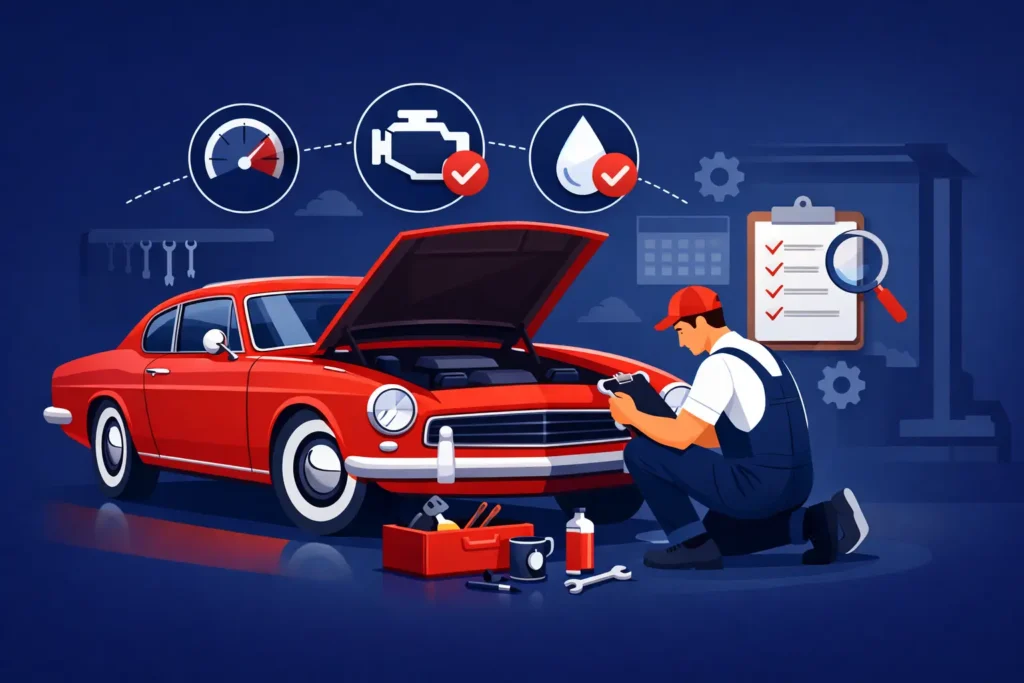
A classic car can look perfect under the lights and still be one warm afternoon away from a roadside problem. Age affects more than paint, chrome, and upholstery. Rubber hardens, fuel breaks down, seals dry out, wiring connections corrode, and old repairs can reveal themselves at the worst possible time. Knowing how to maintain a classic car means protecting the experience of owning it, not simply preserving its appearance.
The right maintenance plan depends on the car’s age, mileage, storage conditions, and how often it is driven. A 1960s weekend cruiser needs different attention than a regularly driven European classic with a fuel-injected engine or an automatic transmission. What does not change is the value of consistent inspection, correct fluids, and repairs performed before a small concern becomes an expensive failure.
How to Maintain a Classic Car Starts With a Baseline
If you have recently purchased a classic, do not assume the previous owner’s receipts tell the whole story. Service records are useful, but they do not replace a careful inspection by someone who understands older vehicles. Establish a baseline before planning long drives, car shows, or upgrades.
Start with the engine oil, coolant, brake fluid, transmission fluid, differential fluid, power steering fluid, and fuel system. Look beyond fluid levels. Color, odor, contamination, and leaks all tell a story. Dark brake fluid may indicate moisture buildup. A burnt smell from automatic transmission fluid can point to heat or internal wear. Coolant that looks rusty or cloudy may signal corrosion in the cooling system.
At the same time, inspect belts, hoses, vacuum lines, battery cables, engine mounts, suspension bushings, and fuel lines. These parts may look acceptable at a glance while being brittle enough to fail under heat and pressure. Classic cars often spend long periods parked, and sitting can be harder on hoses, seals, and fuel systems than regular use.
A documented baseline gives you a realistic service plan. It also prevents the frustrating cycle of replacing parts at random when a drivability problem develops.
Drive It Regularly, But Drive It With Purpose
Many owners believe the safest place for a classic is under a cover. A clean, dry garage is certainly better than leaving it outside, but complete inactivity creates its own problems. Seals can dry out, batteries lose charge, fuel goes stale, and brake components can corrode.
A regular drive is healthy when the car reaches normal operating temperature and is driven long enough to circulate fluids, charge the battery, and evaporate moisture from the engine and exhaust system. Starting the engine for five minutes in the garage is usually not enough. In some cases, it can add condensation without giving the vehicle the benefits of a proper drive.
Pay attention during every outing. Changes in shifting, steering feel, brake response, engine temperature, vibration, or starting behavior are valuable information. Classic cars communicate early warnings through sounds, smells, and feel. Catching a new noise before it becomes constant is often the difference between a simple adjustment and a major repair.
If the car is not safe or practical to drive often, follow a deliberate storage routine instead. The goal is not mileage for its own sake. The goal is keeping mechanical systems exercised and identifying issues early.
Keep Fluids Fresh and Use the Right Specifications
Modern service intervals can be misleading for older vehicles. A classic may not accumulate many miles, but time still degrades oil, coolant, brake fluid, and fuel. Annual service is often sensible for a lightly driven classic, even when mileage is low. Cars that see regular road use, Florida heat, or stop-and-go traffic may need shorter intervals.
Oil choice deserves more thought than simply grabbing the same product used in a newer daily driver. Some older flat-tappet engines require an oil formulation with suitable anti-wear protection. High-mileage oils can help in some situations, but they are not a cure for worn seals or mechanical issues. Engine design, condition, climate, and usage should guide the choice.
Brake fluid is especially easy to overlook because the level may remain full. Most conventional brake fluid absorbs moisture over time, lowering its boiling point and encouraging internal corrosion. A proper fluid exchange protects calipers, wheel cylinders, master cylinders, and brake lines. On a car that is rarely driven, this service can matter even more.
Automatic transmission service also requires precision. The correct fluid, proper level-check procedure, filter or screen condition, and adjustment of external linkages all affect transmission operation. Using a universal fluid or delaying service because the car still moves can create trouble in a system that may already be difficult to source parts for. MotorSport Prime approaches transmission concerns with complete diagnostics rather than assumptions, because shifting symptoms can come from fluid condition, adjustment, electrical controls, or internal wear.
Protect the Fuel and Cooling Systems
Fuel is one of the most common causes of avoidable classic-car problems. Ethanol-blended gasoline can attract moisture, deteriorate over time, and affect older rubber components not designed for it. If your classic will sit for more than a short period, use a quality fuel stabilizer and follow its directions. Keep the tank at an appropriate level for the storage period and inspect fuel hoses, clamps, filters, and the tank area for seepage.
Do not ignore fuel odor. A small leak in an older fuel system is not merely inconvenient. It is a safety issue. Replace aged fuel hose with material rated for the fuel you use, and make sure routing keeps lines away from exhaust heat and moving parts.
Cooling systems need the same respect, particularly in Central Florida. An older radiator, tired fan clutch, weak electric fan, restricted coolant passage, or inaccurate temperature gauge can turn a pleasant cruise into an overheating event. Check coolant concentration, radiator cap condition, hose softness, fan operation, and signs of leakage around the water pump and heater core.
Overheating should not be treated as normal classic-car behavior. Some older vehicles run warmer than modern cars, but repeated temperature spikes can damage head gaskets, warp components, and shorten engine life. Diagnose the cause before installing a lower-temperature thermostat or adding aftermarket parts that may mask the actual issue.
Maintain Brakes, Tires, and Suspension for Safe Miles
A car that starts easily and looks polished is not necessarily ready for the road. Brake systems, tires, and suspension deserve routine attention because their failures affect safety immediately.
Tires can age out long before their tread wears down. Check the manufacturing date, sidewall cracking, uneven wear, and proper inflation. A set of tires with deep tread but significant age may not provide the grip or structural confidence your classic needs. It is also wise to inspect the spare, jack, and tire-changing tools before a trip.
Brake inspections should include flexible hoses, hard lines, pads or shoes, rotors or drums, calipers or wheel cylinders, parking brake operation, and wheel bearing condition. Pulling, a soft pedal, brake fade, or fluid loss should be addressed promptly. Older systems may require careful adjustment as well as replacement parts.
Suspension bushings, ball joints, tie-rod ends, shocks, and steering components change gradually, so owners sometimes adapt to the decline without realizing it. A professional inspection and alignment can restore stability, protect tires, and make the car more enjoyable to drive. Correct alignment settings matter, especially when suspension components or wheel sizes have been changed from original specifications.
Store the Car Like It Matters
Long-term storage is a maintenance procedure, not simply parking. Choose a dry, secure space with stable conditions when possible. Clean the car first, including the undercarriage if it has been exposed to rain or road grime. Moisture and trapped debris encourage corrosion in places owners rarely see.
Use a battery maintainer designed for automotive use rather than repeatedly allowing the battery to discharge. Check that the charging system is healthy first, since a maintainer cannot correct a failing battery or a wiring issue. Protect against rodents as well. They can damage insulation, upholstery, air ducts, and wiring surprisingly quickly.
Avoid sealing a damp car beneath an impermeable cover. A breathable cover in a dry garage is generally a better choice. For extended storage, follow the vehicle-specific recommendations for fuel stabilization, tire positioning, and whether the battery should remain connected. There is no single rule for every classic, particularly when electrical modifications or alarm systems are involved.
Keep Records and Respect Original Details
Good records make ownership easier and protect value when it is time to sell. Note dates, mileage, services performed, fluids used, parts installed, and observations from each inspection. Keep receipts, but also write down symptoms and repair decisions. A future technician can diagnose more accurately when the car’s history is clear.
Be careful with upgrades. Electronic ignition, improved cooling, better lighting, and modern brake components can improve reliability and safety, but the best choice depends on how original you want the vehicle to remain. Save original parts whenever practical, choose quality components, and avoid modifications that make future service harder without solving a real problem.
Classic-car maintenance is not about chasing perfection every weekend. It is about building confidence one inspection, fluid service, and honest repair at a time. Give your car regular attention, listen when it behaves differently, and let experienced hands investigate the concerns that deserve more than a quick fix.