
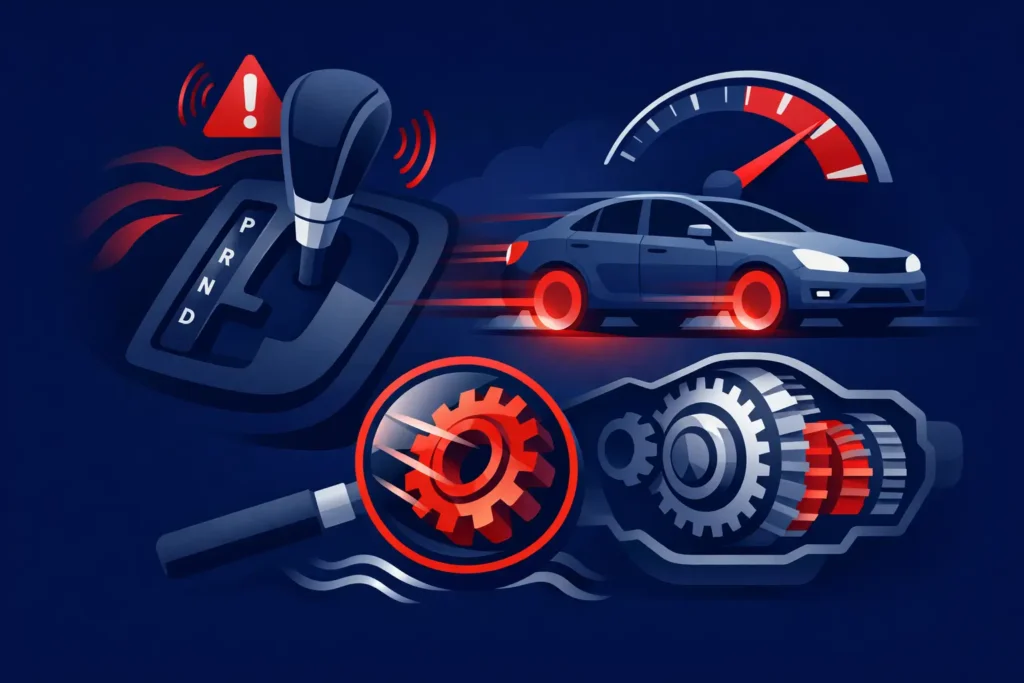
One day your car feels normal. The next, the engine revs higher than it should, the shift feels late, and the vehicle does not move with the same confidence. If you are wondering how to spot transmission slipping, those early changes matter more than most drivers realize. Catching the problem early can mean the difference between a fluid service and a major repair.
Transmission slipping is not always dramatic at first. In many cases, it starts as a small hesitation, a strange shift under light acceleration, or a moment where the RPM climbs without the speed following. Drivers often dismiss it because the symptom comes and goes. That is exactly why it gets missed.
For owners of European cars, performance vehicles, classics, and well-kept daily drivers, this is not a problem to guess at. Modern transmissions are complex, and older units can be just as sensitive in different ways. The key is knowing what slipping actually feels like, what can cause it, and when it is time to stop driving and have it checked by a specialist.
How to spot transmission slipping in real driving
The clearest sign of slipping is a mismatch between engine speed and vehicle response. You press the accelerator, the engine revs up, but the car does not accelerate the way it should. It may feel like the transmission is hunting for the right gear or failing to stay engaged.
Sometimes the symptom shows up during takeoff from a stop. The car may hesitate before moving, then engage abruptly. Other times it appears during an upshift, where the engine flares between gears instead of making a clean, controlled shift. On the highway, slipping can feel like a sudden rise in RPM without a corresponding increase in speed.
Drivers describe it in different ways. Some say the car feels lazy. Others say it feels like the transmission is neutral for a split second. In performance-oriented or European vehicles, you may notice that the precision is simply gone. The car no longer shifts with the smooth, confident timing it had before.
That matters because slipping is not a single failure. It is a symptom. The cause could be as simple as degraded fluid or as serious as internal clutch wear, valve body issues, torque converter problems, or electronic control faults.
Common signs that point to slipping
A slipping transmission often leaves more than one clue. The most common is delayed engagement when shifting into drive or reverse. If you move the selector and the vehicle takes too long to respond, that is worth attention.
Another strong sign is harsh or inconsistent shifting. Slipping does not always feel soft. In some cases, a transmission slips, then grabs hard. That can produce a noticeable bump or jolt as the unit tries to regain proper engagement.
You may also notice burning smells, especially if the fluid is overheating. Transmission fluid should help cool and protect internal components. When it breaks down, heat rises fast, and that heat can damage seals, clutches, and other critical parts.
Warning lights matter too, but they are not the whole story. A check engine light or transmission warning message may appear, but some slipping issues show up before a light ever comes on. That is one reason experienced diagnostics matter. Waiting for the dashboard to tell the whole story can cost you.
If the vehicle suddenly struggles under load, such as merging, climbing a hill, or accelerating onto the highway, pay attention. Slipping often becomes more obvious when the transmission is asked to do real work.
What transmission slipping does not always mean
Not every odd shift means internal transmission failure. That is where honest diagnosis matters.
Low or contaminated fluid can create symptoms that feel severe but may be correctable if caught early. A failing solenoid, software issue, sensor problem, or valve body fault can also create poor shift quality that drivers interpret as slipping. On some vehicles, especially European models with adaptive shift strategies, the behavior can be more nuanced than a simple mechanical breakdown.
On the other hand, not every slipping complaint is minor. If internal clutch packs are worn, if seals are no longer holding pressure, or if the transmission has been overheating for a while, the repair path may be more involved. This is why guessing based on internet symptoms alone rarely helps. The same feeling from the driver seat can come from very different failures.
Why slipping gets worse quickly
Transmission problems tend to build on themselves. Once a unit starts slipping, friction materials can wear faster, fluid temperatures can rise, and debris can circulate through the system. A problem that starts as occasional flare between gears can become a consistent drivability issue in a short amount of time.
Heat is a major part of that story. Automatic transmissions rely on clean fluid and proper hydraulic pressure. When slipping starts, excess heat follows. That heat reduces the fluid’s ability to protect internal parts, which leads to more wear, which creates more heat. It is a cycle that rarely improves on its own.
For drivers who keep valuable vehicles long term, this is especially important. A classic car, an exotic model, or a European performance vehicle deserves more than a wait-and-see approach. Early intervention protects both the transmission and the long-term value of the vehicle.
How to check the situation before it becomes serious
If you suspect slipping, the first step is simple. Pay attention to patterns. Does it happen cold, hot, under light throttle, or only during hard acceleration? Does it affect one shift or several? Does reverse feel delayed too? Those details help narrow down the cause.
If your vehicle allows fluid inspection, check the transmission fluid condition carefully. Healthy fluid should generally appear clean and should not smell burnt. If it looks dark, contaminated, or has a sharp burnt odor, that points to overheating or wear. That said, many modern vehicles do not make fluid checks straightforward, and some require precise procedures and temperatures for accurate inspection.
It is also wise to notice any leaks. Transmission fluid loss can reduce hydraulic pressure and trigger slipping. Even a small leak matters if it continues over time.
What you should not do is keep pushing the vehicle to see if it clears up. Hard acceleration, towing, stop-and-go driving, and long highway trips can all make a slipping transmission worse. If the symptom is consistent, the safer move is to limit driving and schedule a professional diagnosis.
When to stop driving and call a shop
If the transmission is slipping badly enough that the engine races, the car hesitates entering traffic, or the vehicle bangs into gear, you should not ignore it. Safety becomes part of the issue at that point. A delayed or unpredictable response can put you in a bad position during merging, turning, or crossing an intersection.
The same goes for any burnt smell, warning light, or sudden change in drivability. Continuing to drive may turn a repairable condition into a full rebuild or replacement.
At MotorSport Prime, this is where experience makes a real difference. Transmission issues need more than a code scan and a guess. Proper diagnostics look at fluid condition, shift behavior, line pressure, electronic controls, and the overall health of the system. That honest process helps determine whether the fix is maintenance, targeted repair, or deeper transmission work.
How to spot transmission slipping before major damage
The best time to act is when the symptom is still small. A brief flare during shifts, a delayed engagement in the morning, or a strange response under acceleration may not seem urgent, but those are often the first warning signs.
Drivers who know their vehicles tend to catch this early. If your car no longer feels crisp, smooth, or predictable, trust that instinct. Specialty vehicles and daily drivers alike usually tell you when something has changed.
There is also a difference between normal aging and a clear drivability fault. Older transmissions may not shift like new, and some models have quirks by design. But slipping is not a personality trait. If the RPM rises and the power is not reaching the wheels properly, the transmission needs attention.
A good repair shop will not rush to the biggest repair. It should explain what it finds, show you the condition of the system where possible, and talk plainly about options. Sometimes that means service and monitoring. Sometimes it means a more serious repair is the smart move. The honest answer depends on the vehicle, the symptoms, and how far the damage has progressed.
If your transmission feels off, do not wait for a complete failure to make the decision for you. Early diagnosis is almost always cheaper, less stressful, and better for the life of the vehicle. When a car stops shifting the way it should, that is its way of asking for attention – and it is better to answer while the problem is still manageable.