
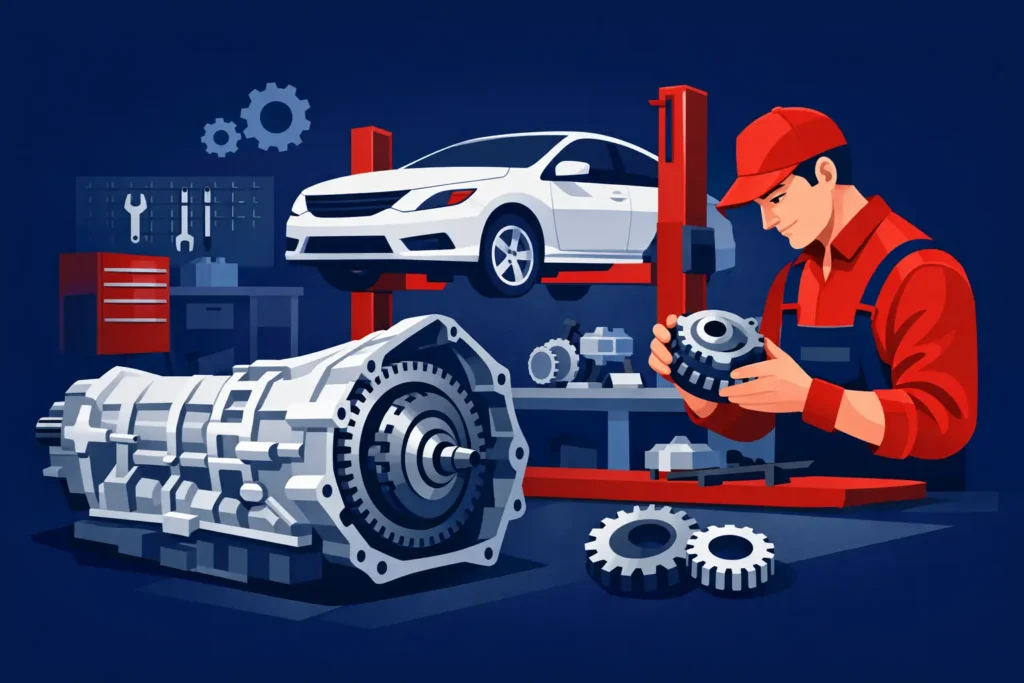
A slipping transmission rarely gives you much warning before it starts affecting everything you expect from your car. One day the shifts feel delayed, the next day the vehicle shudders leaving a stoplight or refuses to move with confidence at all. When that happens, choosing the right automatic transmission rebuild shop matters more than most drivers realize.
Transmission work is not basic maintenance. It is one of the most technical repairs on a vehicle, and the difference between a careful rebuild and a rushed one can mean the difference between years of reliable service and a very expensive return visit. For drivers in Central Florida, especially those with European, exotic, or classic vehicles, this is not a job to hand over to the first shop with an open bay.
What an automatic transmission rebuild shop actually does
A true rebuild shop does more than remove a unit, replace a single failed part, and send the car back out the door. A proper rebuild means the transmission is disassembled, inspected, cleaned, measured, and reassembled with the right replacement components based on wear, damage, and manufacturer specifications.
That process matters because automatic transmissions are complex hydraulic and mechanical systems with electronic controls layered on top. Clutches, seals, valve bodies, solenoids, pump components, torque converters, and internal hard parts all affect shift quality and long-term durability. If one area is overlooked, the transmission may still fail even after a major repair bill.
A good shop also looks beyond the transmission itself. In many cases, drivability complaints that feel like transmission failure are tied to fluid condition, cooling issues, electronic control problems, engine performance faults, or adaptation issues in modern vehicles. Honest diagnosis comes first. Rebuilding a unit that does not actually need a rebuild is not expertise – it is waste.
Why the right shop makes such a big difference
Any shop can say it works on transmissions. The real question is whether that work is a core skill or an occasional service. Transmission rebuilding requires experience, clean processes, strong diagnostic habits, and a willingness to slow down and do precision work.
That matters even more on higher-end vehicles. European and performance-focused platforms often have more sensitive control strategies, tighter tolerances, and model-specific failure patterns. A generic repair approach may not hold up. Classic vehicles bring a different challenge, since age, parts availability, and previous repair history can complicate the job.
An experienced shop understands those differences and explains them clearly. Instead of speaking in circles or pushing a one-size-fits-all solution, it should tell you what failed, why it failed, and what the repair is meant to correct.
Signs you found a quality automatic transmission rebuild shop
The best shops usually sound less like sales departments and more like craftspeople. They ask detailed questions, inspect the vehicle thoroughly, and avoid making promises before diagnosis. That is often the first sign you are in the right place.
A quality automatic transmission rebuild shop should be transparent about process. You should be able to ask whether the transmission will be rebuilt, replaced, or repaired at the component level and get a straight answer. You should also be told whether related items such as the torque converter, cooler, software adaptations, mounts, or fluid lines need attention.
Clear communication matters just as much as technical skill. Good shops explain estimates in plain language, talk honestly about costs, and let you know where there is flexibility and where there is not. Transmission repairs are significant investments, and no customer should feel pressured or kept in the dark.
Experience is another major signal. A shop with decades in the field has seen patterns repeat across vehicle makes, driving habits, and failure types. That does not guarantee perfection, but it often means better judgment when the problem is complicated or the vehicle is not typical.
Questions worth asking before you approve the job
You do not need to be a transmission expert to ask smart questions. In fact, the way a shop answers basic questions can tell you a lot about how it operates.
Ask what testing is done before a rebuild is recommended. A trustworthy shop should mention road testing, scan data, fluid inspection, diagnostic checks, and, when needed, pan inspection or further teardown. If the answer jumps straight to replacement without much evidence, pause.
Ask whether the estimate includes all major parts and related labor. Some transmission jobs become frustrating because the initial quote sounds manageable, then the real cost grows once supporting components are added. That does not always mean the shop is being dishonest – sometimes hidden damage is real – but the possibility should be discussed early.
Ask about warranty terms and what support looks like after the repair. Ask whether the shop has experience with your make and model, especially if you drive a European car, a specialty vehicle, or something older. A rebuild on a common commuter car and a rebuild on a performance-oriented import are not the same conversation.
Rebuild, repair, or replacement – it depends
Not every transmission problem calls for a full rebuild. Sometimes a fluid service, valve body repair, solenoid replacement, or control diagnosis can solve the issue. Sometimes the internal damage is too advanced, making a complete rebuild or full replacement the smarter path.
That is where honesty really shows. A good shop does not sell the biggest job by default. It weighs the vehicle condition, the owner’s goals, the severity of failure, and the long-term value of the repair.
For example, if a vehicle has relatively low mileage and the transmission issue is isolated, a targeted repair may make sense. If the unit has widespread clutch material contamination, heat damage, and hard-part wear, rebuilding may be the best way to restore dependable operation. In some cases, replacement is more practical because of cost, parts access, or time.
There is no universal answer. The right recommendation should match the car and the customer, not just the invoice total.
Why specialty vehicles need specialty attention
Drivers of European, exotic, and classic cars already know that not every repair shop is equipped for their vehicle. Transmission service makes that even more obvious.
Modern European vehicles often rely on precise electronic integration and adaptation procedures after repair. Exotic platforms may demand a deeper level of familiarity, careful handling, and patience that a general repair chain simply cannot provide. Classic vehicles bring another layer of craftsmanship because wear patterns, rebuild history, and aging components often require judgment that only comes with experience.
This is where a specialist shop stands apart. A team that works regularly with high-value and specialty vehicles understands that the job is not just to get the car moving again. The goal is to preserve performance, drivability, and confidence behind the wheel.
Cost matters, but value matters more
No one is excited to hear they need transmission work. It is a major repair, and budget is part of the decision. Still, the cheapest estimate is rarely the safest choice.
Low pricing can reflect shortcuts in diagnosis, lower-quality parts, minimal supporting repairs, or a limited process that does not fully address the cause of failure. On the other hand, a higher estimate should come with clear reasoning. You deserve to know what you are paying for and why it protects the vehicle.
Fair pricing is not about being the lowest. It is about being honest, thorough, and realistic about what the repair requires. Financing options can also be helpful when the right repair is clear but timing is difficult.
At a shop built around craftsmanship, the focus stays on getting the job right the first time. That approach usually saves money, stress, and downtime over the life of the vehicle.
What trust looks like during transmission repair
Trust is not just a slogan in this kind of work. It shows up in how a shop handles the first phone call, the inspection, the estimate, and the final handoff. It shows up when technicians explain findings without talking over the customer. It shows up when a shop is willing to say, “You do not need a rebuild yet,” just as confidently as it says, “This transmission needs major work.”
That is the standard drivers should expect. At MotorSport Prime, that trust is backed by 38 years of hands-on experience, certified technicians, and a real commitment to treating people with respect while delivering serious transmission expertise.
If your vehicle is showing signs of transmission trouble, do not wait for a complete breakdown to force the decision. The right shop will help you understand the problem, lay out your options clearly, and repair the vehicle with the kind of care that gives you confidence every time you shift into drive.