
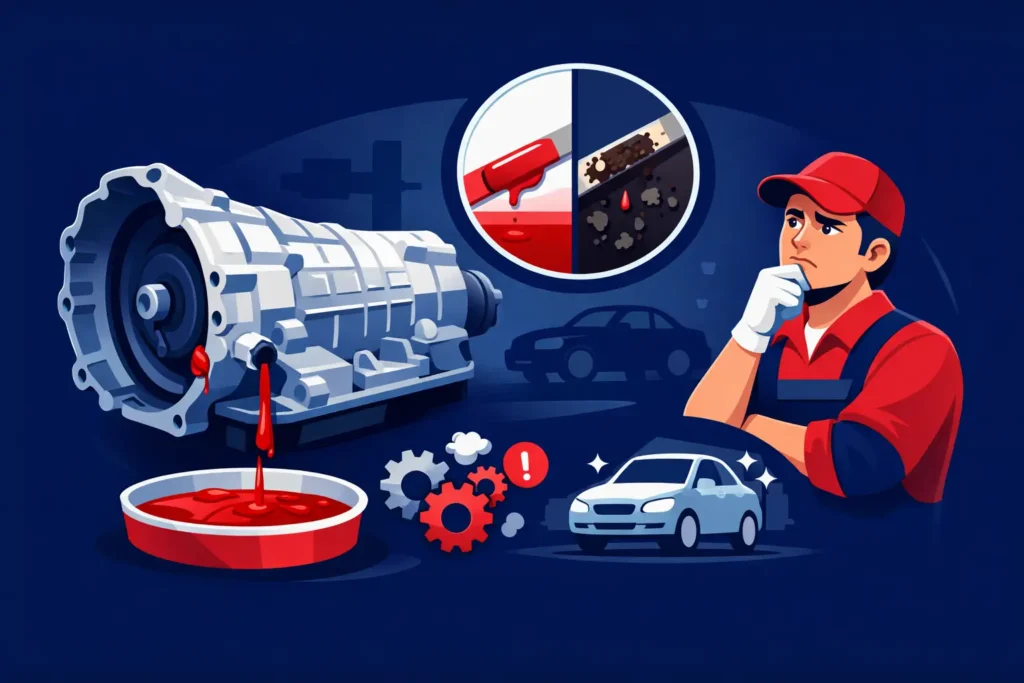
A transmission that shifts smoothly at 40,000 miles can start slipping at 120,000 miles, and that is often when drivers hear conflicting advice about service. One shop says a flush will save it. Another says touching the fluid will ruin it. So, is transmission flush bad? Not automatically. The honest answer depends on the vehicle, its maintenance history, the transmission’s condition, and what people mean when they say “flush.”
A properly chosen transmission fluid service is valuable preventive maintenance. An aggressive service on a transmission that is already failing can expose problems that were there all along. The difference matters, especially for owners of European, exotic, classic, and high-mileage vehicles that deserve more than a one-size-fits-all recommendation.
What a Transmission Flush Actually Does
Automatic transmission fluid does far more than lubricate moving parts. It helps control hydraulic pressure, carries heat away from internal components, protects clutch materials, and allows the transmission to shift as designed. Over time, heat and normal wear break that fluid down. It can lose protective qualities and collect fine debris from clutch material, seals, and metal components.
A transmission flush generally uses a machine to exchange old fluid for new fluid through the transmission cooler lines. Depending on the equipment and procedure, it may replace a larger percentage of the old fluid than a standard drain-and-fill service. Some shops use the term “flush” loosely, even when they are performing a gentler fluid exchange. That is one reason drivers get confused.
A drain-and-fill removes only the fluid that drains from the pan or case. It may also include removing the pan, replacing the filter when applicable, inspecting for debris, and installing the correct fluid. On many modern transmissions, this is the preferred service method. On others, a controlled fluid exchange may be appropriate. The owner’s manual and the transmission’s actual condition should guide the decision.
When a Transmission Flush Can Be a Bad Idea
The concern around flushing is not made up. If a transmission has been neglected for years, is already slipping, shuddering, delaying engagement, or producing burnt-smelling fluid, a flush is not a repair. In some cases, changing severely degraded fluid can make an existing internal problem more noticeable.
Old fluid may contain worn clutch material. That material is not healthy for the transmission, but a failing unit can sometimes seem to function because the contaminated fluid has different friction characteristics than fresh fluid. Once new fluid is introduced, worn clutch packs or failing seals may no longer hold pressure well enough to operate normally. The service did not create the damage. It revealed that the transmission had reached a point where fluid alone could not compensate for wear.
There is also a risk when the wrong fluid is used. Many late-model European vehicles require a specific fluid formulation, filling temperature, level-setting procedure, and service interval. Using a universal fluid because it is convenient or less expensive can lead to poor shift quality and long-term damage. A specialty transmission deserves the exact fluid and procedure specified for that unit.
A flush can also be inappropriate if there is evidence of major internal failure. Excessive metal in the pan, heavy clutch debris, a confirmed torque converter issue, or severe slipping calls for diagnostics first. Moving fluid through a damaged system without understanding the cause does not provide reliable results.
When Fluid Service Is the Smart Choice
For a transmission that is operating normally and has been serviced on schedule, fluid maintenance is generally a wise investment. Fresh, correct fluid helps manage heat and supports consistent hydraulic operation. It can be especially beneficial in Central Florida, where high temperatures, stop-and-go traffic, towing, and long idle times can put extra strain on a transmission.
Service is also sensible when a vehicle has a known maintenance history but is overdue by a modest amount. A careful inspection can help determine whether a drain-and-fill, filter service, or controlled exchange is the right route. The goal is not to sell the biggest service. It is to protect the transmission with the method that fits its age, design, and condition.
For some classic vehicles, the right approach may be very different from the one used on a modern dual-clutch, CVT, or electronically controlled eight-speed automatic. Older units may have serviceable filters and different fluid requirements. Newer vehicles may need computer-guided temperature checks and precise fluid-level procedures. Experience with the platform matters.
Warning Signs to Address Before Any Flush
If your car has a transmission concern, start with a diagnosis rather than scheduling a flush based on mileage alone. A fluid service may still be part of the solution, but it should not be the first guess.
Pay attention if you notice delayed engagement when shifting into Drive or Reverse, slipping under acceleration, harsh or erratic shifts, shuddering at cruising speed, transmission overheating warnings, leaks, or a burning odor. A check engine light or transmission warning light also deserves proper scanning and testing. Modern vehicles can store fault codes related to pressure control solenoids, speed sensors, temperature sensors, and communication issues that no fluid service will correct.
Fluid condition tells part of the story, not all of it. Dark fluid is not automatically a reason to panic, and clean-looking fluid does not prove a transmission is healthy. A qualified technician should consider the road test, scan data, fluid level, service records, leaks, transmission pan findings, and the vehicle manufacturer’s recommendations together.
Why the Right Procedure Matters More Than the Word “Flush”
The question is transmission flush bad often comes from stories about a vehicle failing shortly after service. Those stories are frustrating, but they leave out key details: Was the transmission already slipping? Was it 150,000 miles overdue? Was the filter changed? Was the correct fluid used? Did the shop inspect the pan? Was the level set at the required temperature?
A professional transmission service is not just connecting a machine and adding fluid. It starts with identifying the exact transmission, checking its condition, confirming the approved fluid, and selecting a service method that makes sense. If the unit shows signs of wear that fluid will not solve, the honest recommendation may be to avoid a flush and discuss repair options instead.
This is where transparent communication protects the vehicle owner. You should understand what service is being recommended, why it is appropriate, what the inspection found, and what the realistic outcomes are. No responsible technician should promise that fluid will repair burned clutches, broken hard parts, or an internal hydraulic failure.
A Better Way to Decide for Your Vehicle
Start with your maintenance records. If you know the transmission has received regular service, follow the manufacturer’s interval and use the specified procedure. If the history is unknown, do not assume the answer is either “flush it immediately” or “never touch it.” Have the transmission evaluated.
For a vehicle that shifts well, has no warning lights, and shows no evidence of severe internal wear, preventive service is often the right move. For a vehicle with active symptoms, the priority is determining whether the problem is fluid-related, electronic, hydraulic, or mechanical. That diagnosis can prevent money from being spent on a service that will not address the real issue.
At MotorSport Prime, transmission decisions are approached with the same care as any high-value repair: inspect first, explain the findings clearly, and recommend the service that protects the vehicle rather than the one that simply sounds easiest.
Your transmission does not need guesswork, fear, or a blanket rule from the internet. It needs the correct fluid, the correct procedure, and an honest assessment of the condition it is in today.